Water level stable in Delhi's Yamuna river for past 3 hours after constant rise; schools, colleges shut

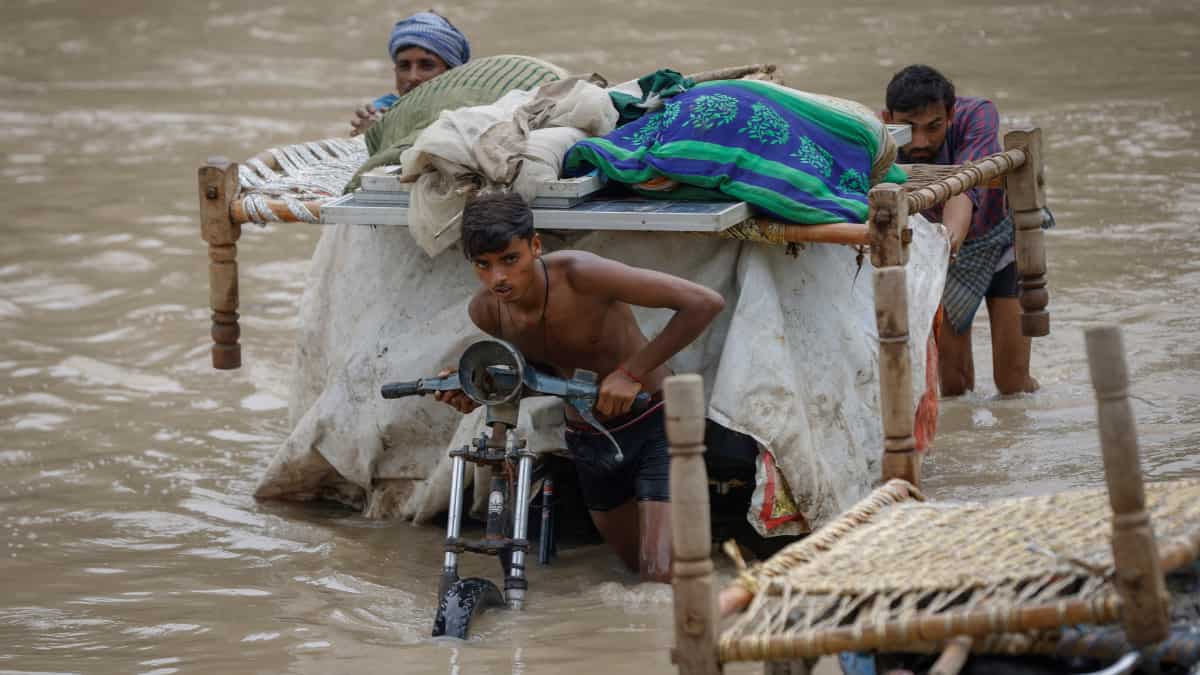
Rising water level of river Yamuna after heavy monsoon rains in New Delhi.
The water level of river Yamuna in India's national capital New Delhi has been stablefor the last three hours after it rose continuously for the past four days. At 1 pm and 2 pm local time on Thursday, the water level stood at 208.62 metres.
Earlier, India's Central Water Commission estimated that the level of River Yamuna can reach up to 208.75 metresbetween 3-5 pm on Thursday in the national capital New Delhi. At 7 am on Thursday, the river swelled up to 208.46 metres as an 'extreme flood alert' was issued in the capital city and flood water entered Delhi's ITO area.
Delhi Chief Minister Arvind Kejriwal appealed to the Central government to intervene and ensure that the release of water from the Hathnikund barrage of Haryana is slowed which is leading to the Yamuna flooding.
Meanwhile, thousands of people who were staying in low-lying areas of the capital were shifted to safe places as a precautionary measure.
Yamuna water level crosses danger mark
After the capital city received heavy rain for several consecutive days, Yamuna's water level breached the danger mark of 205.33 metres. Since then, the water level has risen rapidly. However, as the intensity of the rain gradually weakened, Kejriwal on Mondaystated that the city was facing no immediate flood threat.
But by 1 pm on Wednesday, the water level breached and reached an all-time high of 207.49 metres and the level went beyond the 208-metre mark on Thursday morning.
ALSO READ |Flood alert in India's capital Delhi as water level in Yamuna river breaks 45-year record
The primary reason for the Yamuna flooding is believed to be the extreme rainfall that the capital received in a very short span of time. The Central Water Commission's official said that water which was released from the Hathnikund barrage in Haryana reached Delhi in less time, in comparison to other occasions. This could have happened because of siltation and encroachment. Experts stated that the water passes through a constricted space which may have led to an increase in the speed of the water. The experts stated that if the city had received the same amount of rainfall over an expanse of a few days, it would not have led to such extreme situations.
Various areas affected by flooding
All the low-lying areas near Yamuna were affected as the flood water of the river entered the ring road on Wednesday. The river water had flooded Boat Club, Monastery Market, Neeli Chhatri Temple, Yamuna Bazar, Neem Karoli Gaushala, Vishwakarma colony, and the stretch between Majnu ka Tila and Wazirabad till Wednesday evening.
Parts of Mayur Vihar, Laxmi Nagar, Sarai Kale Khan, Badarpur, Jamia Nagar, and Shaheen Bagh also stand at the risk of facing a flood-like situation if the water level continues to rise. Kashmiri Gate and ITO were also flooded because of the rise in the water level of Yamuna.
The Garhi Mandu village, which is located near Signature Bridge in Wazirabad, was also submerged by the flood water.
An advisory was issued by the Municipal Corporation of Delhi (MCD) on Wednesday for some of the cremation grounds which are located near the Yamuna river considering the rising water level after incessant rainfall.
WATCH |Delhi rains: Who is responsible for people's suffering? 5 shocking videos of the tragedy
MCD said that the Nigam Bodh Ghat is also at risk of flooding. The watercanenterits campus anddisrupt cremation activities, the MCD said andappealed to peoplenot to use the cremation ground. The civic body has asked people to go to nearby cremation grounds instead.
“There is a possibility of water entering into the Nigam Bodh Ghat hampering the cremation-related activities. Therefore, the general public is advised to take the dead bodies of their near and dear to the nearby cremation grounds i.e. Panchkuyian Road, Sat Nagar, Punjabi Bagh, Green Park, Dakshinpuri or preferably near their colony,” MCD stated.
Yamuna Bank Metro closed, water treatment plants shut
Informing the people about the latest developments, Delhi CM Kejriwal tweeted, "Due to rising water level in Yamuna, Wazirabad, Chandrawal and Okhla water treatment plants have been closed. Due to this, there will be water problemin some areas of Delhi. As soon as the Yamuna water recedes, we will try to resume them as soon as possible."
Meanwhile, the entry and exit of passengers at the Yamuna Bank Metro Station was temporarily closed because of the rising water levels of the Yamuna river.
"Entry and exit at Yamuna Bank Metro Station has been temporarily closed due to the rising water levels of the Yamuna River. However, interchange facility is still available and services on Blue Line are running normally. Kindly plan your journey accordingly," tweeted the Delhi Metro Rail Corporation (DMRC). It added that approach road leading to the Yamuna Bank station is also currently inaccessible.
"Due to the escalating water levels of the Yamuna River, the approach road leading to Yamuna Bank Metro Station is currently inaccessible. Kindly plan your journey accordingly and consider alternate routes. However, interchange facility is available," the DMRC stated in another tweet.
Speaking about the measures taken by the government so far, Delhi CM Kejriwal said.
Schools, colleges shut
The Delhi Disaster Management Authority, DDMA, has decided to shut down all schools, colleges and universities in in the national capital till July 16 in the wake of floods. The offices functioning in Delhi have been advised to function from home.
Except all government offices providing essential services, all other government offices will run on work from home till Sunday and private offices are also advised to work-from-home till Sunday, DDMA's order stated.
You cannow write for wionews.comand be a part of the community. Share your stories and opinions with ushere.
WATCH WION LIVE HERE