Explained: What is Waqf Board and why does the Indian government want to curb its powers?

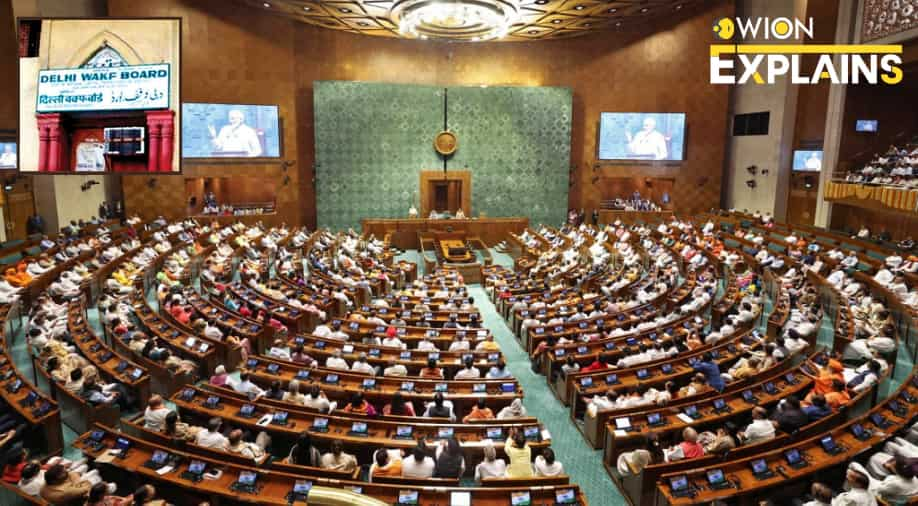
Explained: What is Waqf Board and why does the Indian government want to amend it
Indian Prime Minister Narendra Modi's central government is set to overhaul the Waqf Act to restrict the "unfettering" powers of the Waqf Board - - the country's third largest landowner after the Indian Railways and armed forces.
The cabinet approved a total of 40 amendments to the act on Friday (Aug 2) last week during a high-level meeting. The changes will be clocked in by bringing a bill to Parliament in the next few days.
"As per the proposed amendments, all claims made by the Waqf Board on properties will undergo mandatory verification. A mandatory verification process is proposed for properties claimed by the Waqf Board," the sources stated.
What does the government want to repeal?
The amendments areintended to reduce the arbitrary powers currently wielded by Waqf Boards, which allow them to claim any property as waqf without any mandatory verification.
Additionally, the government is mulling involving district magistrates in monitoring Waqf properties to prevent misuse of the assets.Properties claimed by Waqf Boards will also have to undergo fresh verification to resolve disputes.
Under the changes, women's participation in the Central Waqf Council might also be increased by amending Section 9 and Section 14.
Moreover, the revenue generated by Waqf properties which amounts to Rs 200 crore per annum ($23.8 million) will also be closely monitored under the proposed amendments.
What is Waqf?
Waqf is the property given in the name of God for religious and charitable purposes. In legal terms, Section 3 of the Waqf Act defines what a Waqf property is.
"Waqf means the permanent dedication by any person, of any movable or immovable property for any purpose recognised by the Muslim law as pious, religious or charitable," it says.
A property can become a Waqf through a deed orinstrument, or a property can be deemed Waqf if it has been used for religious or charitable purposes for a long period of time. The proceeds are typically used to finance educational institutions, graveyards, mosques and shelter homes.
Notably, as per Sharia law, once Waqf is established, and the property is dedicated to Waqf, it remains as Waqf property forever.
What are functions of Waqf Board?
The Waqf Act of 1954 was passed under the late PM Jawaharlal Nehru's government and provided a pathway toward the centralisation of Waqfs. Central Waqf Council of India, a statutory body was established in 1964 by the Government of India under the Waqf Act of 1954.
Currently, every state has a Waqf Board, headed by a chairperson, one or two nominees from the state government, Muslim MLAs and MPs, Muslim members of the State Bar Council and Islamic scholars.
The boards have the power to administer the property and take measures to recover andsanction any transfer of immovable property if Waqf by way of gift, sale,mortgage or lease.
How much property do the Waqf Boards have?
Currently, Waqf Boards have almost 870,000 immovable properties, 16,173 moveable properties and 356,031 estates in more than eight lakh acres of land.
There are over 58,000 complaints against the board with more than 18,000 in tribunals while over 150 are in High Courts and Supreme Courts.
WATCH |Madrasas on Indo-Nepal border under scanner over foreign funding
Controversies surrounding Waqf Boards
In September 2022, a huge controversy erupted when the Waqf Board in the southern state of Tamil Nadu claimed ownership of the entire Thiruchendurai village which had a majority Hindu population.
The Waqf Board claimed thatthey hold 389 acres of land that was measured by government-recognised surveyors and registered as Waqf property in 1954.
Opposition against the move
AIMIM chief Asaduddin Owaisi hascome out in opposition to the proposed changes. Owisi said the government wanted to take away the autonomy of the Waqf Board by interfering in its functions.
"The BJP has been against these boards and Waqf properties from the very beginning and they have a Hindutva agenda. Now if you make amendments to the establishment and composition of the Waqf Board, then there will be administrative chaos, a loss of autonomy of the Waqf Board and if the control of the government increases over the Waqf Board, then the independence of Waqf will be affected," the Hyderabad MP said.
Similarly, theAll India Muslim Personal Law Board in a statement said any change or alteration in the Waqf Act “will not be tolerated”.
While Owaisi opposes the move, it is not the first time amendments have been made to the Waqf Act.In 2013, the then UPA government, led by the Indian National Congress (INC) gave more sweeping powers to Waqf Boards, which have since been a point of contention.
(With inputs from agencies)