Explained | Delhi HC rejects PepsiCo’s appeal for patent on potato seeds: What was the case about?

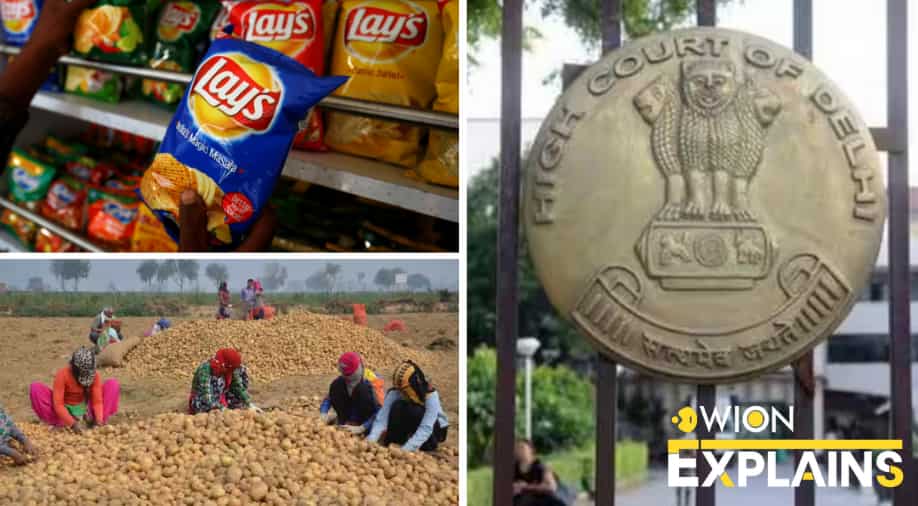
PepsiCo case explainer
in a major win for Indian farmers, the Delhi High Court recently upheld a 2021 order revoking PepsiCo India’s supposed patent for a special potato variety grown for its Lay’s chips. The judgement by the Protection of Plant Varieties and Farmers’ Rights Authority (PPVFRA) was upheld by the court last week, while also quashing intellectual property protection granted to PepsiCo.
What has happened so far?
The legal battle between PepsiCo India and farmers’ rights activist Kavitha Kuruganti began back in 2019 when the former sued a group of farmers for cultivating the FL 2027 potato variety, commonly known as FC5, over alleged infringement of its intellectual property rights (IPR).
Notably, the company had initially also sought $121,050 each for alleged patent infringement.
However, in 2019, the farmers’ rights activist wrote a letter to PPVFRA and accused the company of hiring a private intelligence firm that posed as potential buyers and toured fields of certain potato farmers in the Indian state of Gujarat between January and February.
PepsiCo India asserted that upon testing they found that the independent farmers in the state who were not under its contract were growing the FL 2027 variety of potato. Kuruganti’s letter said that the company filed individual petitions in the Ahmedabad civil court to stop the farmers from growing that type of potato.
Following criticism from lawmakers and farmers, the New York-based company decided to withdraw legal cases the same year, and declared it will solve the issue amicably.
But the fight did not end there, as Kuruganti filed a petition with the PPVFR Authority for revocation of IPR granted to PepsiCo’s FC5 potato variety, arguing that the Indian law does not allow patents on seeds.
What makes this type of potato so special?
The FL 2027 was developed in 1996 by a US-based plant breeder who was working with the PepsiCo division, Frito-Lay Agricultural Research. Since then the company has been manufacturing and selling the widely known Lay’s potato chips.
Typically, potatoes have more moisture and are also high in sugar. The excess moisture contributes to additional dehydration and energy costs during the processing and manufacturing phase of the chips while the high sugar content in normal potatoes makes them black while frying.
Therefore, the FL 2027, a type of potato with a moisture content at five per cent lower than other potato variations which contain at least 85 per cent moisture makes it ideal for making snacks like chips.
FL 2027 potato variety in India
PepsiCoset up its first potato chips plant in India in 1989. The production of Lay’s took a hit in 2008, prompting the company to develop and register a variety of potatoes in India.
In 2009, FL 2027 was put to commercial use and PepsiCo India gave select farmers in the Indian state of Punjab permission and seeds to grow the FC5. As of last year, the US-based snacks and beverages giant reportedly works with thousands of farmers in nearly 10 Indian states via contract cultivation and at a fixed price.
In India, the potato was one of the 172 crop species that are eligible to be registered for IPR protection under the PPVFR Act. As of last year, there are over 40 recognised potato varieties, out of which 17 were registered by the Indian Council of Agricultural Research. Others have been registered by commercial businesses such as PepsiCo India.
PepsiCo India’s claim over the potato seed
PepsiCo India was granted a certificate of registration for FL 2027 as an “extant variety” in February 2016 for the next six years. During the validity of the certificate, which could be extended for up to 15 years, the breeder has sole authority over that variety.
This means no one could commercially produce, sell, market, distribute, import or export it without the company’s authorisation.
This became a point of contention for Kuruganti, who said that India does not allow a patent on seed varieties. In line with this view, PPVFRA, who had granted registration to PepsiCo, revoked it by the end of 2021.
ALSO READ |PepsiCo to withdraw case against Gujarat potato farmers
The revocation followed a letter issued by the PPVFRA in February 2022 which said that it is rejecting PepsiCo India’s application for renewal of its registration of the FL 2027.
The matter was taken up to the Delhi High Court in May 2022, when the company filed an appeal against both the refusal to renew as well as the revocation of the certificate.
Delhi HC upholds decision
In the court order dated July 5, Delhi HC judge Navin Chawla upheld the decision of the PPVFRA and dismissed claims of public interest violation by PepsiCo. The decision was based on a technicality which dates back to the application based on which the company obtained its certificate.
In a bid to obtain registration of FL 2027 as a “new variety”, PepsiCo in its application back in 2012 wrote the date of the potato variety’s commercialisation in India as December 17, 2009.
A “new variety” requires to conform with the criterion of originality. The propagated or harvested material should not have been sold in India sooner than one year before the date of filing the application, as per an Indian Express report.
Since FL 2027 could not satisfy the requirement for novelty, it was granted a registration as an “extant variety” which compiles with distinctiveness, uniformity and stability, but not originality. While the date of commercialisation in the application by PepsiCo was 2009, by then it had already been commercialised in Chile, in 2002, said the Indian media report.
Therefore, the certification of the FL 2027 was obtained based on incorrect information by the applicant, the court noted. As per Indian laws, any protection granted for a plant variety is subject to complete disclosure from the applicant about their invention or development.
In this case, PepsiCo failed on two accounts – for applying to register FL 2027 under the category of “new variety” and giving the incorrect date for its first commercialisation.
How has PepsiCo responded?
In a statement to WION, PepsiCo India’s spokesperson said, “The appeal was filed on several grounds and the Hon’ble Delhi High Court vide its order dated 5th July 2023 upheld the revocation primarily on procedural infirmities in the application and other supporting documents.”
It added, “The Court, however, held that exercising of rights by PepsiCo, granted vide registration of its potato variety under PPVFRA, cannot be construed as against public interest and revocation of registration by PPVFR Authority on ground of ‘public interest’ was erroneous. We are in the process of examining the order in detail to decide our options.”
(With inputs from agencies)
WATCH WION LIVE HERE
You can now write for wionews.com and be a part of the community. Share your stories and opinions with us here.