
&imwidth=800&imheight=600&format=webp&quality=medium "Did Pranab Mukherjee reject military intervention demand against Pakistan after 26/11 Mumbai attack? Here's what Rajnath Singh said")
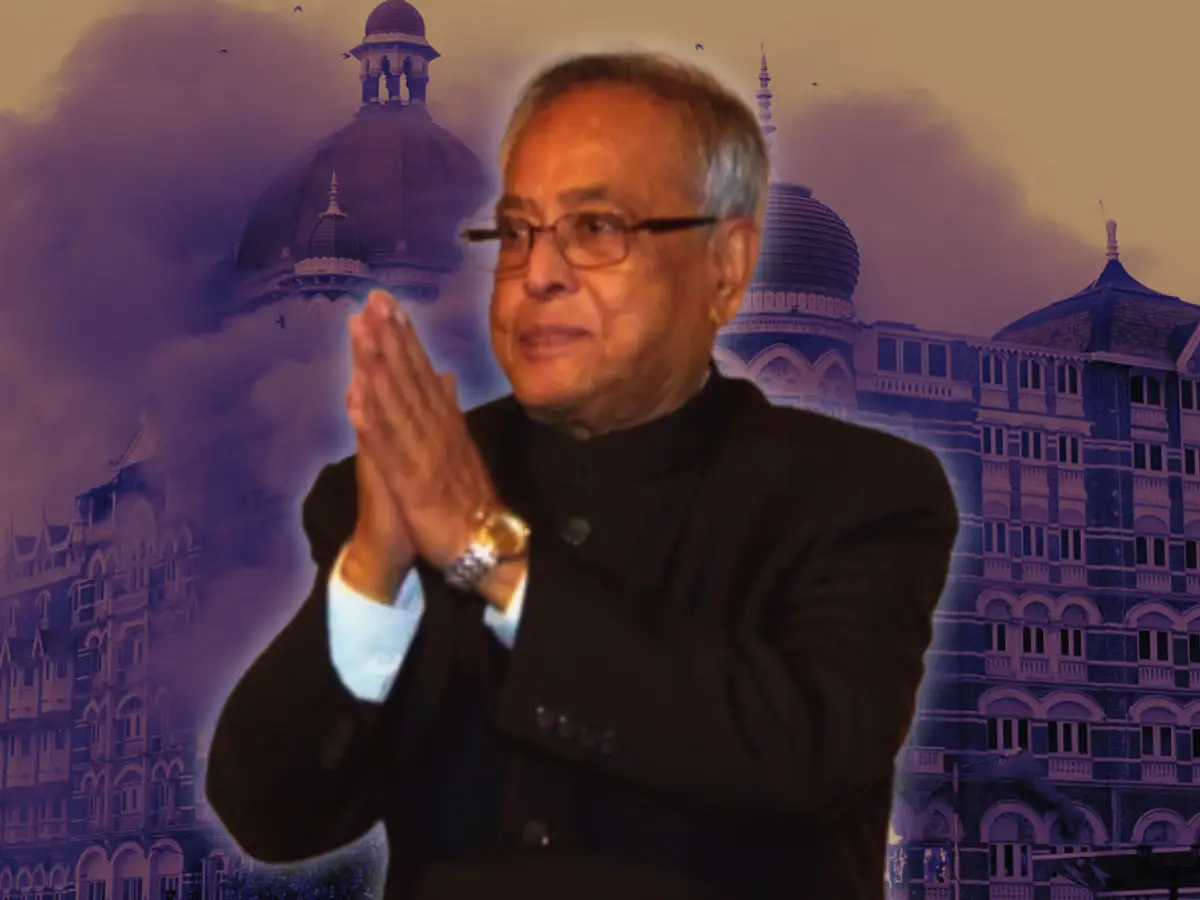
Indian Defence Minister Rajnath Singh, while speaking in the Parliament on Monday (July 28), said that when the 26/11 attack happened in 2008, Pranab Mukherjee - who was then the External Affairs Minister - had rejected the demand for a military response. Singh quoted some excerpts of Mukherjee's book, The Coalition Years, to prove his arguments.
"Pranab Mukherjee, in his book 'The Coalition Years', has written that when the Mumbai attack happened, India had evidence that a terrorist came from Karachi Port. But the excuse of 'non-state actors' by Pakistan was not being accepted by the global community. Pranab da has written and I quote, 'Amid the heated debates within the cabinet, there was a demand for military intervention which I rejected'. He (Mukherjee) has written this, not me," Singh said.
"Honorable speaker, a senior official of the Indian foreign services has also confirmed this in his book, his name is Ajay Bisaria and he was probably the foreign secretary, that just after the Mumbai attack, a high level meeting had taken place in which the then External Affairs Minister Panab Mukherjee asked - 'What should be done?' So the Foreign Secretary Shivshankar Menon suggested that India can attack the Lashkar-e-Taiba headquarters in Muridke. After listening to this, Pranab da removed his glasses, cleaned them, and dismissed the meeting after saying thank you to all the officials," the defence minister added.

"The government of that time did what seemed right to them. But I believe that if the then government had taken firm decisions like the 2016 Surgical Strike, 2019 Air Strike, so Pakistan's strategic calculations could have changed. A powerful and decisive action by Pakistan and its military would have proved very disincentive for these 500 terrorist organisations," Singh said.
Singh said that after the 2008 attack, the then-government opted for dialogue only. "I want to clarify that this is not a criticism, neither of the government of that time, nor of the then PM, nor of those politicians. The leadership of that time did what seemed right to them," he added.
"But today's India thinks differently. And worlds differently. we believe that if your enemy has opted for terrorism as its strategy and does not understand the language of dialogue, then there is no option but to be decisive and stand firm.

