

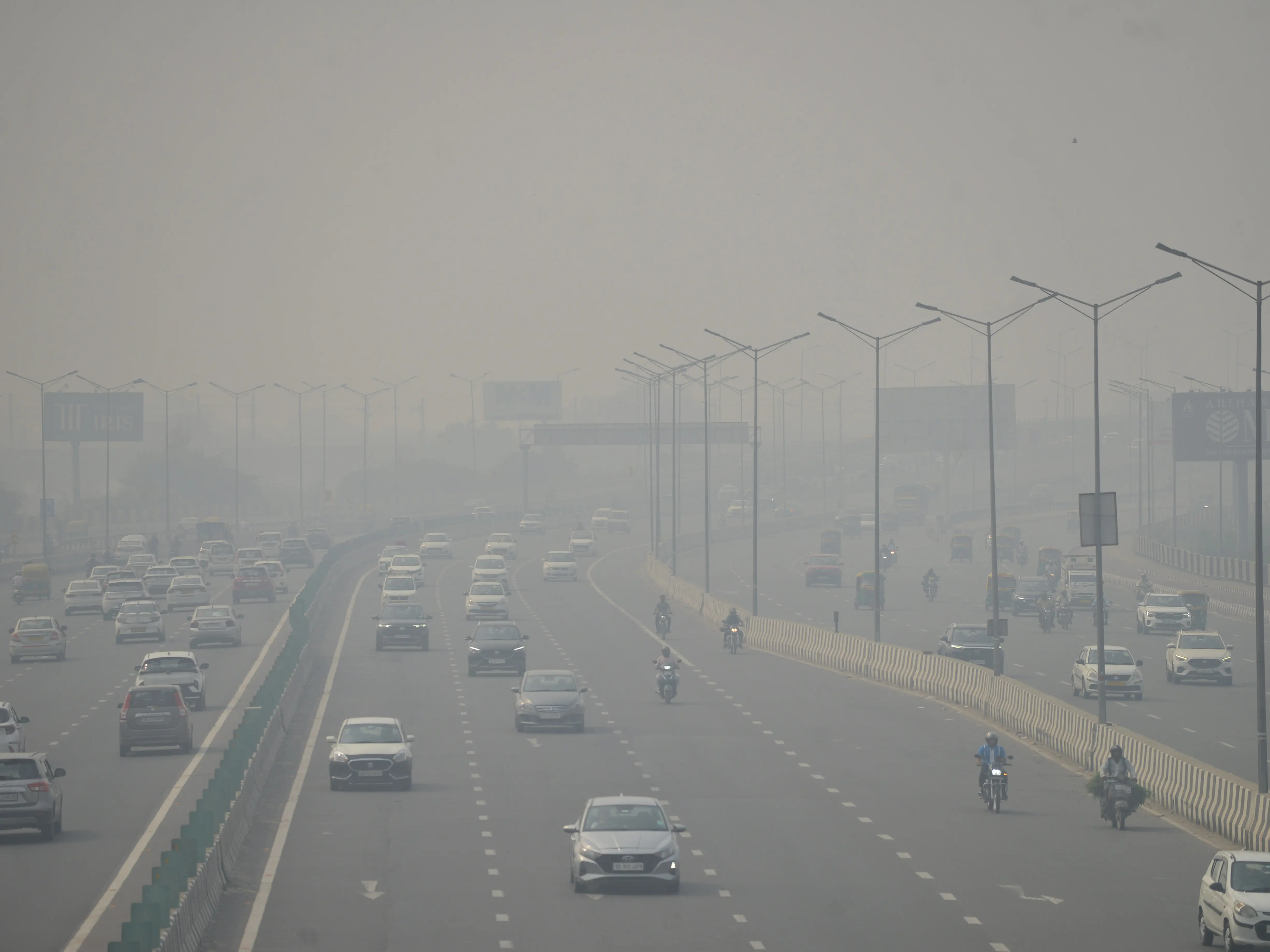
&imwidth=800&imheight=600&format=webp&quality=medium "Delhi's air quality hits ‘very poor’ for third consecutive day as wind speed slows down")
Delhi's air quality continued to deteriorate, remaining in the 'very poor' range for the third day in a row, with the 24-hour average Air Quality Index (AQI) at 353 by 4pm on Wednesday (October 22), according to the Central Pollution Control Board (CPCB). This was the highest AQI recorded this season, surpassing the 351 on Tuesday and 345 on Monday. A dense layer of smog covered the city as winds remained weak, not exceeding 7 km/hr, as reported by the India Meteorological Department (IMD). The IMD forecast indicates that this situation is likely to persist in the coming days, with minimal change in weather patterns.
Krishna Mishra, a senior IMD scientist, said that although a western disturbance is expected around October 27, it will bring little change in wind speed or rainfall, offering no relief from the stagnant air. The Centre’s Air Quality Early Warning System (EWS) predicts that Delhi's AQI will stay in the ‘very poor’ category until at least Saturday, fluctuating between 'poor' and 'very poor'. The AQI scale ranges from 0-50 (good) to 301-400 (very poor) and above 400 (severe). On Wednesday, three of the city's 39 air quality monitoring stations recorded severe pollution levels, with Nehru Nagar topping the charts at an AQI of 411. On Diwali day, the station saw a peak PM 2.5 reading of 1763µg/m³, the highest in Delhi this season.
Also Read: PM Modi to skip ASEAN Summit in Malaysia due to scheduling conflicts; will attend virtually
The temperature in Delhi on Wednesday reached a high of 32.1°C, slightly below normal, but the night remained warmer, with a minimum of 21.8°C, above the seasonal average. These temperatures are expected to remain stable throughout the week. Tuesday marked the sixth most polluted day of the year, with the 24-hour average PM 2.5 concentration hitting 241µg/m³. This data from the Centre for Research on Energy and Clean Air (CREA) reveals that the first five most polluted days occurred in January. According to Manoj Kumar, a CREA researcher, this spells the worst pollution streak since January, with adverse meteorological conditions leading to higher levels of smog in both months.

