
&imwidth=800&imheight=600&format=webp&quality=medium "Delhi Police deny excessive use of force during Jantar Mantar protest, says plainclothes personnel were 'spotters'")
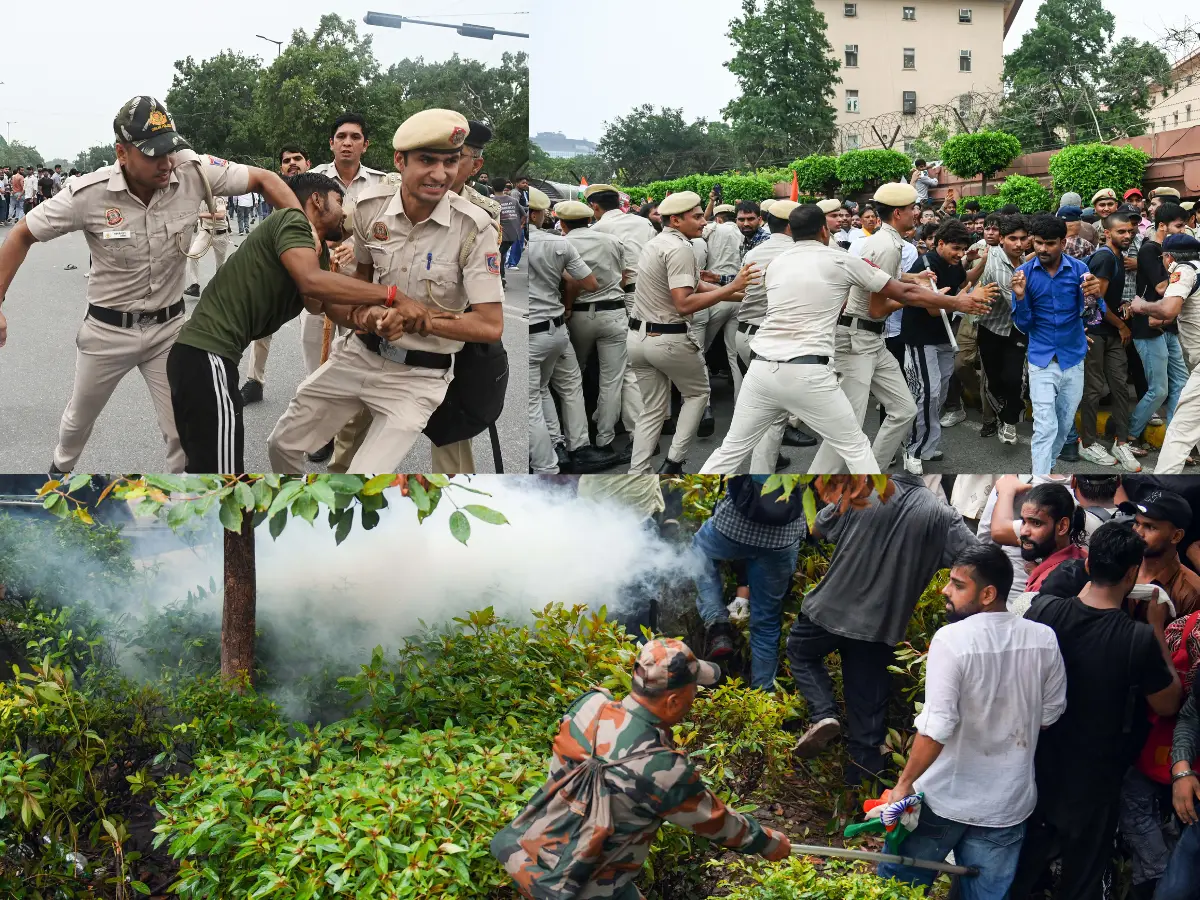
The Delhi Police has filed a counter-affidavit before the Supreme Court on Tuesday (Jul 18) and has defended its use of force against student protesters during the July 20 “Sansad Chalo” protest march. The police also defended plainclothes personnel and highlighted the restrictions imposed in and around the protest site. The police stated in the affidavit that it resorted to a “graded” response only after the gathering ceased to remain peaceful, with sections of the crowd breaching multiple layers of barricades and attempting to move towards Parliament. The CJI-led bench is expected to consider the police’s response for hearing later today.
Also Read: ‘Reckless reporting’: CJI Surya Kant denies rejecting plea on Delhi Police brutality amid protests
The Delhi Police also defended the presence of ‘plainclothes personnel’ stating that they were “spotters” drawn from the Special Branch, Special Cell, Crime Branch and local police who had strategically merged with the crowd because of the urgency of the situation. It had previously claimed that 2,873 persons at the protest site had criminal cases registered against them, including allegations relating to murder, attempt to murder, dacoity, rape and offences under the POCSO Act.

On the use of facial-recognition technology at the protest site, the Delhi Police has defended the deployment as a “proportionate policing measure”, while denying that it amounted to indiscriminate surveillance of protesters. The police claimed that no action is taken solely on the basis of a facial-recognition match. Further, the police mentioned that as per Standing Order prior police permission for demonstrations at Jantar Mantar, caps the gathering at 1,000 persons, and prohibits marches from the designated protest site except a limited symbolic march with prior permission.
Deputy commissioner of Police Sachin Sharma said that the allegation of excessive force was unsustainable given the scale of the gathering. He said that about 5,000 police personnel were deployed to manage more than 30,000 protesters spread across nearly three kilometres. On the allegation that police personnel used lathis fitted with nails, the affidavit stated that examination of the available videos showed one solitary instance of such an object. It maintains that lathis form part of permissible crowd-control equipment and were used only to contain groups of protesters who, according to the police, had begun attacking personnel.

