COVID-19 is very, very contagious; hand washing & social distancing can minimise transmission: Dr Bishwajeet Elangbam

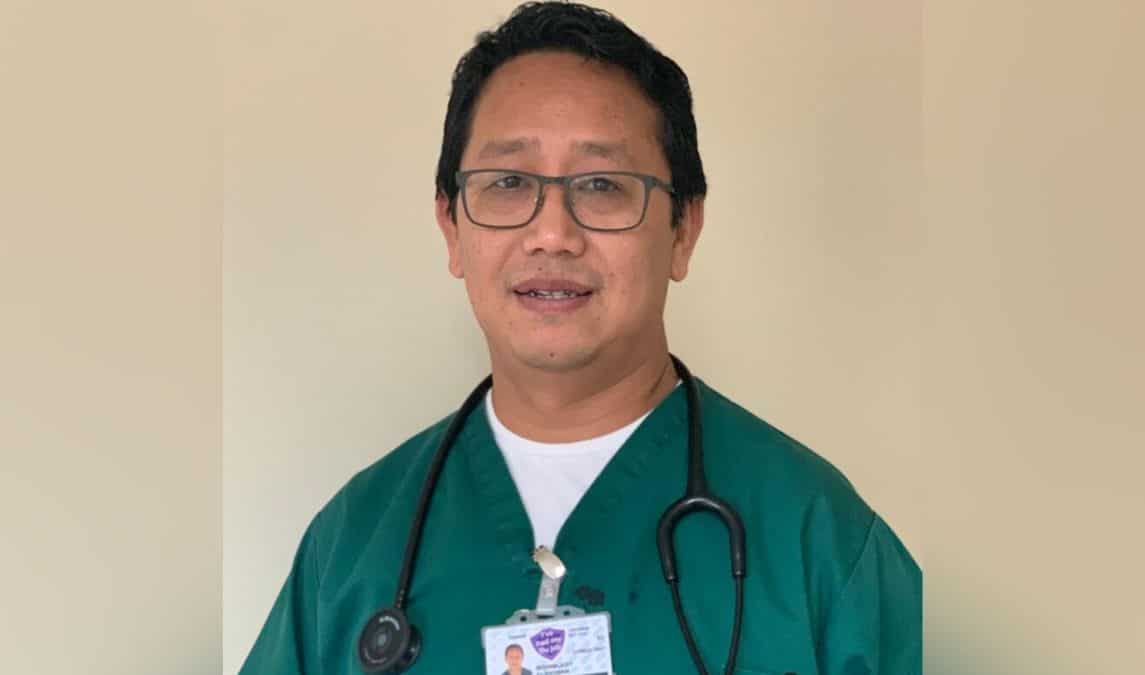
Bishwajeet Elamgram
By
Huidrom Athouba Meetei
Dr Bishwajeet Elangbam, is a consultant in emergency medicine in the Sandwell and West Birmingham NHS trust in the United Kingdom.
The hospital based in Birmingham is the second worst-affected city in the UK which alone has witnessed more than 250 deaths due to COVID-19.
Dr Elangam who was also a part of the SARS team when it had hit the UK, shares his experiences with WION on the nature of the pathogen and the knowledge gathered during his days of attending to the survivors.
WION: You have seen people suffering with COVID-19 since day one in your hospital. Can you please share your experiences since the first positive cases were reported and then resulting in casualties?
Dr Bishwajeet Elangbam: We first heard about the outbreak of this pandemic in Wuhan and on Jan 27, then we did first testing of our mask, we were preparing ourself by making ensure our masks were fitted to our face, and I still remember on Feb 1, we did a simulation for our department.
In order to look after our patients. We had a separate room for coronavirus, we called it corona post- for looking at suspected patients, with the hope of not contracting it with anyone in the hospital.
On February 10, I saw my first suspected patient, he had a travel history to China and Hong Kong.
We were looking at many suspected patients. The first confirmed case reported on March 5 in Birmingham and on March 14, the first positive case was reported in our hospital, since the last six weeks things have changed a lot from the data we have recorded unfortunate deaths of around 250 patients and 870 confirmed positive cases.
A lot of patients are coming to our hospital. I was among the team to deal during the SARS period, we thought, we should be ok but we were worried as the number of mortality increased in Wuhan and in Italy, even though we had the experience from the past, there was a lot of apprehension among our colleagues.
WION: Now across the globe the fight against the virus is underway. What do you suggest as a precaution since there seems very little clarity on the nature of the virus,its mode of attack at humans and how and when it affects us?
Dr Bishwajeet Elangbam: COVID-19 virus is a very very contagious virus. It is similar to common flu, common cold - transmits through droplets, it can transfer when you cough, sneeze, through our sputum. It's very very highly contagious. What we can do about it?
We are happy to share the information that Oxford have started clinical trial of a vaccine on humans and we are hopeful that by September, we should have a viable vaccine that is safe, but according to the CMO UK government, it feels that it may take around 1 year or 18 months.
Come next year, we should have some idea of from where the vaccine are coming through by the end of year, we have a long time to go, meanwhile, various countries are taking several measures to stop the transmission - lockdown is going on, this is very, very important, lockdown is just to buy some time to decrease the transmission and we can prepare ourself, when we say, "we" - it includes everyone, healthcare providers and the public.
Handwashing and social distancing is the way to minimize the transmission, and we should strictly follow the rules set by the government and keep a good hygiene habit.
WION: As you have been directly dealing with this new deadly virus, what is your advice to the people when should they go for a test, any set of measures that one can take up before going for test?
Dr Bishwajeet Elangbam: Tests arebeing done according to the strategy of respective countries - for example, in be UK we started with the containment phase, where we were swabbing people in the community and we were doing tests for the people who were coming to the hospital.
Now in the UK, we are doing delayed phase testing that is swabbing for people who are admitted in hospitals only and key workers who are working in the frontline.
If you have been in contact with any positive individuals and you are feeling unwell take advice from the hospital through helplines or doctors first through phone and fix a time for your visit, so that the hospital can prepare or to avoid other patients putting them at risk
WION: As you know India is moving towards a critical stage, what would be your advice or best practices that should be followed in the healthcare sectors or for the public?
Dr Bishwajeet Elangbam: I saw in India that the curve has been flattening, my advice to the people is - please follow the government order, wash your hands regularly, keep social distancing, follow hygiene advice strictly, lockdown is just a means to buy time to prevent mass spreading before vaccines are made.
I repeat - remember lockdown is only meant to buy time, we may become infected with the viruses with some way or the other if we don't take care of ourselves.
WION: Tell us from your experiences how does this disease attacks the human body- does it give time once it enters the human body, which part or parts are the most vulnerable?
Dr Bishwajeet Elangbam:This virus is just like common flu,it attacks in two ways- first, the virus loads into the upper respiratory tract infection that is how we have sore throat and sneezing.
Eight per cent of patients have flu or cold-like symptom another 14 per cent to 20 per cent are quite unwell, what happens is - if the person has immunity compromised like diabetes or cancer treatment when the virus came in the body, then the body reacts - the inflammatory response can be quite high and the person can feel very unwell and the second is immune response phase which is somewhere 6,7,8,9 days, the body tries to fight against the virus - unfortunately it starts to fight too strong that it attacks its own organ like kidney, lung, brain which leads to respiratory failure, kidney failure.
These are two phases is how this virus attacks the human body. Most of them recover but around 5 per cent of patients succumb to the virus.
Many of the patients come to hospital needing oxygen around 28 per cent, they improve after 4/5 days. Another group who are very unwell with very low oxygen level, they deteriorate within hours and its so fast that we have little time to treat them.
People who have diabetes, are obese, people who used to smoking have a higher rate of death.
WION: We also know about the clinical trial of a vaccine that's happening in the UK, can you share with us any information about the nature of the trial, what can one hope?
Dr Bishwajeet Elangbam: The Oxford team is doing the trial for a vaccine. The vaccine is the only way that can save us from this virus.
They are studying around 510 volunteers, they are expecting a result by September and hoping for a good result, until then we have to take care of our family, our loved ones till the vaccinecomes out.
We need to behave as responsible individuals and as responsible citizens to fight this deadly virus.