Chandrayaan-3 rocket's part made uncontrolled re-entry into Earth's atmosphere

Chandrayaan-3 updates
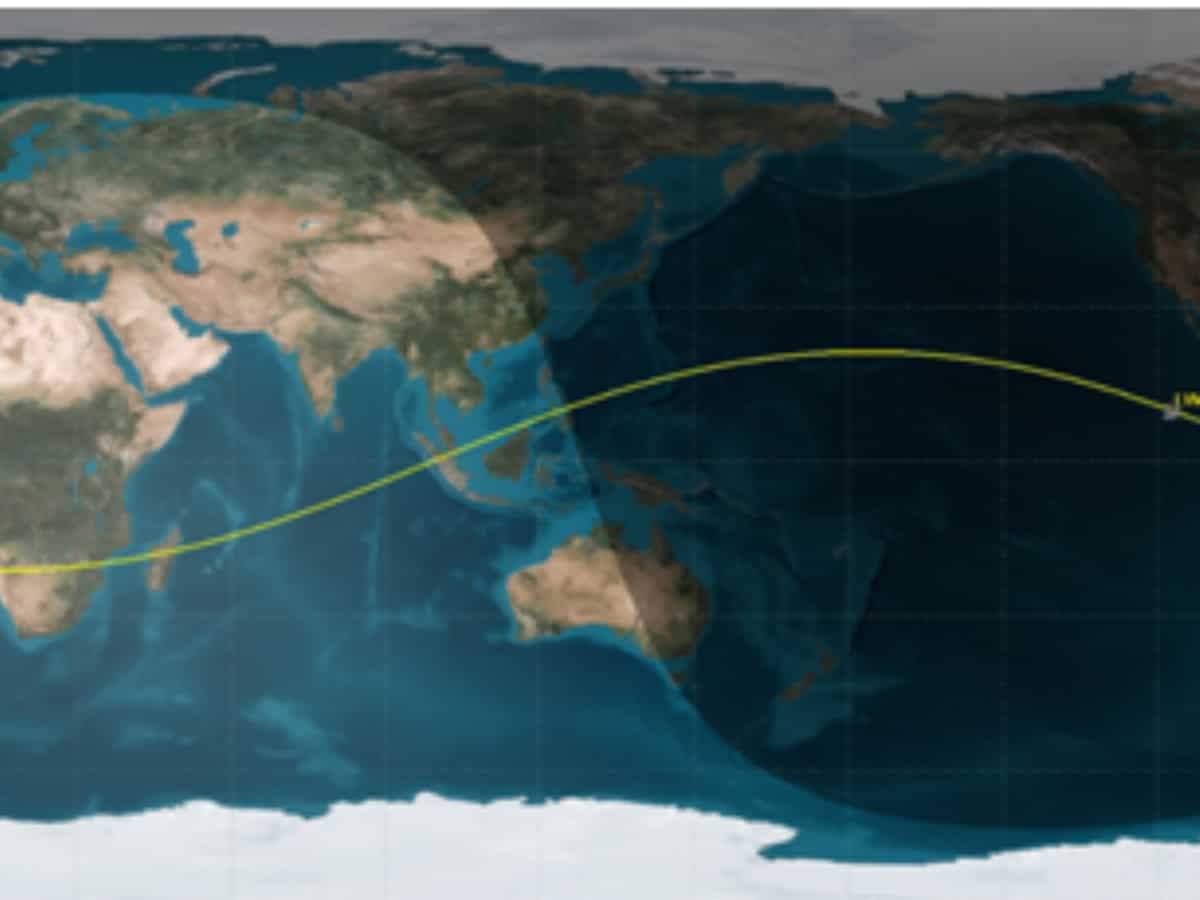
A major part of the Chandrayaan-3 launch vehicle has made uncontrolled re-entry into the Earth’s atmosphere. The Indian Space Research Organisation (ISRO) said in this press release that the cryogenic upper stage of the LVM3 M4 launch vehicle made this re-entry at around 2:42 am IST on Wednesday.
“The cryogenic upper stage of the LVM3 M4 launch vehicle made an uncontrolled re-entry into the Earth’s atmosphere, around 2.42 pm today. The probable impact point was predicted over the North Pacific Ocean,” ISRO said.
The space agency further said that the final ground track did not pass over India.
“This rocket body (NORAD id 57321) was part of the vehicle that successfully injected the Chandrayaan-3 spacecraft into the intended orbit of 133 km x 35823 km with a 21.3o inclination on July 14, 2023,” the space agency said.
Chandrayaan-3: Re-entry of rocket body into Earth’s atmosphere
The Indian space agency further said that the re-entry of the rocket body part took place within 124 days of its launch. The post-mission orbital lifetime of the LVM3 M4 Cryogenic upper stage is, thus, “fully compliant with the '25-year rule'for LEO (Low Earth Orbit) objects”. It was aligned with the recommendation of the Inter-Agency Space Debris Coordination Committee (IADC).

What does this mean? In order to mitigate the space debris, some guidelines were laid down by the international space community. According to that guideline, satellites in LEO must deorbit or be placed in graveyard orbit within a maximum of 25 years after the completion of their mission. Hence, as per this guideline, ISRO’s Chandrayaan-3 rocket’s body part followed the 25-year rule.
India’s commitment to sustainable space exploration
The press release also mentioned the “passivation” of Chandrayaan-3’s upper stage. It went through “passivation” to remove all residual propellant and energy sources to minimise the risks of accidental explosions as per the space debris mitigation guidelines by the United Nations and IADC.
Also Read |India contacts Thai cave rescue experts while racing against time to save Uttarakhand tunnel workers
“Passivation and Post-mission disposal of this rocket body in adherence to the internationally accepted guidelines once again reaffirms India’s commitment to preserving the long-term sustainability of outer space activities.”
On Aug 23, India became the fourth country to successfully land on the moon as the Chandrayaan-3’s lander module successfully made a soft landing on the lunar surface and the first nation to touch down on the polar region of the moon.
(With inputs from agencies)