Cauvery row: Supreme Court refuses to interfere with order directing Karnataka to release water for Tamil Nadu

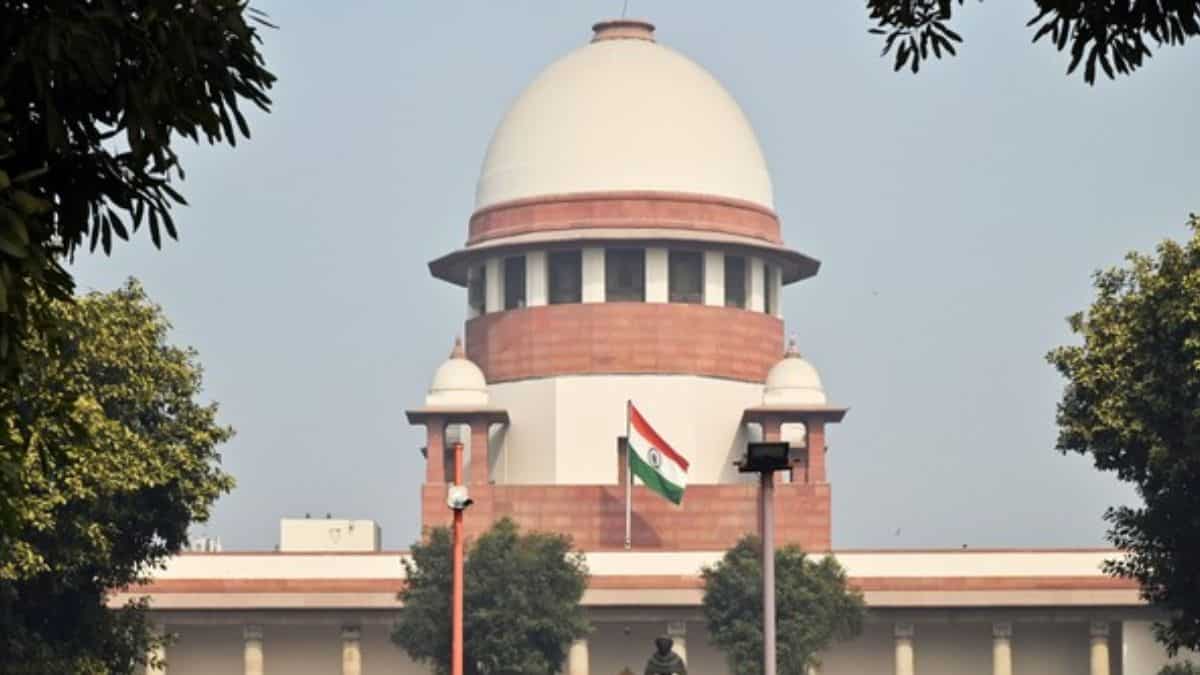
Supreme Court
India's Supreme Court (SC), on Thursday (September 21), refused to intervene in the dispute between Karnataka and Tamil Nadu over the release of Cauvery River water for irrigation purposes.
The Cauvery Water Regulation Committee (CWRC) in its September 12 order, which was upheld by CWMA, directed Karnataka to release 5,000 cusecs (cubic foot per second) of water every day for the next 15 days to Tamil Nadu.
A bench of Justices BR Gavai, PS Narasimha and Prashant Kumar Mishra, while declining to meddle, said that both CWMA and Cauvery Water Regulation Committee (CWRC) are conducting meetings regularly and also observing the water requirements every 15 days.
The bench further highlighted that both CWMA and CWRC, have experts from the India Meteorological Department (IMD), who have weighed in on all the pertinent aspects like drought, deficit rainfall, and water level in the river and only then passed the order.
"We are therefore of the considered view that the factors which have been taken into consideration by both the authorities cannot be said to be irrelevant or extraneous. In that view, we are not inclined to interfere with the orders," the bench said.
Senior advocate Mukul Rohatgi, who appeared for Tamil Nadu, submitted that both the authorities despite having acknowledged there was scanty rainfall since August and the state was eligible for 7,200 cusecs of water, reduced the volume to 5,000 cusecs a day.
"I am a low riparian state...water flows from Karnataka to Tamil Nadu from where it goes to Puducherry. There is a shortfall of rainfall which has been taken into consideration by the authorities. In a regular year, I would have been eligible for three times more but I am not seeking that. I am seeking what is rightfully mine," Rohatgi said.
He then added that Tamil Nadu has over five lakh acres of standing crop and on top of it is facing a drinking water issue for which more water is required in the Indian state.
"If the drought-like condition was taken into account and the authority calculated it to be 7,200 cusecs per day, then there was no occasion to further bring it down to 5,000 cusecs per day," he submitted.
On the other hand, senior advocate Shyam Divan, appearing for Karnataka, said that the state was also facing drought-like conditions, and the release of 5,000 cusecs of water ordered by the authorities is against the "interest".
"We are facing a drinking water crisis, especially in urban areas including in Bengaluru," he said.
"They have taken into account IMD data, rainfall, water level in reservoirs and other relevant data after which they have arrived at the figure of 5,000 cusecs," Bhati said.
(With inputs from agencies)
WATCH WION LIVE HERE
You can now write for wionews.com and be a part of the community. Share your stories and opinions with us here.