Ayodhya verdict: Chronology of events

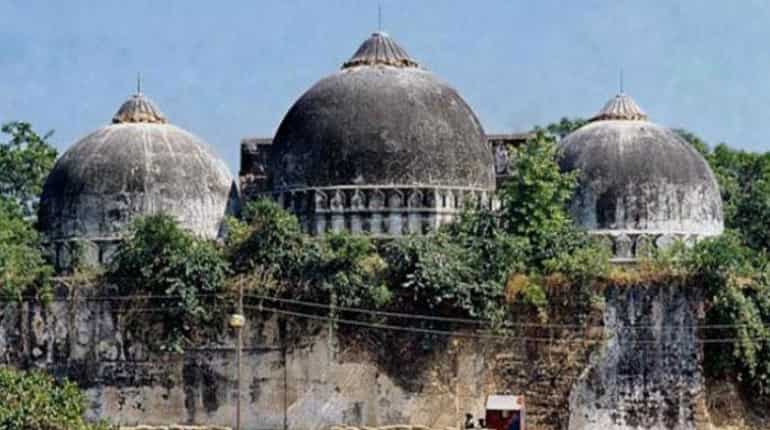
Babri Masjid
The Supreme Court on Thursday declined to refer theBabri Masjid-Ram Mandirmatter to a larger bench.In its verdict, the court said that all temples, mosques and churches are equally relevant.
Following is the chronology of events in the Ram Janmabhoomi-Babri Masjid land dispute case:
1528: Babri Masjid built by Mir Baqi, commander of Mughal emperor Babur.
1885: Mahant Raghubir Das files plea in Faizabad district court seeking permission to build a canopy outside the disputed Ram Janmabhoomi-Babri Masjid structure. Court rejects plea.
1949: Idols of Ram Lalla placed under a central dome outside the disputed structure.
1950: Gopal Simla Visharad files suit in Faizabad district court for rights to worship the idols of Ram Lalla.
1950: Paramahansa Ramachandra Das files suit for continuation of worship and keeping the idols.
1959: Nirmohi Akhara files suit seeking possession of the site.
1981: UP Sunni Central Waqf Board files suit for possession of the site.
February 1, 1986: Local court orders the government to open the site for Hindu worshippers.
August 14, 1989: Allahabad HC ordered maintenance of status quo in respect of the disputed structure.
December 6, 1992: Ram Janmabhoomi-Babri Masjid structure demolished.
April 3, 1993: 'Acquisition of Certain Area at Ayodhya Act' passed for acquisition of land by Centre in the disputed area.
1993: Various writ petitions, including one by Ismail Faruqui, filed at Allahabad HC challenging various aspects of the Act.
October 24, 1994: SC says in the historic Ismail Faruqui case that a mosque was not integral to Islam.
April 2002: HC begins hearing on determining who owns the disputed site.
March 13, 2003: SC says, in the Aslam alias Bhure case, no religious activity of any nature be allowed at the acquired land.
March 14: SC says interim order passed should be operative till disposal of the civil suits in Allahabad HC to maintain communal harmony.
September 30, 2010: HC, in a 2:1 majority, rules three-way division of disputed area between Sunni Waqf Board, the Nirmohi Akhara and Ram Lalla.
May 9, 2011: SC stays HC verdict on Ayodhya land dispute.
February 26, 2016: Subramanian Swamy files plea in SC seeking construction of Ram Temple at the disputed site.
March 21, 2017: CJI JS Khehar suggests out-of-court settlement among rival parties.
August 7: SC constitutes three-judge bench to hear pleas challenging the 1994 verdict of the Allahabad HC.
August 8: UP Shia Central Waqf Board tells SC mosque could be built in a Muslim-dominated area at a reasonable distance from the disputed site.
September 11: SC directs Chief Justice of the Allahabad HC to nominate two additional district judges within ten days as observers to deal with the upkeep of the disputed site.
November 20: UP Shia Central Waqf Board tells SC temple can be built in Ayodhya and mosque in Lucknow.
December 1: Thirty-two civil rights activists file plea challenging the 2010 verdict of the Allahabad HC.
February 8, 2018: SC starts hearing the civil appeals.
March 14: SC rejects all interim pleas, including Swamy's, seeking to intervene as parties in the case.
April 6: Rajeev Dhavan files plea in SC to refer the issue of reconsideration of the observations in its 1994 judgement to a larger bench.
July 6: UP government tells SC some Muslim groups were trying to delay the hearing by seeking reconsideration of an observation in the 1994 verdict.
July 20: SC reserves verdict.
September 27: SC declines to refer the case to a five-judge Constitution bench. Case to be heard by a newly constituted three-judge bench on October 29.
