'Severe' Air quality hits Delhi-NCR after Diwali, AQI soars to record highs

&imwidth=600&imheight=450&format=webp&quality=medium "'Severe' Air quality hits Delhi-NCR after Diwali, AQI soars to record highs")
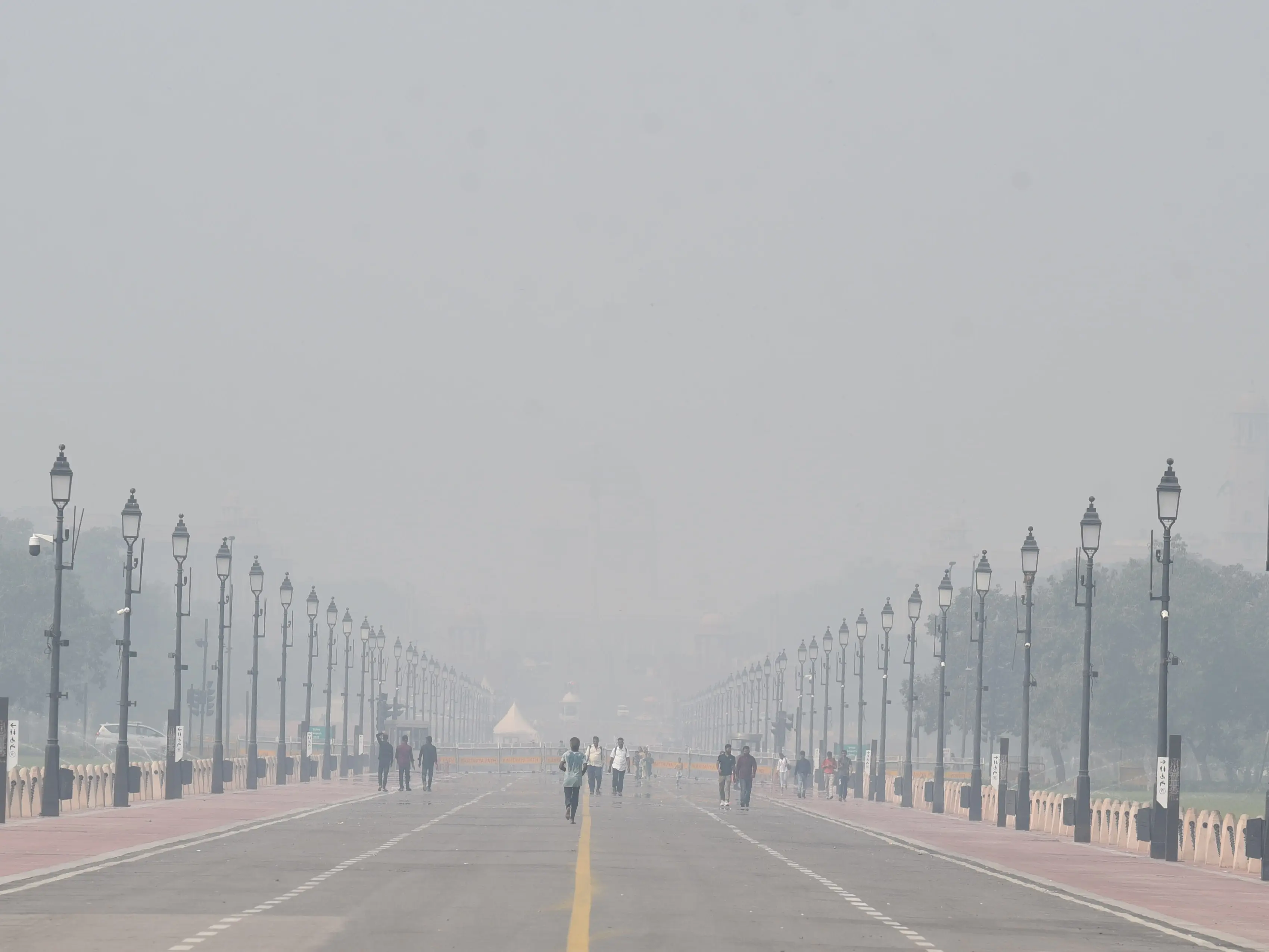
A view of Kartavya Path, covered in smog as the Air Quality Index (AQI) deteriorates, in New Delhi Photograph: (ANI)
Delhi's AQI hits 'severe' levels, with several areas of the national capital recording extreme pollution post-Diwali. Measures under stage 2 of GRAP enforced
As Diwali celebrations continued across Delhi-NCR, the capital woke up to hazardous air quality on Tuesday (October 21) morning. The Air Quality Index (AQI) surged into the ‘severe’ category, reaching an alarming 451—almost double the national safety threshold. Several parts of Delhi, including Noida and Gurgaon, recorded AQI levels of 407 and 402, respectively, while the majority of monitoring stations indicated 'red zone' conditions, marking the air as ‘very poor’ or worse. The pollution levels worsened overnight, following the Diwali festivities, which had already seen air quality deteriorate to the ‘very poor’ category. Areas like Punjabi Bagh topped the charts with an AQI of 999, the highest possible reading, while Narayana registered 611. Other hotspots like Rohini and Anand Vihar reached 500, with Central Delhi seeing 409, and Noida at 392.
Also Read: Delhi Diwali fires break previous records: Firefighters spend festival night fighting over 400 fires
The India Meteorological Department (IMD) forecasted partly cloudy skies for the morning, but the air quality remained dangerously unhealthy. Data from the Decision Support System (DSS) indicated that vehicles contributed to about 15.6% of the pollution, with industries and other local sources accounting for 23.3%. In response to the deteriorating air quality, the Commission for Air Quality Management (CAQM) activated Stage II of the Graded Response Action Plan (GRAP), which includes banning dust-producing construction activities, limiting diesel generator use, and enhancing road cleaning. If pollution levels continue to rise, Stage III could be triggered, imposing even stricter measures.
Earlier this month, the Supreme Court had allowed green firecrackers for a limited time, from 6-7 am and 8-10 pm on Diwali night. However, the aftermath suggests these restrictions weren’t fully enforced, as 36 out of 38 monitoring stations reported ‘very poor’ to ‘severe’ air quality levels. The AQI scale measures air quality as follows: 0-50 (Good), 51-100 (Satisfactory), 101-200 (Moderate), 201-300 (Poor), 301-400 (Very Poor), and 401-500 (Severe).

