
&imwidth=800&imheight=600&format=webp&quality=medium "‘A spectacular performance’: PM Modi shares glimpses of Bagurumba dance during his two-day Assam visit — WATCH")
Prime Minister Narendra Modi on Sunday shared glimpses of a vibrant Bagurumba dance performance held in Assam's Guwahati, calling it a 'spectacular' display of the culture and tradition of the state. In a post on his social media platform on X, PM Modi wrote, "A spectacular Bagurumba dance performance in Guwahati!"
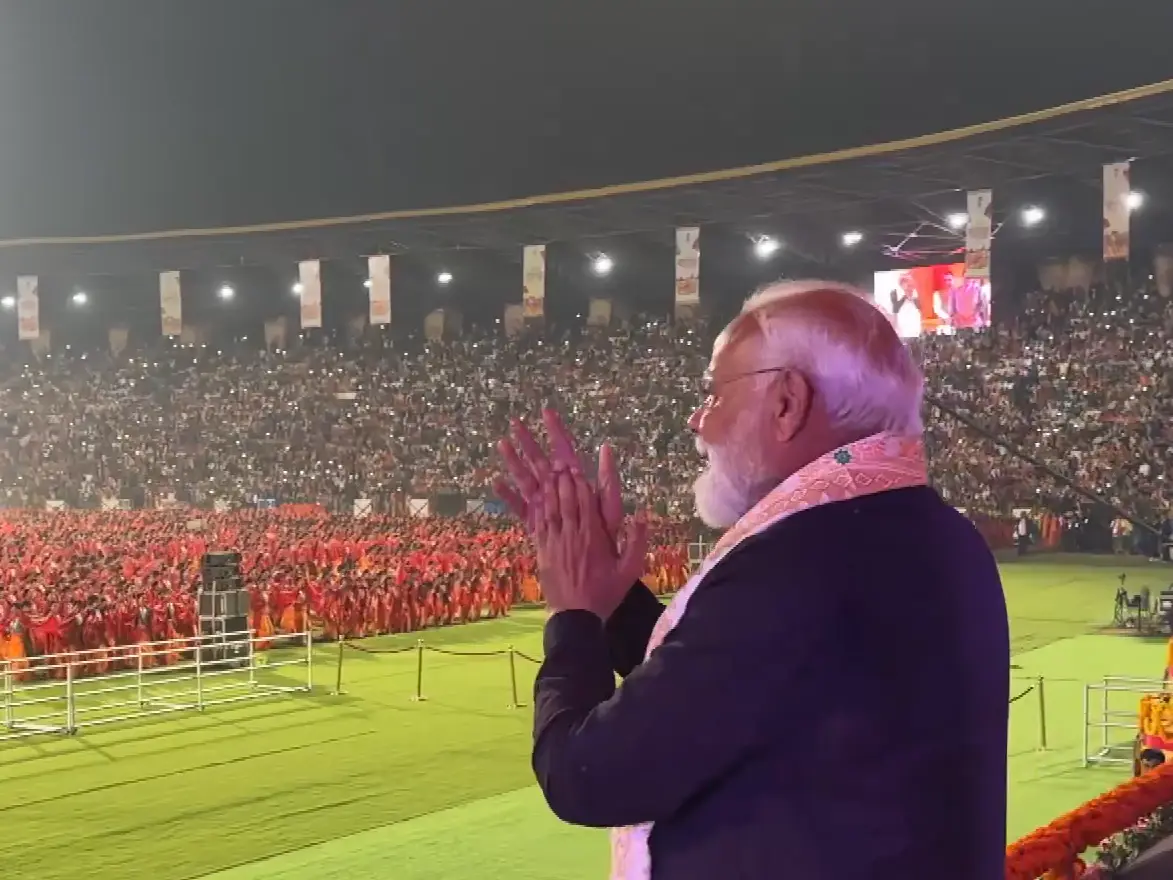
The video shared on X shows a packed stadium in Guwahati, with thousands of visitors gathered to witness the traditional dance form from Assam. The performers, all women, are seen dressed in red attire, moving in perfect synchrony, creating a scene more captivating and attractive. The sea of red costumes, combined with coordinated movements, has added to the grandeur of the event, making the performance energetic.
The video concludes with PM Modi applauding and clapping for the performers, acknowledging their effort and the cultural significance of the dance. The event comes as PM Modi is in Assam for two days visit. He arrived in Guwahati on Saturday and witnessed the Bodo folk dance 'Bagurumba', with over 10,000 artistes participating in the event at the Arjun Bhogeswar Baruah Stadium in the Sarusajai area of the city.

What is Bagurumba?
Bagurumba is a traditional folk dance of the Bodo community, often referred to as the 'butterfly dance', dedicated to nature. Bodo women wear the traditional Dokhona with a Jwmgra (shoulder scarf) and Aronai (traditional muffler) during the dance. The best part of it is that the chosen colors inspired by nature—green, yellow, and red.
The dance features gentle music paired with rhythmic movements that mirror the fluttering of a butterfly. The accompanying music includes the indigenous Kham, a traditional drum crafted from wood and animal skin. Other instruments used are the Sifung (bamboo flute), Serja (a bowed string instrument), Jotha (cymbals), along with Jabsring, Gongwna and Tharkha.
Bagurumba is traditionally performed during Bwisagu, the Bodo community’s New Year festival. The dance is dedicated to Bathou, the Bodo deity symbolised by the Sizu plant. Passed down through generations, the form has evolved, with each generation adding its own nuances. In modern times, Bagurumba is occasionally performed even without musical accompaniment.

