

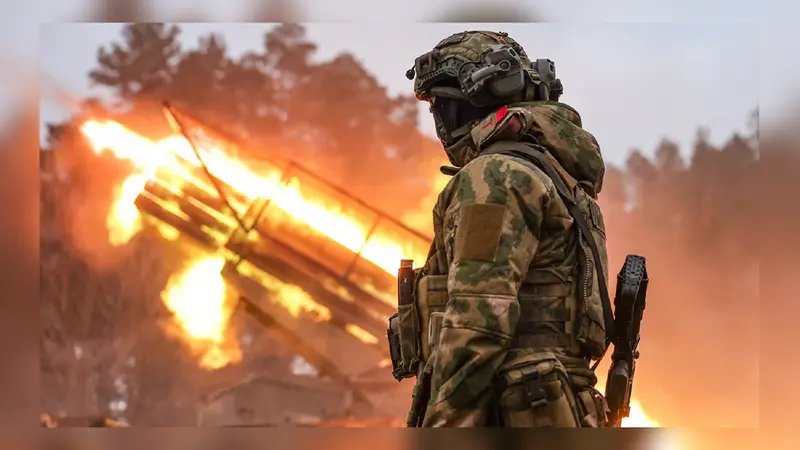
The Russia-Ukraine War has seen drones become extremely important weapons on the battlefield.... for both sides. A new report has now thrown light on how Beijing is helping Moscow sustain its large-scale aerial warfare...
Meanwhile, Russia has expressed willingness for restarting Ukraine talks after US President Donald Trump's envoys visited Kyiv and Moscow in a new push for peace talks.
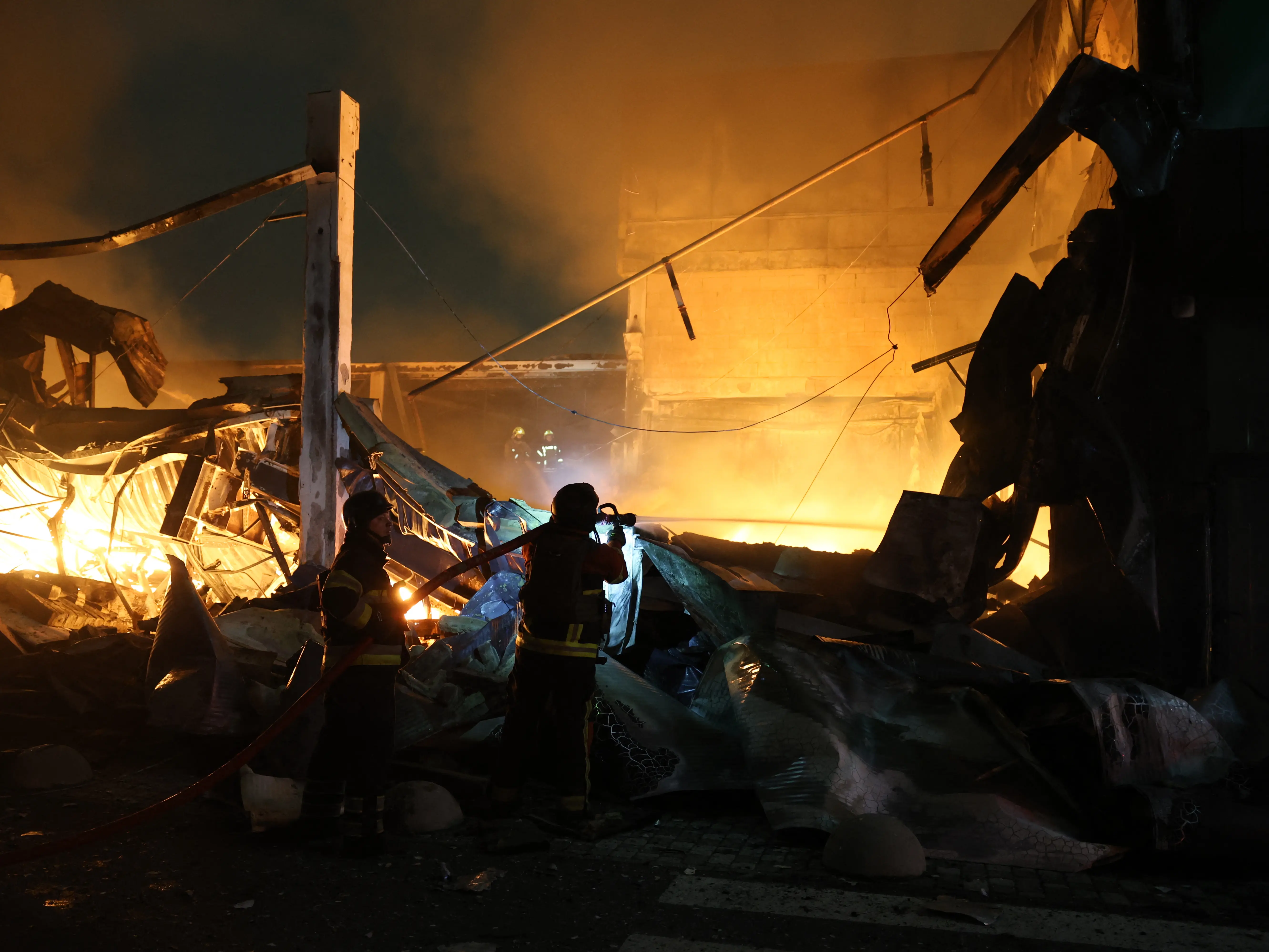
In the latest from the battlefield, Ukraine reported a Russian drone strike at a shopping mall in Zaporizhia.
Visuals showed firefighters trying to extinguish a large blaze in the aftermath of the attack, which did not result in any casualties.
On the other hand, Russia claimed that one person was killed whereas four others were injured in an Ukrainian drone attack on a residential building in the country's Perm region.
According to a joint investigation by the Telegraph and Politico, a Chinese state-owned firm named Jilin Chemical Fibre Group supplied at least 46 tonnes of carbon-fibre chemical to a Russian firm this year.
Trending Stories
&imwidth=180&imheight=135&format=webp&quality=medium)
Viral video shows cross falling on Colombia priest, no official confirmation | WATCH
&imwidth=180&imheight=135&format=webp&quality=medium)
Shikhar Mohan earns maiden India A call-up, replaces KL Rahul
&imwidth=180&imheight=135&format=webp&quality=medium)
AI slop or smart strategy? South African author Coral Hart defends Her 370 AI- assisted books in 20 months
&imwidth=180&imheight=135&format=webp&quality=medium)
Two BrahMos missiles on Tejas, triple the range and 100% indigenisation, says former BrahMos CEO
&imwidth=180&imheight=135&format=webp&quality=medium)
India-China face-off continues near Arunachal’s Taksing, reveals ITBP chief in first official confirmation of tensions
&imwidth=180&imheight=135&format=webp&quality=medium)
Ilhan Omar breaks silence over alleged marriage to her brother; Trump thinks it's 'really good answer'
&imwidth=180&imheight=135&format=webp&quality=medium)
Pakistan signs another defence pact even as Makkah Alliance shows no teeth. This time, it's with Qatar, Indonesia, Turkey
&imwidth=180&imheight=135&format=webp&quality=medium)
WATCH: Trump demands Ilhan Omar removal from Congress for 'using fake name to be sworn in'. So what is her real name?
&imwidth=180&imheight=135&format=webp&quality=medium)
Netanyahu dials PM Modi, invites him and Capt Smit Machchhar to light torch on Israel’s Independence Day
&imwidth=180&imheight=135&format=webp&quality=medium)
Christa Pike's failed execution: Tennessee team struggled to insert IV lines, lawyer says
&imwidth=180&imheight=135&format=webp&quality=medium)
Did Neha Bora call for Bangladesh-like GenZ protest, 'anarchy' in India? WION Fact-checks viral claim
&imwidth=180&imheight=135&format=webp&quality=medium)
US midterms 2026: US Supreme Court allows New Hampshire to restrict student IDs for voting
&imwidth=180&imheight=135&format=webp&quality=medium)
A secret code, a midnight escape and 300 deaths: The Russian officer who turned on Putin
&imwidth=180&imheight=135&format=webp&quality=medium)
'Completely insane, never happened': Trump's son-in-law denies allegations of secret dealings with Saudi, UAE
&imwidth=180&imheight=135&format=webp&quality=medium)
Trump ordered to answer questions under oath in BBC defamation lawsuit by December 11
&imwidth=180&imheight=135&format=webp&quality=medium)
Putin says Russia is ready to resume Ukraine-US peace talks but rejects 'short ceasefire' amid deadly attacks
&imwidth=180&imheight=135&format=webp&quality=medium)
Horrific video shows the moment 18-year-old fell to her death from Mexico amusement park ride
&imwidth=180&imheight=135&format=webp&quality=medium)
From Agni-V to Project Kusha: How are India’s indigenous missile systems and defence shield reshaping modern warfare
&imwidth=180&imheight=135&format=webp&quality=medium)
'It's a crime not to see this scene': Tehran puts Trump 'behind bars'
&imwidth=180&imheight=135&format=webp&quality=medium)
What is the ‘heat ray’ weapon? Pete Hegseth reportedly authorises DHS to test it at US-Mexico border
&imwidth=180&imheight=135&format=webp&quality=medium)
Meghan Markle’s father Thomas under investigation over alleged child abuse images: Report
&imwidth=180&imheight=135&format=webp&quality=medium)
SA vs AUS 2nd Test: Temba Bavuma reveals 'Tendulkar inspiration' behind career-best 179
&imwidth=180&imheight=135&format=webp&quality=medium)
China's dancing robot turns violent bodyguard, lifts cars and fights intruders - Watch
&imwidth=180&imheight=135&format=webp&quality=medium)
Watch: India rejects ‘imprecise and unsupported’ references in UN migrant rights report
&imwidth=180&imheight=135&format=webp&quality=medium)
US to get 850 F-35 stealth fighter jets under 10-year Pentagon-Lockheed deal
&imwidth=180&imheight=135&format=webp&quality=medium)
GRAVITAS | Putin fires nuclear-capable hypersonic missiles, Zelensky ready to surrender 25% territory
&im=FitAndFill=(700,400)&imwidth=180&imheight=135&format=webp&quality=medium)
New Friday OTT releases (October 23, 2026): Gajab Raat, Dorothy, Chaar Yaar- Watch these 6 new movies and TV shows on Netflix, Prime Video and more
&im=FitAndFill=(700,400)&imwidth=180&imheight=135&format=webp&quality=medium)
Serbia elections: Nearly 150,000 people take to streets in massive rally against Aleksandar Vucic | In pics
&imwidth=180&imheight=135&format=webp&quality=medium)
BCCI’s CoE cautious over Hardik Pandya’s fitness, sets expected comeback timeline
&imwidth=180&imheight=135&format=webp&quality=medium)
'This is despicable': Amy Acton hits back at Vivek Ramaswamy over Ohio campaign ad featuring her estranged mother
&imwidth=180&imheight=135&format=webp&quality=medium)
First Lady Melania Trump secures ceasefire between Russia, Ukraine in Oleshky: White House
&imwidth=180&imheight=135&format=webp&quality=medium)
Finance influencer dies by suicide in Chennai; father accuses tech CEO, who denies charge
&imwidth=180&imheight=135&format=webp&quality=medium)
'Vivek should keep it up': Trump defends Ramaswamy's controversial campaign ad targeting Amy Acton
&imwidth=180&imheight=135&format=webp&quality=medium)
One man, 8 months of work, and a river dirty again: Why Bittu Tabahi may quit
&imwidth=180&imheight=135&format=webp&quality=medium)
450 villagers in UP rush to take anti-rabies shots after consuming 'charnamrit'
&imwidth=180&imheight=135&format=webp&quality=medium)
US midterms 2026: Elon Musk’s political spending hits $445 million as Republicans battle to retain Senate control
&imwidth=180&imheight=135&format=webp&quality=medium)
ENG vs SL: Harry Brook breaks Shubman Gill’s record for fastest ODI double century
This firm, which is a subsidiary of a Russian state-owned company, used it to produce military-grade carbon fibre which is used for the mass production of Kamikaze drones.
These explosive-laden drones are designed to destroy a specific target in a single, self-sacrificial strike.
This report also claimed that the shipments were disguised as synthetic chemical fibres to avert sanctions.
At present, the Chinese firm in question is not facing any Western sanctions.
Experts caution that the material sent by China might be enough for Russia to build at least thirteen hundred Kamikaze drones.
According to the report, both the US House Select Committee on China and the Ukrainian government have reviewed the documents and determined they are legitimate.
This is crucial, as the US had stated last year that it can impose sanctions to disrupt networks through which Russia procures technology and equipment from abroad to support its war effort.
It is worth noting that US sanctioned two Chinese companies in October 2024 for their involvement in making Russia's long-range Garpiya drone.
As of March this year, Ukraine claimed that Russia has fired over 57,000 Shahed-type drones on its territory.
After the country innovated by producing indigenous interceptor drones designed to shoot down these drones, Russia then turned to jet power.
According to the Ukrainian air force spokesperson, Russian forces fired over twenty-eight hundred jet-powered drones in August itself.
After initially using Iran's Shahed drones, Russia began mass-producing its own versions called Gerans.
Now, its most advanced version- Geran-5 is creating quite a flutter in Ukraine.
It flies more like a low-cost cruise missile.
According to the country's ministry of defence, its speed can touch 600 kilometres per hour, and it can strike targets close to 950 kilometres away, which is much more than its previous variants.
Thus, Ukraine's existing air defence measures are relatively ineffective in intercepting this drone.
While Ukrainian officials say four companies have developed interceptors to shoot down jet-powered drones, they are still in the testing phase.
Earlier in August, Russian President Vladimir Putin appointed a general to head the country's unmanned systems forces, which is its newly established military branch responsible for drone warfare.
Now, the report comes just a week after Chinese President Xi Jinping met Putin on the sidelines of the SCO Summit in Bishkek.
While Xi stated that the prospects of China-Russia ties will be even more brighter, Putin hailed the comprehensive partnership and strategic interaction between the two countries.
Although China has denied providing lethal weapons to any party in the Russia-Ukraine War, the report raises uncomfortable questions for the West, with Xi set to meet Trump in Washington later this month...
Although China may not have troops fighting alongside Russia, its technology and supply chain can still help power Putin's war machine....