Physicists discover how to create elongated hearts in a glass of martini

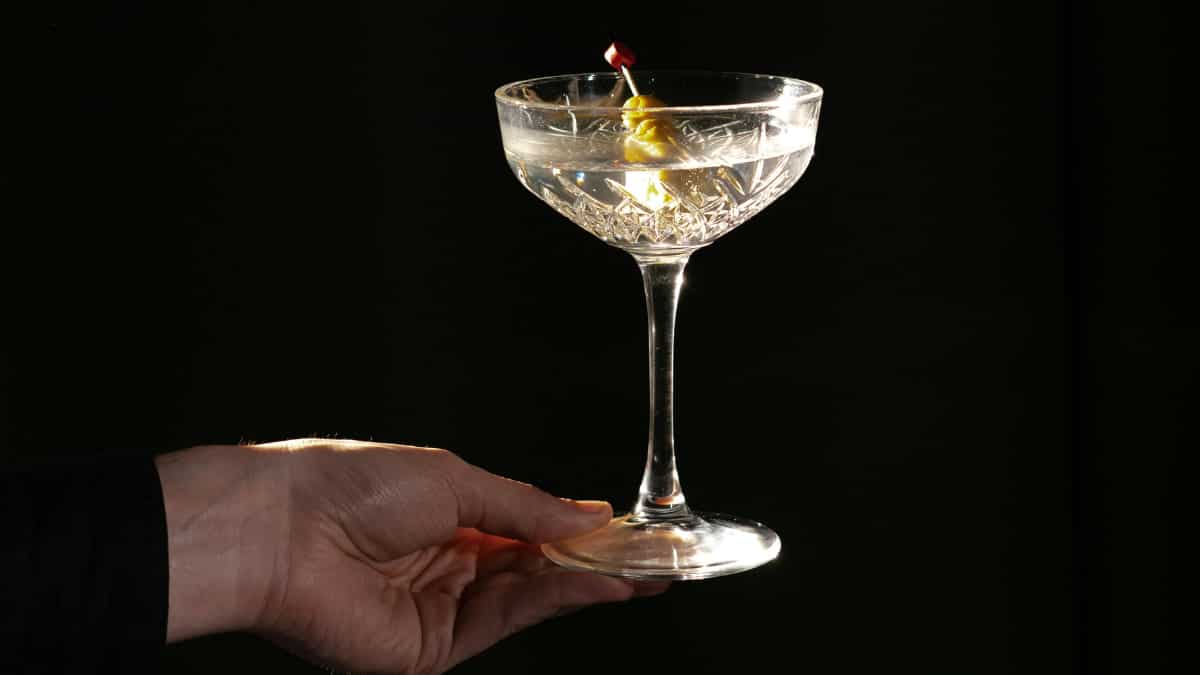
A glass of martini/representative image from Pexels
Next time you sip a martini glass over a date or party, make note of how it was shaken to create those bubbles of succinct intoxication. This is because the physicists have now invented a new way to shake a martini to create a specific pattern in the cocktail that takes on a different shape depending on the physical properties of the drink.
Physicists at Canada's University of Waterloo have found that if one adds lots of syrup while preparing a martini drink, shaking that glass would produce a pattern of vortices resembling elongated hearts when looking into the glass from above.
How did physicists come to this conclusion?
According to a report in the New Scientist, when a physicist named Zhaon Pan from University of Waterloo was traveling abroad, he noted an intriguing game of physics in his glass of martini.
His martini was full of bubbles and he could see them trace a complicated structure of vortices when he shook the glass.
When he repeated the process in the lab with a mixture of water, glycerine and food dye instead of conventional martini cocktail, he noted a pattern.
Pan and his students reportedly mixed liquids with different 'Reynolds number', a measure of physics to denote an imbalance between the particles in a fluid — difference between the speed propelled by their natural flow and slowed momentum due to their viscosity — and came to the following conclusion.
They found that for mixtures with lots of syrup (high Reynolds number), shaking the martini glass created a pattern of vortices resembling elongated hearts.
Also watch |WION Fineprint: Japan wants young people to drink more alcohol
"The first thing that occurred to me when I saw this is that anything that can have a specific pattern must have some theory behind it, there might be a nice combination of physics and maths in this beautiful problem," Mabel Song, also at the University of Waterloo, who collaborated with Pan on a series of stunning photographs of the new phenomenon, which will be presented at the American Physical Society’s Division of Fluid Mechanics conference in Washington DC later this month, said, according to the New Scientist.