The Academy Museum to dedicate first exhibit to animation legend Hayao Miyazaki

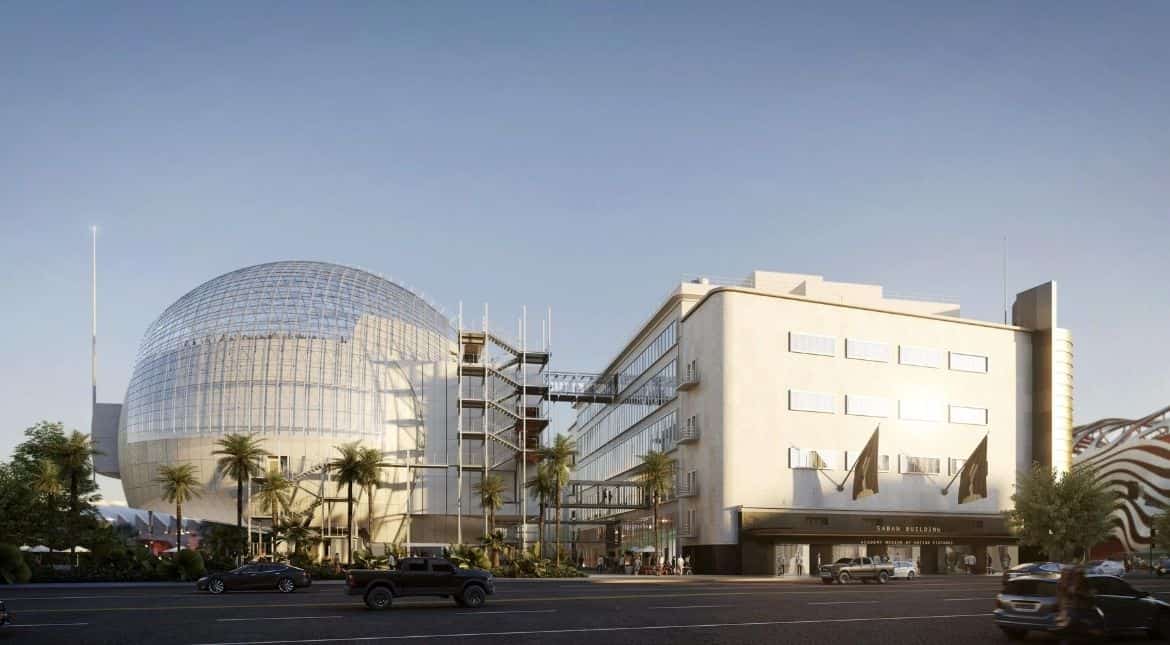
The Academy Museum
The Academy Museum will be going ahead with its launch and at the center will be Oscar-winning animation giant Hayao Miyakazi. The Academy will be open for the public on April 30, 2021.
The Museum was supposed to open on December 14 but it got delayed because of the coronavirus.
The Academy has now provided details for the opening in April.
Hayao Miyakazi is a Japanese icon who co-founded Studio Ghibli in 1985 and the production house has collaborated with Academy Museum exhibitions curator Jessica Niebel and assistant curator J. Raul Guzman to pull it all together in the museum’s Marilyn and Jeffrey Katzenberg Gallery, marking the first North American retrospective ever dedicated to Miyazaki and his prolific body of world-acclaimed work.
With more than 300 objects, the exhibition will explore each of Miyazaki’s animated feature films including ‘My Neighbor Totoro’ (1988) and the Oscar-winning ‘Spirited Away’ (2001).
The museum promises visitors will travel through the filmmaker’s six-decade career through “a dynamic presentation of original imageboards, character designs, storyboards, layouts, backgrounds, posters, and cels, including pieces on public view outside of Japan for the first time, as well as large-scale projections of film clips and immersive environments.”
Divided into seven sections, the exhibition is designed as a journey. To enter, visitors follow 4-year-old Mei, a character from ‘My Neighbor Totoro’, into the Tree Tunnel gallery, a transitional space that leads into Miyazaki’s enchanted worlds. Emerging from the Tree Tunnel, visitors will find themselves in the Creating Characters gallery, which features a multi-screen installation of short clips of Miyazaki’s main protagonists. This section highlights how his characters are developed from concept to creation and features original character-design drawings from My Neighbor Totoro, Kiki’s Delivery Service (1989) and Princess Mononoke (1997). Some of these artworks have never before been seen outside of Japan.
In the following Making Of gallery, visitors will learn more about Miyazaki’s long-term collaboration with the late Isao Takahata, with whom he founded Studio Ghibli. Visitors will view Miyazaki’s early works as an animator, including the groundbreaking TV series Heidi, Girl of the Alps, and his first feature film, Lupin the 3rd: The Castle of Cagliostro (1979). A special tribute to Nausicaä of the Valley of the Wind (1984) emphasizes the importance of this beloved film for Miyazaki’s career and the founding of Studio Ghibli.
From there, visitors move into the Creating Worlds gallery, a space that evokes Miyazaki’s fantastical worlds. The gallery will capture the contrast between beautiful, natural, and peaceful environments and the industrial settings dominated by labor and technology that are also often featured in Miyazaki’s movies.
Visitors can view concept sketches and backgrounds that offer insight into Miyazaki’s imagination, including an original imageboard from his first Ghibli film Castle in the Sky (1986) and artworks from subsequent Ghibli features. Other areas explore Miyazaki’s fascination with complex vertical structures, such as the famous bathhouse in Spirited Away, and the underwater world of Ponyo (2008), as well as Miyazaki’s interest in flying, as seen in Porco Rosso (1992) and The Wind Rises (2013).
As a highlight of the exhibition, visitors can enjoy a moment of quiet contemplation in the Sky View installation, addressing another frequent motif in Miyazaki’s films: the desire to slow down, reflect, and dream.
Next, the Transformations gallery affords visitors the opportunity to explore the astonishing metamorphoses often experienced by both characters and settings in Miyazaki’s films. In Howl’s Moving Castle (2004), for example, the protagonists go through physical transformations that reflect their emotional states, while in other films, such as Nausicaä of the Valley of the Wind, he creates mysterious and imaginative ways to visualize the changes that humans impose on the natural world.
Visitors then enter the exhibition’s final gallery Magical Forest through its Mother Tree installation. Standing at the threshold between dream and reality, colossal, mystical trees in many of Miyazaki’s films represent a connection or gateway to another world.
After passing through the installation, visitors encounter the spirits of the forest, such as the playful Kodama from Princess Mononoke, through an array of storyboards and mixed media. Visitors exit through another transitional corridor, which guides them back into the main museum.
An elaborate 256-page catalog featuring highlights of what visitors will see when traversing the wide-ranging exhibit will be available at the time of opening.

