Red Sea shipping woes wreak havoc on Chinese exporters: Report

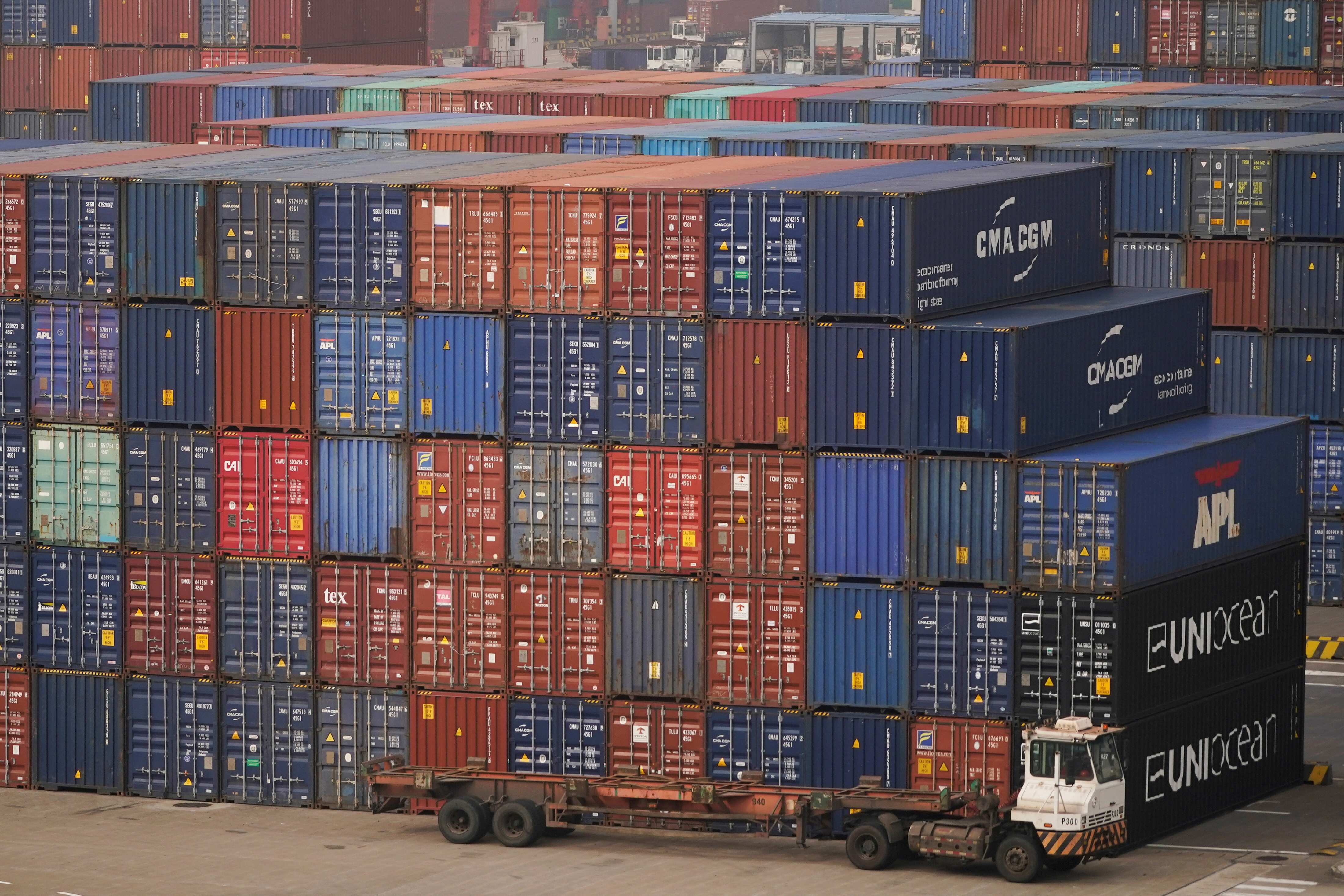
A truck is seen next to containers at the Yangshan Deep Water Port
The escalating disruptions to shipping in the Red Sea are casting a dark shadow over Chinese exporters, inflicting financial strain and logistical challenges.
This is based on a Reuters report.
Han Changming, a Chinese businessman whose trading company Fuzhou Han Changming International Trade Co Ltd faces severe setbacks, revealed that the cost of shipping a container to Europe surged from $3,000 to $7,000 due to heightened attacks on shipping by Yemen's Houthi movement.
"The disruptions have wiped out our already thin profits," Reuters quoted Han as saying.
The impact extends beyond increased shipping costs, with delays and higher insurance premiums taking a toll on businesses.
The Red Sea disruptions are unravelling the intricacies of China's export-dependent economy, highlighting vulnerabilities to supply chain interruptions and external shocks.
Premier Li Qiang, speaking at the World Economic Forum, stressed the importance of maintaining "stable and smooth" global supply chains. While not explicitly mentioning the Red Sea, the remarks highlighted the broader challenges faced by China.
The disruptions are compelling some companies, including US-based BDI Furniture, to diversify production locations, reducing reliance on China amid geopolitical tensions.
The fear now is that a prolonged crisis might encourage a "near-shoring" strategy, prompting businesses to shift production closer to home.
The vulnerability of China's export economy is highlighted by the potential shift of companies opting for alternative manufacturing locations.
Reuters cited Marco Castelli, the founder of IC Trade, who warned, "If it's permanent, then the whole mechanism will be readjusted. Some (companies) may also consider moving more production to India."
The disruptions add to the challenges faced by China's struggling economy, grappling with a property crisis, weak consumer demand, a shrinking population, and sluggish global growth.
As companies like Fuzhou Han Changming International Trade Co Ltd navigate delays and cost increases, there is a growing concern about the broader economic impact.
Han Changming, whose business heavily relies on Europe and Africa trade, is pleading with suppliers and customers to share additional costs to sustain his company.
The disruptions come at a critical time, with many companies already managing logistics challenges ahead of the Lunar New Year in February. The festive season leads to a mass exodus of nearly 300 million migrant workers and temporary factory closures, creating a rush to ship goods in the weeks preceding the holiday.
Mike Sagan, Vice President for supply chains and operations at KidKraft, highlighted the impact, stating, "A lot of suppliers, they're screaming about money today." The disruptions, coupled with concerns about payment delays, are reverberating across the supply chain.
Rerouting vessels from the Red Sea, primarily via the Suez Canal, to circumvent disruptions can add significant delays, impacting global container capacity and disrupting supply chains.
The prolonged shipping schedules could result in delays for goods expected to reach Western shelves in April or May. Some logistics companies are already reporting container shortages at Ningbo-Zhoushan port, one of the world's busiest.
The Suez Canal is a vital route for China's westward shipments, handling around 60 per cent of its exports to Europe. The broader impact on China's export landscape and the interconnected global supply chain remains a significant concern.
The far-reaching consequences of the Red Sea shipping woes extend beyond financial strains to manufacturers reconsidering their future strategies.
Yang Bingben, whose company manufactures industrial-use valves, revealed a substantial reduction in orders amid soaring freight costs. "The impact is huge," said Yang, emphasizing the potential loss.
The uncertainty in trade conditions poses a particularly acute challenge for companies relying on just-in-time deliveries or frequent stock changes.
Gerhard Flatz, Managing Director of premium sportswear manufacturer KTC, voiced concern that companies with shrinking margins might face closure, compounding the economic impact.
(With inputs from Reuters)