Over 24.8 crore people escaped multidimensional poverty in India in 9 years: NITI Aayog Report

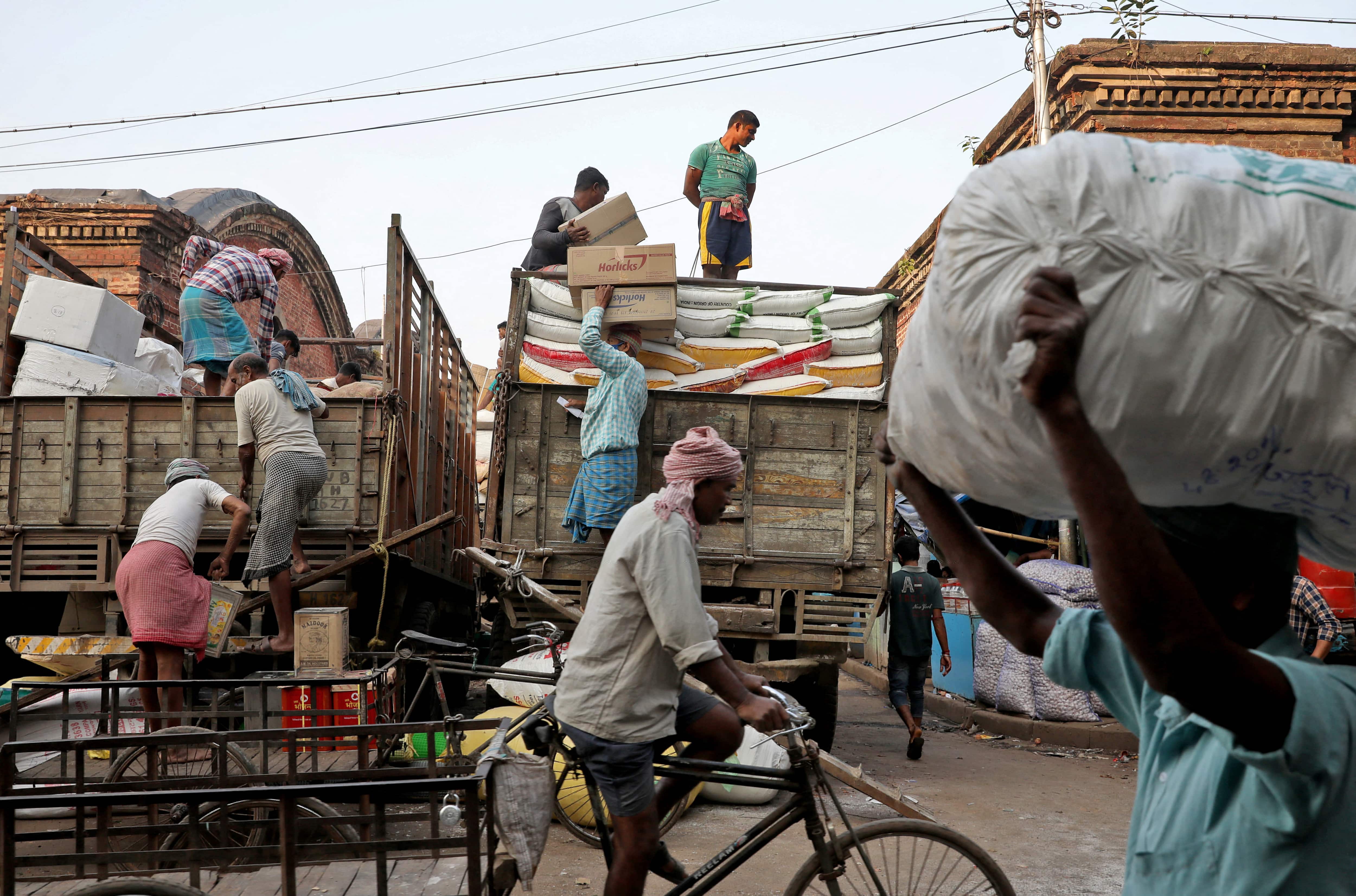
Labourers load consumer goods onto supply trucks at a wholesale market in Kolkata
A recent NITI Aayog report has unveiled a positive trend in India's fight against multidimensional poverty.
Over 24.8 crore people have moved out of multidimensional poverty in the span of nine years, from 2013-14 to 2022-23.
This reduction, representing a decline from 29.17 per cent to 11.28 per cent, underscores the successful efforts in addressing deprivations across health, education, and standard of living.
Prime Minister Narendra Modi, in response to the report, expressed optimism, stating, "Very encouraging, reflecting our commitment towards furthering inclusive growth and focusing on transformative changes to our economy."
The NITI discussion paper outlines that the national multidimensional poverty index (MPI) measures simultaneous deprivations across 12 indicators aligned with sustainable development goals.
These indicators include nutrition, child and adolescent mortality, maternal health, years of schooling, school attendance, cooking fuel, sanitation, drinking water, electricity, housing, assets, and bank accounts.
Uttar Pradesh leads the states, with 5.94 crore people escaping poverty, followed by Bihar at 3.77 crore and Madhya Pradesh at 2.30 crore.
The report indicates an annual escape rate of 2.75 crore people from multidimensional poverty, demonstrating a consistent positive trend.
NITI Aayog CEO BVR Subrahmanyam emphasised the government's goal to bring multidimensional poverty below 1 per cent, highlighting ongoing efforts in that direction.
The report suggests that India is on track to reach single-digit poverty levels in 2024.
The pace of decline in the poverty headcount ratio has notably increased between 2015-16 to 2019-21, demonstrating a 10.66 per cent annual rate of decline compared to 7.69 per cent in the preceding period.
Poorer states are experiencing a faster decline in poverty, indicating a reduction in disparities. Additionally, the report anticipates India achieving Sustainable Development Goals (SDGs) 1.2, aiming to reduce multidimensional poverty by at least half, ahead of the 2030 target.
Despite these positive trends, the report identifies areas of continued deprivation.
Cooking fuel and housing remain the highest contributors to deprivation, while child and adolescent mortality, electricity, and bank account indicators maintain the lowest deprivation levels.
The report credits government initiatives like Poshan Abhiyan and Anemia Mukt Bharat for significantly improving healthcare access, contributing to the decrease in deprivation.
The targeted public distribution system, covering 81.35 crore beneficiaries, has also played a crucial role in reducing poverty.
(With inputs from PTI)