India's retail inflation slips to 3-month low, yet rate cuts unlikely amid lingering concerns

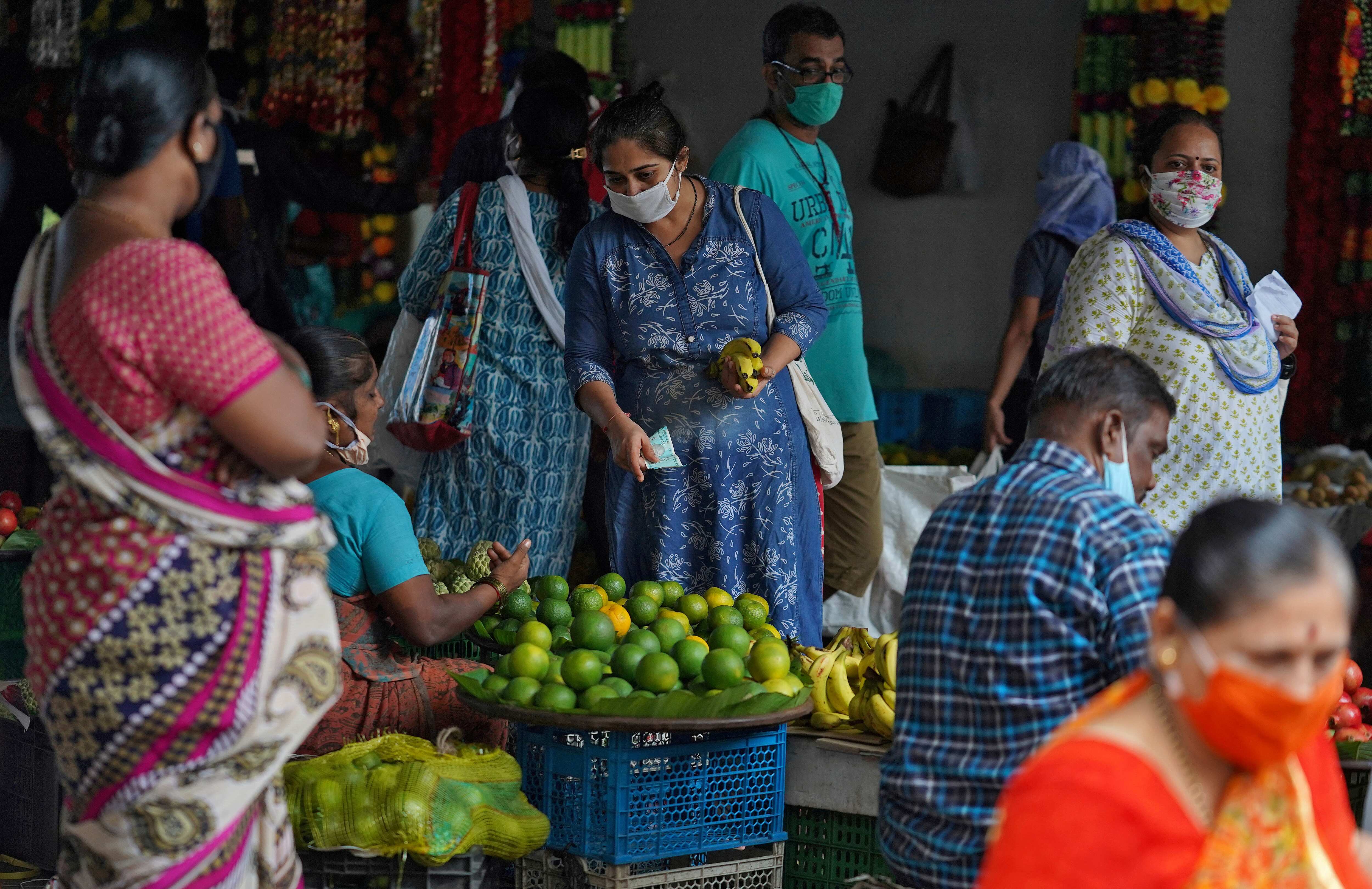
A woman wearing a protective face mask buys fruit in a market
India's retail inflation dipped to a three-month low of 5.10 per cent in January, fueled by slower price increases in certain food items, according to recent data.
While this decline aligns with economists' forecasts, the Reserve Bank of India (RBI) is expected to maintain its cautious stance on interest rates, considering inflation remains above its target rate.
"The CPI inflation came in slightly softer than our expectations," Reuters quoted Upasna Bhardwaj, chief economist at Kotak Mahindra Bank as saying.
However, she emphasised uncertainties surrounding food inflation, which are likely to keep the central bank vigilant in the near term.
Food inflation, a significant component of the overall consumer price basket, registered a notable decrease in January, standing at 8.30 per cent compared to 9.53 per cent in December.
Prices of cereals and vegetables, in particular, witnessed moderation, offering a glimmer of hope for easing inflationary pressures.
Despite these improvements, concerns persist over volatile food prices, driven by factors such as climate vagaries and supply shocks.
Gaura Sen Gupta, an economist at IDFC First Bank, noted the persistent weakness in housing inflation, juxtaposed with robust urban demand.
India's economic resilience has been evident, with growth outpacing expectations in recent quarters.
The economy expanded by 7.6 per cent in the July-September quarter, surpassing earlier projections.
Despite this growth momentum, the RBI remains cautious, citing ongoing challenges posed by food price shocks and geopolitical tensions.
In response to inflationary pressures, India has implemented measures such as lowering stock limits for certain commodities and imposing export bans to stabilise prices.
Economists anticipate that these initiatives, coupled with moderating food prices, could provide relief from inflationary pressures in the coming months.
Shilan Shah, deputy chief emerging markets economist at Capital Economics, expressed optimism, suggesting that rate cuts might become a consideration in the latter half of the year.
(With inputs from Reuters)