Deadly earthquakes leave Venezuela facing a massive economic recovery

&imwidth=600&imheight=450&format=webp&quality=medium "Deadly earthquakes leave Venezuela facing a massive economic recovery")
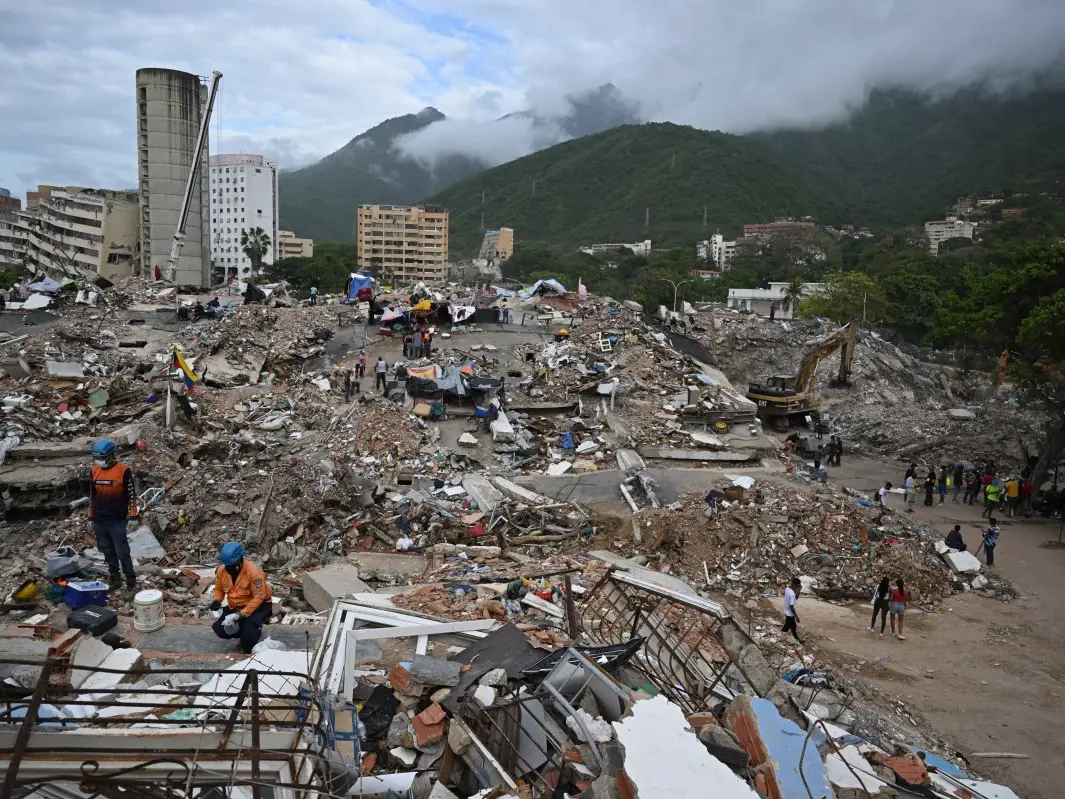
Rescuers search through the rubble of collapsed apartment buildings in Caraballeda, La Guaira state, Venezuela, on July 12, 2026, following twin earthquakes that struck the region. Photograph: (AFP)
Economists warn that the impact extends well beyond damaged buildings. Trade, transportation, supply chains, employment and consumer spending are all expected to suffer, creating long-term economic uncertainty for one of Venezuela's key coastal commercial hubs.
Nearly two weeks after twin earthquakes struck Venezuela's Caribbean coast, the focus is shifting from rescue to recovery.
The quakes devastated the coastal city of La Guaira, claiming more than 4,000 lives and leaving nearly 17,000 people injured. Once a popular beach destination for residents of nearby Caracas, the city is now covered in rubble.
Faisuris Alvarez, owner of a beach food stall, spoke to AFP about how 'leaving' is not a choice. 'I’ve got family out there, and they’ve told me to leave, but I say I’m not leaving here because I’ve built everything here and I arrived on this beach nearly eight or nine years ago. I have everything here – my customers, my friends, my house, my stall,' he said.
Also read | Venezuela earthquake: Drone footage shows extent of damage caused by twin quakes
According to the United Nations Office for Disaster Risk Reduction, the disaster has caused an estimated $37 billion in material damage. But beyond the physical destruction, the economic fallout is emerging as the next major challenge.
For thousands of residents, the earthquakes have also wiped out their source of income. Beach vendors, shopkeepers and small business owners are now struggling to survive as customers disappear and commercial activity remains disrupted.
Some businesses that survived the tremors were later looted during the chaotic aftermath, adding to their losses.
Luis Baena, co-owner of Bilight, the company that was looted and then got burnt down, said, 'At 7 am the following day, we were informed that our company, our warehouse, our store – the livelihood of many families – was being looted. Around 60 or 70 families depend on this company.'
Watch | Venezuela's economic recovery hinges on reconstruction
Economists warn that the impact extends well beyond damaged buildings. Trade, transportation, supply chains, employment and consumer spending are all expected to suffer, creating long-term economic uncertainty for one of Venezuela's key coastal commercial hubs.
While some businesses have cautiously reopened, recovery remains slow. Residents say it will take time for customers, tourists and economic activity to return.
Experts argue that reconstruction could help revive the local economy, but only if authorities can mobilise adequate funding, rebuild infrastructure and restore investor confidence.