Budget 2024: India’s Department of Space proposed to receive approx $1.63 billion

India Department of Space budget 2024
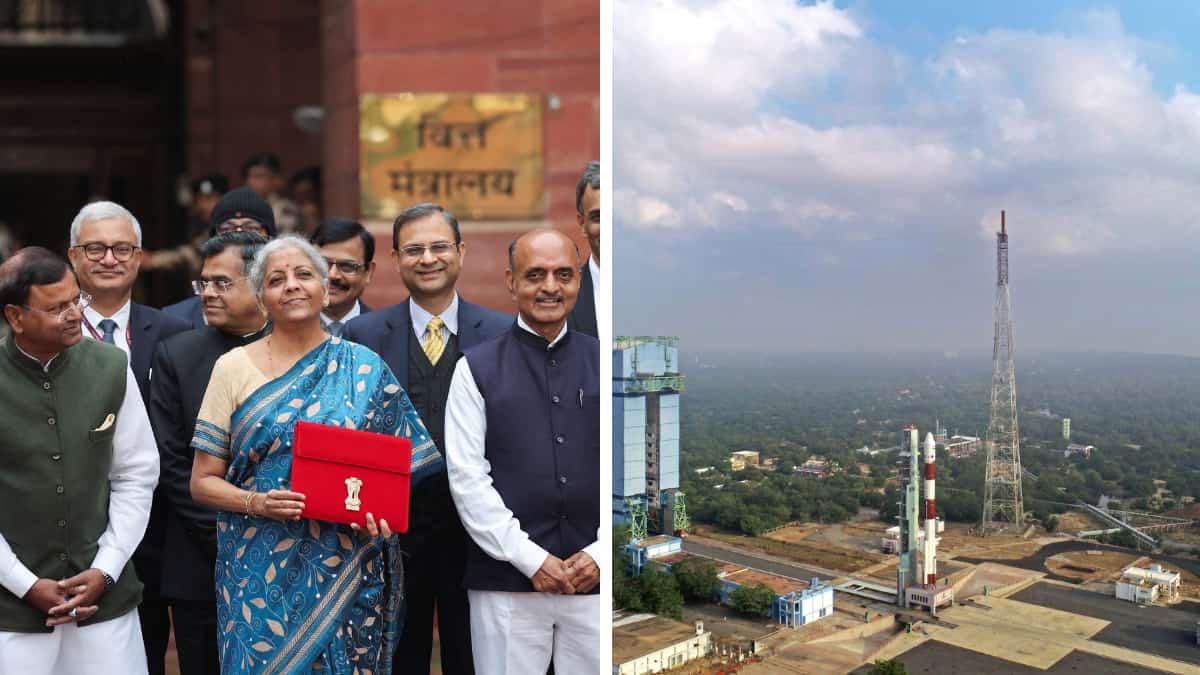
For the year 2024-25, the Indian government has proposed an allocation of around $1.63 billion (Rs 13,042 crore) for the Department of Space (DoS), as revealed in the interim budget. The DoS is an umbrella body, which covers the Indian Space Research Organisation (ISRO), the space sector regulator IN-SPACe (Indian National Space Promotion and Authorization Centre), other related centres, associated academic and research institutions, etc.
As per the data shared in the Demand for Grants document, this proposed budget allocation of Rs 13,042 crorefor 2024-25 is a step up from the revised estimate of $1.33 billion (Rs 11,070 crore) for 2023-24. While this is an increase of 17.8 per cent, it would take considerable time to know how much of this proposed sumwould be allocated eventually.
However, when comparing the proposed budget allocation for 2023-24 (Rs 12,543 croreor approx $1.56 billion)and the proposed allocation for 2024-25 (Rs 13,042 croreor approx $1.63 billion), the hike is barely Rs 500 croreor approximately $62 million, which translates to four per centhike.
It is noteworthy that the government-run Indian space agency ISRO has been assigned significantly challenging technological tasks by Prime Minister Narendra Modi. In October 2023, Prime Minister Modi set a roadmap for ISRO's future endeavours and even stated specific deadlines for these projects.
Setting up a ‘Bharatiya Antariksha Station’ (Indian Space Station) by 2035 and sending the first Indian to the Moon by 2040, are among the targets. Therefore, it raises questions about whether such a modest proposed hike in funding would be adequate to meet the challenges that have been put forth.
ALSO READ |India Budget 2024: ‘Garib, Mahilayen, Yuva, Annadata,’ key takeaways from Sitharaman’s speech
The Department of Space had also been asked to develop a roadmap for Lunar exploration, which would encompass a series of Chandrayaan missions, the development of a Next Generation Launch Vehicle (NGLV), construction of a new launch pad, setting up human-centric laboratories and associated technologies. In addition to this, Prime Minister Modi has also called upon Indian scientists to work towards interplanetary missions such as a Venus orbiter and a Mars lander.
Since 2018, ISRO has been working on executing its maiden human spaceflight mission, under a programme known as 'Gaganyaan'. This is an entirely indigenous effort to ferry Indian astronauts (specially trained Indian Air Force test pilots) to space and bring them back safely. ISRO aims to perform an uncrewed Gaganyaan mission in 2024, another uncrewed mission in 2025 and perform the astronaut mission by early 2026.
ALSO READ |India Interim Budget 2024: This is what is in store for jobs in tourism, infra, and deep tech
Along with routine launch activities and satellite building for India’s own needs, ISRO would also have to carry out research and development on new technologies and components that would enable them to achieve their future goals. On a war footing, ISRO has to also work on increasing the payload carrying capacity of its existing rocket LVM3, while developing new rockets, and reusable rockets for future requirements.
Over the years, ISRO has been gradually outsourcing routine activities such as building rockets and satellites to private firms or public-private entities, thereby ensuring that ISRO’s resources can be better utilised for the core research and development activities that are aimed at scaling up and meeting future requirements.
