Zuma supporters protest ex-South African president's jailing

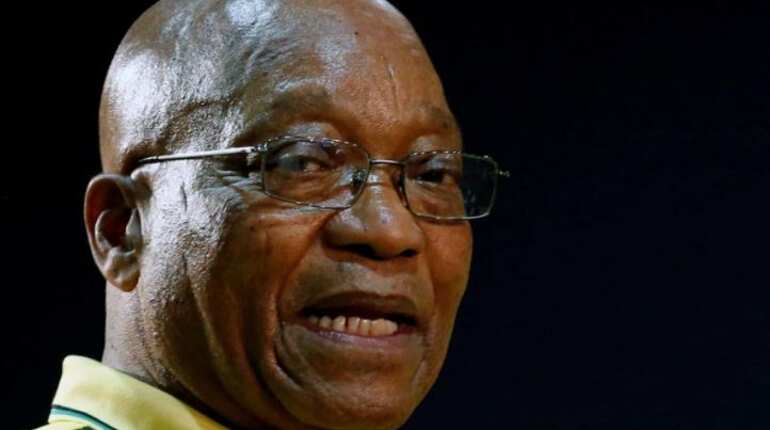
Jacob Zuma
As violent protests raged against former South African President Jacob Zuma's jailing, several trucks were set on fire on a main highway in South Africa on Friday night (local time). This caused closure of one of country's biggest roads.
Police on Saturday (July 10) said they had arrested 28 people.
Protests erupted in parts of Zuma's home province KwaZulu-Natal (KZN) after he handed himself over to the police to serve 15-month jail term for contempt of court.
On Friday, the high court dismissed Zuma's application to have his arrest overturned in a case that has been seen as a test of the post-apartheid nation's rule of law. An hour before the ruling, a Reuters photographer saw a group of protesters shouting "Zuma!" burning tyres and blocking a road.
Zuma's imprisonment has laid bare deep divisions in the governing African National Congress (ANC), as a party faction remains loyal to the former president and has been a potent source of opposition to his successor, Cyril Ramaphosa.
KZN police spokesman Jay Naicker said the 28 arrests had happened since Friday on charges including public violence, burglary, malicious damage to property, and contravention of COVID-19 lockdown regulations.
He said protesters had set alight some trucks near Mooi River, a town on the N3 highway that leads from Durban to Johannesburg, and shops had been looted in Mooi River and eThekwini, the municipality that includes Durban.
Law enforcement officers had been deployed to all districts in the province but there had been no deaths or injuries so far, he added. As of lunchtime, the N3 was closed at Mooi River.
Ramaphosa, whose allies engineered Zuma's ouster in 2018, said in a statement that "criminal elements must be met with the full might of the law".
Zuma was given the jail term for defying an order from the constitutional court to give evidence at an inquiry investigating high-level corruption during his nine years in power.
He denies there was widespread corruption under his leadership but has refused to cooperate with the inquiry that was set up in his final weeks in office.
(With inputs from agencies)