World population day: How rising population density affects living standards

Population
Latest estimates by the United Nations in July has predicted that by 2030, our current 7.6 billion will increase to 8.4 billion
The world is observing World Population Day on Wednesday and it's a well-known fact that it's fighting the population battle which keeps on rising every minute.
According to reports, the global population has grown from 1 billion in 1800 to 7.616 billion in 2018 and latest estimates by the United Nations in July has predicted thatby 2030, our current 7.6 billion will increaseto 8.4 billion.
That figure will further rise to 9.7 billion by 2050, and to a mind-boggling 11.2 billion by 2100.
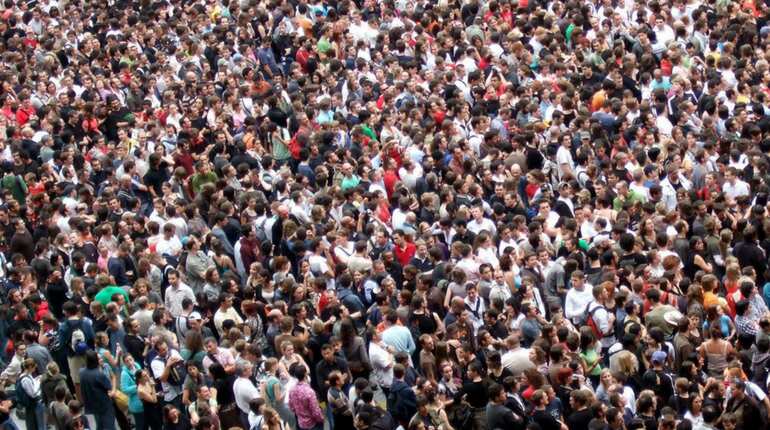
As the population is on the rise so is population density. The population density means individuals living in per square kilometre land of the area. From malls to large scale residential construction to increasing number of vehicles on the road population density has been consistently rising since the decade or so.
The population density greatly affects the living standards of a nation. It also impacts an area's social and economy conditions.
According to reports, Kolkata is one of India's largest and most densely populated cities and it is rapidly growing population now numbers more than 16 million people hence much of Kolkata's population is made up of financially weak people.
According to reports in 2015, India's poorest slums are in Kolkata. The population densityof Kolkata is 24,000 people per square kilometre.
The main cause of the high population density is migration from rural areas into the city in search of work.
People in the overpopulated cities face problems like overcrowding, lack of open space, shortage of clean water and pollution.
Like Kolkata, Mumbai is also suffering from overpopulation problem as people from various areas migrate to Bombay in search of work or various other reason.
In comparison to other states of India, most of the Mumbai suffers from an open space problem the most.
To put the problem in perspective, London reportedly has per capita open space of 50 square meters. Delhi has about 14-15 square metres and Mumbai has less than two square metres.
With higher population densities, congestion also emerges as a problem as more people start to live in a place, problems like overcrowded roads, transport congestion making harder for people to travel by public transport leading to people buying more cars which then leads to further problems like traffic jams and pollutions.
In India, it has 404 people per square kilometre while Greenland has the lowest population density which is 0.023 people per square kilometre.