Who is Julian Assange, a 'cyberpunk' or reckless publisher of classified information?

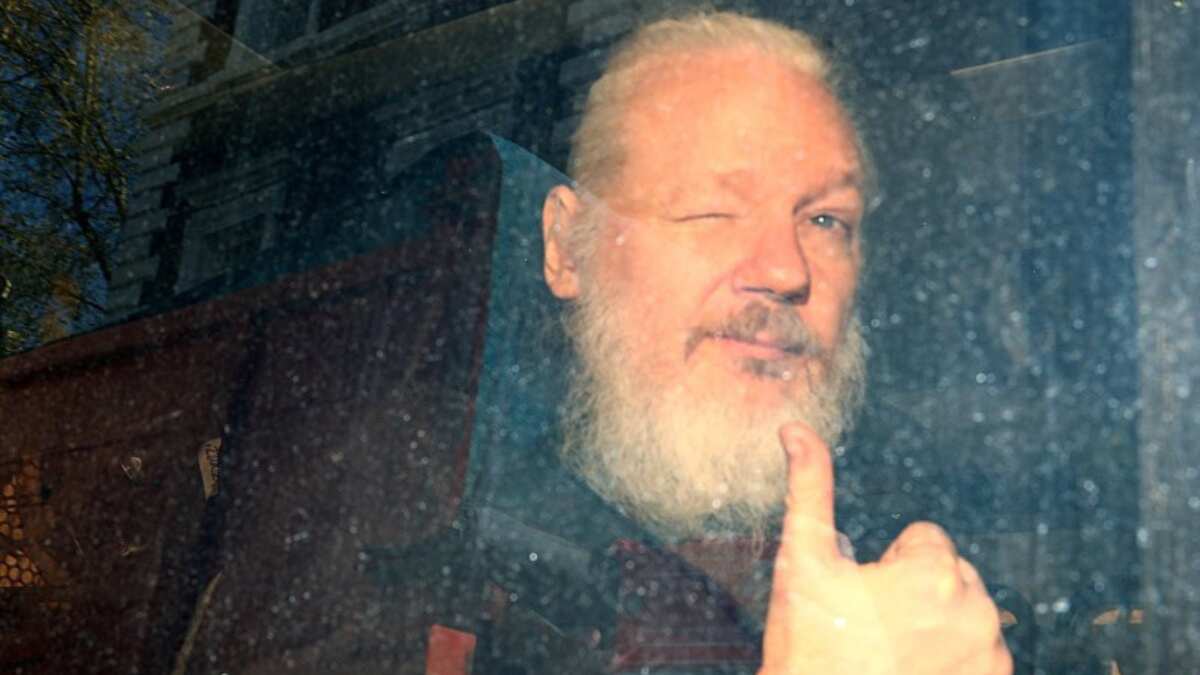
File photo of whistleblower website Wikileaks founder Julian Assange
Julian Assange, who entered a plea deal with the US authorities on Monday (June 24) that allows him to be free, has entered the annals of history as an undisputed champion of free speech. But for many, especially the US intelligentsia whose dirty secrets related to wars in Iraq and Afghanistan was revealed by Assange's Wikileaks in 2010, the 52-year-old Australian is a reckless publisher of information that should stay classified.
The founder of Wikileaks has spent more than a decade either in custody or in asylum inside Ecuador's London embassy while trying to avoid extradition to Sweden, where he was facing sexual assault charges that were later dropped.
Soon after Assange published revelations from classified documents about US military campaigns in Iraq and Afghanistan in 2010, rape allegations in Sweden followed, which he denied. Assange in past has described himself as a cyberpunk and even contributed to a book by the same name. Cyberpunksoppose the purported militarisation of cyberspace and call for freer access to information, some of which often stays classifiedto the general public.
Assange was in Britain when Sweden sought his extradition in the sexual assault case in 2012.
Ecuador granted him political asylum and let him into its London embassy where he lived from 2012 to 2019. He kept on releasing statements from asylum until March 2018 whilst he still had access to the internet. In these statements released via WikiLeaks, Assange controversially advocated for "holding the national security sector to account" and described the quality of discourse as the "limit of civilisation".
In academia, Assange's emphasis on the contagious nature of courage during moments of revolution gained currency and redefined the syllabi of liberal arts papers in universities across the world.
"Tiananmen Square is so heavily policed in China because it's a congregation point where courage can spread like a contagion," Assange was quoted as saying by the French newspaper Le Monde in December 2010.
Also watch |WikiLeaks founder Julian Assange to plead guilty in espionage act case in US court
His stay in the Ecuadorian embassy ended after a new government in Quito handed him over to the British police in April 2019. He was arrested for violating bail and jailed.
The Swedish prosecutors dropped their sexual assault investigation in 2019. But the US authorities charged him with violating the US Espionage Act and sought extradition.
On June 25, 2024, WikiLeaks announced that its founder was free and that he was flying home to Australia.
Assange is scheduled to appear in court in the Northern Mariana Islands, a US possession in the Pacific, where he will plead guilty to a single count of conspiracy to obtain and disseminate national defence information in exchange for his freedom, ending the years-long legal drama.