What's next after COVID-19? Global heating may cause 'potentially devastating' future pandemics

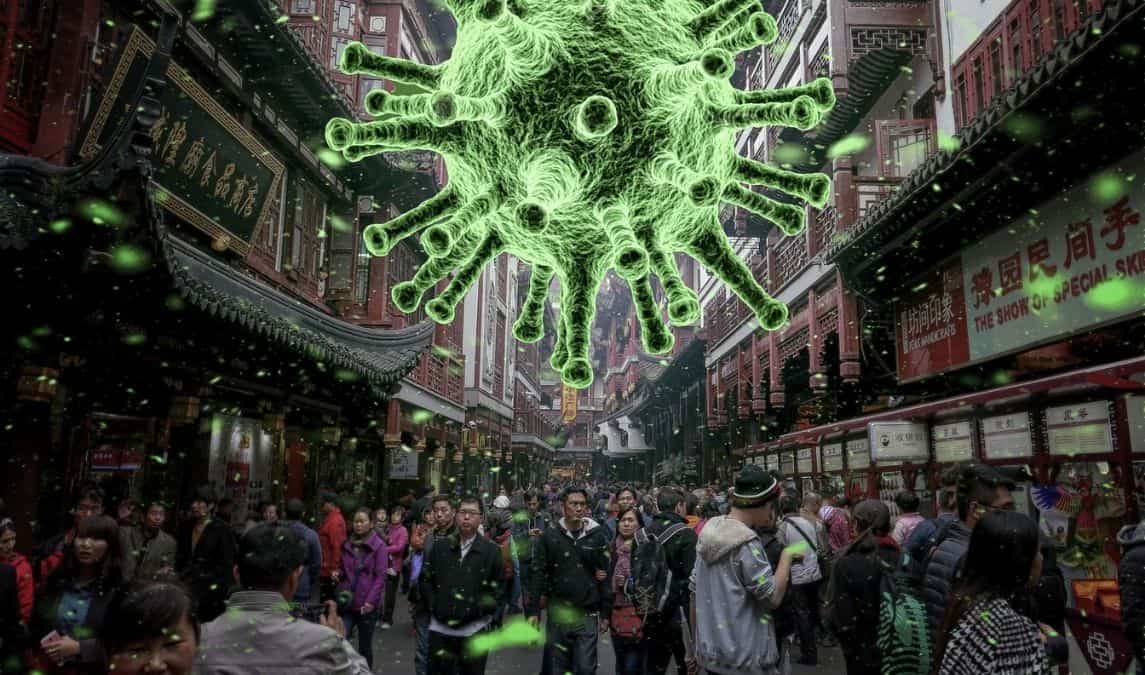
Future pandemics
The coronavirus (COVID-19) pandemic is not even close to being over. It wreaked havoc across the world since it was first identified in late 2019 in China. The world is not at all ready for another pandemic? However, researchers have issued a warning about future pandemics.
A recent study, published in Nature journal stated that because of climate change, thousands of new and emerging viruses might jump from animals to humans in the coming years.
The peer-reviewed paper titled "Climate change increases cross-species viral transmission risk" predicts that if global temperatures rise by 2 Celsius, at least 15,000 new cross-species viral transmissions to happen by 2070.
The study explained that due to fast environmental change, several species will move from one place to another to track shifting climates.
In the process of shifting they will bring their parasites and pathogens into new environments, which poses threat to global health, particularly given several "recent epidemics and pandemics of viruses that originate in wildlife".
Part of the study read: "Climate and land use change will produce novel opportunities for viral sharing among previously geographically-isolated species of wildlife."
Gregory Albery, who is an expert in disease ecology at Georgetown University and also the co-author of the paper, said that "as the world changes, the face of disease will change too."
"This work provides more incontrovertible evidence that the coming decades will not only be hotter, but sicker. We have demonstrated a novel and potentially devastating mechanism for disease emergence that could threaten the health of animals in the future and will likely have ramifications for us, too," he added.
Albery further added that said that climate change is "shaking ecosystems to their core". The process is apparently causing alarming interactions between species that are prone to spreading viruses.
Albery said, "This is happing, it’s not preventable even in the best case climate change scenarios and we need to put measures in place to build health infrastructure to protect animal and human populations."
Will be able to stop it? Well, Albery noted that even drastic action to address the temperature rise now won't be enough to halt the risks.
WATCH |If you are unvaccinated for COVID, you are a threat to those who're jabbed
The mass movement of species will lead to encountering among species, may for the first time. The process might create unique opportunities for viruses to transmit.
As per the study, areas of high human population density in Asia and Africa are highlighted by the authors as it will drive the novel cross-species transmission of their viruses an estimated 4,000 times.
"We predict that species will aggregate in new combinations at high elevations, in biodiversity hotspots, and in areas of high human population density in Asia and Africa, driving the novel cross-species transmission of their viruses an estimated 4,000 times," the study mentions.
As per the study, bats account for the majority of novel viral sharing because of their unique dispersal capacity.
They are likely to share viruses along evolutionary pathways that will facilitate future emergence in humans.
WATCH WION LIVE HERE