What is the United Nations General Assembly and what are its functions and responsibilities?

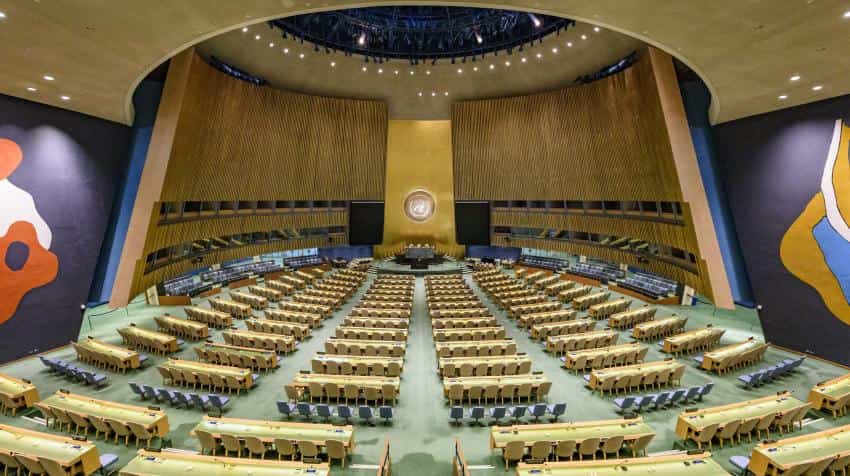
United Nations General Assembly
The United Nations General Assembly convened for its 76th session on Tuesday, as the COVID-19 continues to rock the world.
Every year, diplomats and international leaders gather in New York City, the headquarters of the United Nations, to review the year's agenda and work toward solutions to global issues.
The United Nations General Assembly (UNGA) is the Organization's main policy-making body.
It provides a unique platform for multilateral discussion of the complete spectrum of international issues covered by the United Nations Charter. It is composed of all UN Member States.
Each of the United Nations' 193 member states has an equal vote.
What is the United Nations General Assembly?
The United Nations General Assembly (UNGA) is the UN's main decision-making body, and it serves as a forum for multilateral deliberations on some of the world's most sensitive problems, such as peace and security.
In January 1946, 51 world leaders gathered in London to discuss world problems, including Clement Attlee, the United Kingdom's postwar prime minister, and Prince Fahd of Saudi Arabia.
Many of the problems debated in the inaugural session, such as refugee rights, nuclear disarmament, and peacekeeping, are still on the table today.
What does the General Assembly do?
The General Assembly's responsibilities include choosing the secretary general (on the 15-member Security Council's proposal), electing non-permanent members of the Security Council and other UN organisations, and approving the UN budget.
The assembly's responsibilities are defined under the UN Charter as discussing, debating, and making recommendations on issues of international peace and security.
Up to seven months before the assembly, member states start putting together the agenda.
The list of issues is gradually reduced down, culminating in a final vote that officially establishes the assembly's agenda.
(With inputs from agencies)