What is the 'super blood blue moon'

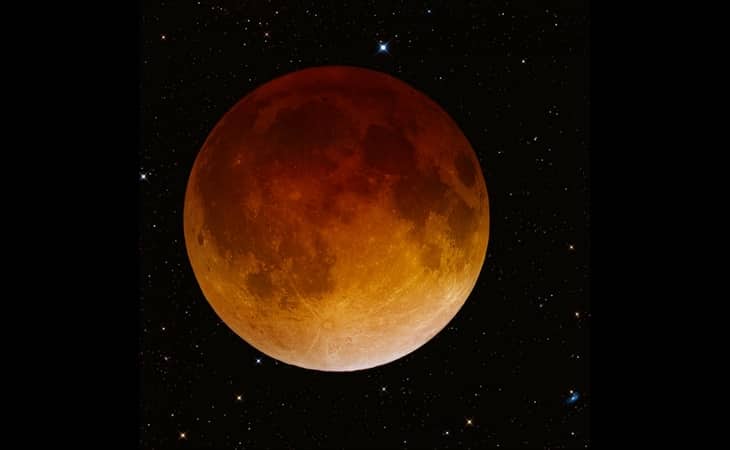
The 'super blue blood moon' - as it has been termed - is something rather unusual because a total lunar eclipse will occur with the blue moon, or second full moon of the month, which will also be a supermoon
On January 31, a total lunar eclipse will occur with a blue moon, known as a Super Blue Blood Moon - which will take place for the first time in 150 years.
So what is this 'super blue blood moon' anyway?
The 'super blue blood moon' - as it has been termed - is something rather unusual because a total lunar eclipse will occur with the blue moon, or second full moon of the month, which will also be a supermoon.
 Stages of the January 31, 2018 'super blue blood moon' (Others)
Let's break it down to make it slightly more understandable.
When the moon is at or near the closest point in its Earth's orbit and appears about 11%-14% larger and about 30% brighter than full moons that occur at the farthest point in the moon's orbit it is called a supermoon.
This will be the third in a series of “supermoons.”
This time, it will also be a bluemoon as it will be the second full moon of the month.
Ablue moon is the second full moon in a calendar month. Usually, months have only one full moon, but occasionally a second one sneaks in. Full moons are separated by 29 days so it is possible to fit two full moons in a single month. This happens every two and a half years, on average.
The last blue moon occurred in July 2015 and in 2018, we'll experience two of them, a phenomena that won't happen for another 19 years. The second blue moon is slated to occur in late March.
Because of the way the light filters through the atmosphere during an eclipse, blue light is bounced away from the moon, while the red light is reflected.The eclipsed moon’s reddish colour earned it the nickname blood moon, making this rare celestial event "a super blue blood moon eclipse."
The rare sight will be seen from many countries including India, Russia, Australia, China and Thailand.
The eclipse will last for 3.5 hours, with the total eclipse stretching for 77 minutes. In India, it will start at 5.18pm local time but the total eclipse takes effect at 6.21pm until 7.37pm.