West Asia crisis | Key elements of any ceasefire deal with Lebanon are...: Israel tells US envoys

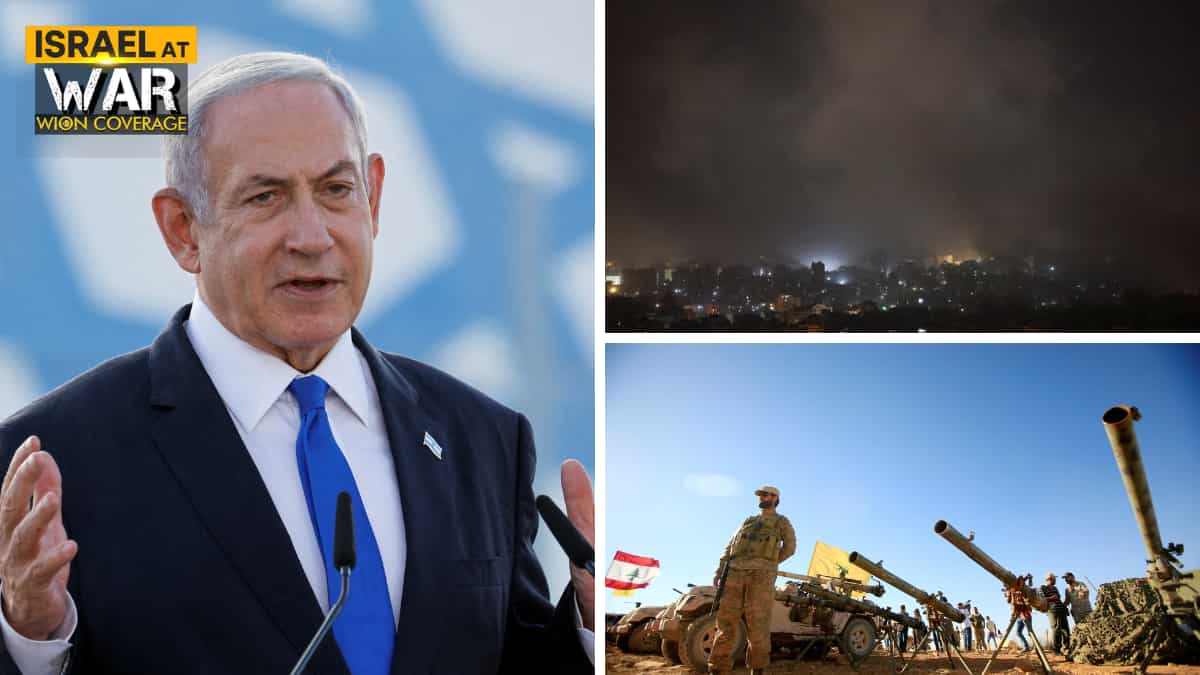
File photo.
Israeli Prime Minister Benjamin Netanyahu told US envoys on Thursday (Oct 31) that his country'sability to counter threats to its security from Lebanon and return displaced people to the north were key elements of any ceasefire deal with Lebanon.
The conflict between Israel and Iran-aligned Lebanese militant group Hezbollahresumed a year ago when the militant group began firing rockets at Israel in support of Palestinian militants Hamas at the start of the Gaza war.
The conflict in Lebanon has dramatically escalated over the past five weeks, with most of the 2,800 deaths reported by the Lebanese health ministry for the past 12 months occurring in that period.
'The main issue is...'
Israeli Prime Minister Netanyahu presented the key elements of a truce deal with Lebanon after aHezbollah attack on northern Israel's Metula killed five people including an Israeli farmer and four foreign workers, while two more civilians were killed by shrapnel near the town of Kiryat Ata.
"The main issue is ... Israel's ability and determination to enforce the agreement and thwart any threat to its security from Lebanon,"Netanyahu's office cited him as telling USenvoysBrett McGurk and Amos Hochstein.
A report by the news agency Reuters said that McGurk and Hochsteinwere in Israel on a new push to secure ceasefires in both Lebanon and the Gaza Strip.
UNresolution that would end the Israel-Hezbollah conflict
Citing sources, Reuters reported thattalks for Lebanon were centred on a 60-day pause to allow for the implementation of UNSecurity Council (UNSC) Resolution 1701, which would entail Hezbollah withdrawing its armed presence from south of the Litani River.
The UNSCadopted resolution 1701 in 2006 to keep peace on the border between Lebanon and Israel.
On Thursday, US Secretary of State Antony Blinken told reporters,"On Lebanon. Let me just say that we are working very hard and making progress on reaching understandings of what would be required for the effective implementation of UNSecurity Council Resolution 1701. This would be the basis of a diplomatic resolution to the crisis."
"It's important to make sure we have clarity, both from Lebanon and from Israel, about what would be required under 1701 to get its effective implementation," Blinken added.
"The withdrawal of Hezbollah forces from the border, the deployment of the Lebanese armed forces, the authorities under which they'd be acting, an appropriate enforcement mechanism," Blinken further said and pointed out that good progress was made on those understandings.
Latest from West Asia crisis
In the latest news from the West Asia crisis, Israel said on Friday that it carried outair strikes on Beirut'ssouthern suburbs, the first such strikes there in nearly a week.
Also watch | Lebanon PM hopes for ceasefire with Israel
Three explosions followed by clouds of smoke rang out in at least three locations in the city's suburbs after the Israeli army ordered several buildings in Hezbollah's stronghold to evacuate.
"I can tell you that based on my recent trip to the region, the work that's ongoing right now, we have made good progress on those understandings," Blinken added.
(With inputs from agencies)