Venezuela: President Maduro faces uphill battle in highly consequential presidential polls

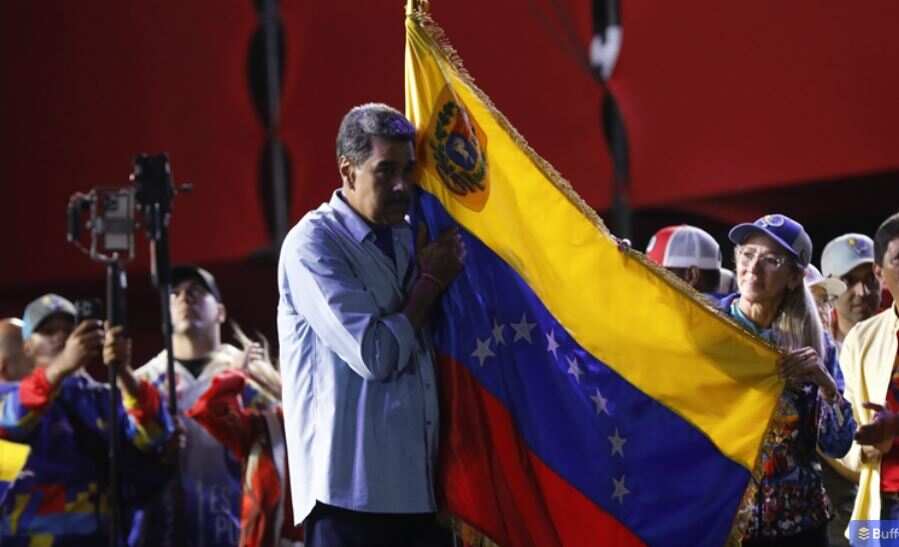
President Maduro is seeking a third term in the office
Venezuelans are lining in queues on Sunday (Jul 28) as the country goes to a highly consequential presidential election. President Nicolas Maduro is in for an uphill task to defeat the opposition coalition, the Democratic Unitary Platform. “I’m doing this for my children and my grandchildren,” one voter, Amelia Perez, was quoted as saying by CNN.
President Maduro is seeking a third term in office, with the past two terms marred with allegations of violent repression and a glaring botch up of the once-flourishing economy.
The oil-rich nation was once the fifth-largest economy in Latin America but its economy has shrunk over the last decade.
Nations like the US, as well as European Union, have imposed crippling sanctions on the country, but those have failed to topple the Maduro regime. Under his watch, almost 8 million people have fled the nation amid shortages of vital goods and soaring inflation.
Minor irregularities
The opposition initially reported minor irregularities but the polling was going smoothly in most of the country.
There are concerns that the Maduro regime may not allow free and fair elections. Previous polls were also marred with allegations of rigging, which the government vehemently denied. However, members of the opposition coalition were present at each polling station to ensure no breach was allowed to happen.
A team of election observers is also on the ground, including one from the Carter Center – a non-profit organization set up by former US President Jimmy Carter.
Watch:Venezuela Elections 2024: All eyes are on Venezuela elections
Opposition has urged the country's military, which has supported the Maduro regime in the past, to respect the results.
Latin American leaders, including Brazilian President Luiz Inácio Lula da Silva, have also called on the Venezuelan leader to step down if he loses in the elections.
“The military is absolutely key. But I must also say that the military is very hermetic, [and] it is very difficult to access information about what it is thinking,” Laura Cristina Dib, the Venezuela Program Director of Venezuela Programme at the Washington Office on Latin America (WOLA), was quoted as saying by CNN.
(With inputs from agencies)