US loses 23,000 jobs in July as labour market slowdown deepens

&imwidth=600&imheight=450&format=webp&quality=medium "US loses 23,000 jobs in July as labour market slowdown deepens")
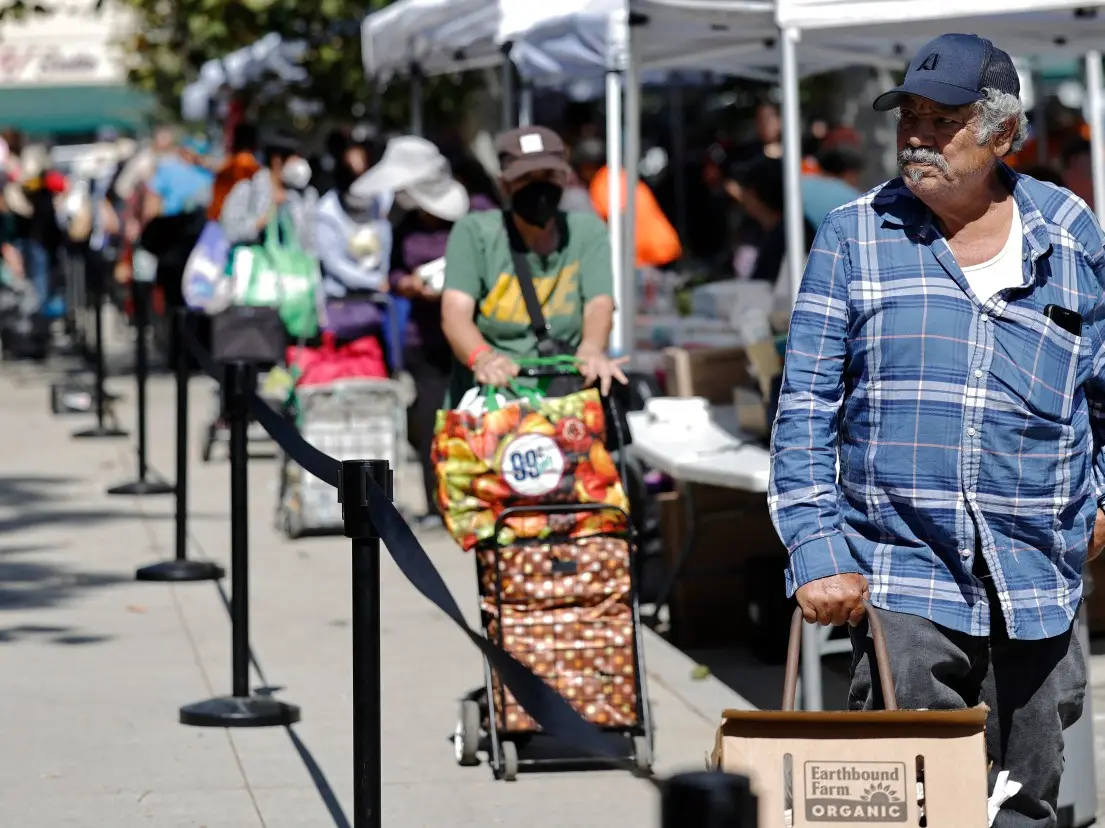
People walk after receiving food from volunteers with Pasadena Community Job Center at the Mano a Mano Pantry food distribution program on July 10, 2026 in Pasadena, California. Photograph: (AFP)
The US economy lost 23,000 jobs in July after major downward revisions to May and June, signalling a weakening labour market and slowing growth.
The US economy just lost 23,000 jobs in July 2026, missing the projection of adding 83,000 new jobs for the month. According to data from the Bureau of Labour Statistics, July's net loss of 23,000 jobs was not a sudden or one-time fluke caused by a bad month. Instead, the economic slowdown had already taken root in May and June, with the 103,000 vanished jobs from May and June.
The unemployment rate remained steady at 4.1 per cent, down from 4.2 per cent in June. Analysts point out that this is driven by 720,000 people leaving the workforce. July’s job losses were concentrated in local government education, with 50,000 jobs lost, and retail, which lost 19,000. The private sector, however, gained 30,000 jobs, with growth focused once again in healthcare.
Market experts describe the current climate as a "no hire, no fire" labour market, where employers are retaining existing staff due to past pandemic-era shortages but are highly hesitant to expand. Unemployment is a lagging indicator and is a critical indicator of economic crisis. Job losses reduce personal income, forcing households to cut non-essential spending immediately.
The data shows that the US economy is behaving in a stagflationary pattern. The leading indicators like consumer spending show an economy where everyday consumers are tapped out and pessimistic; the yield curve remains volatile in a phase known as a “Bear Steepener”, yet industrial factories and tech infrastructure firms are still running hot, driven by wartime production and defensive positioning rather than a healthy, consumer-driven retail market. While the lagging indicators like jobs, labour force, corporate earnings and capex spending have suddenly turned negative may indicate the long-anticipated slowdown is beginning to appear in hard economic data.