US: Black justices take swipe at each other in affirmative action case

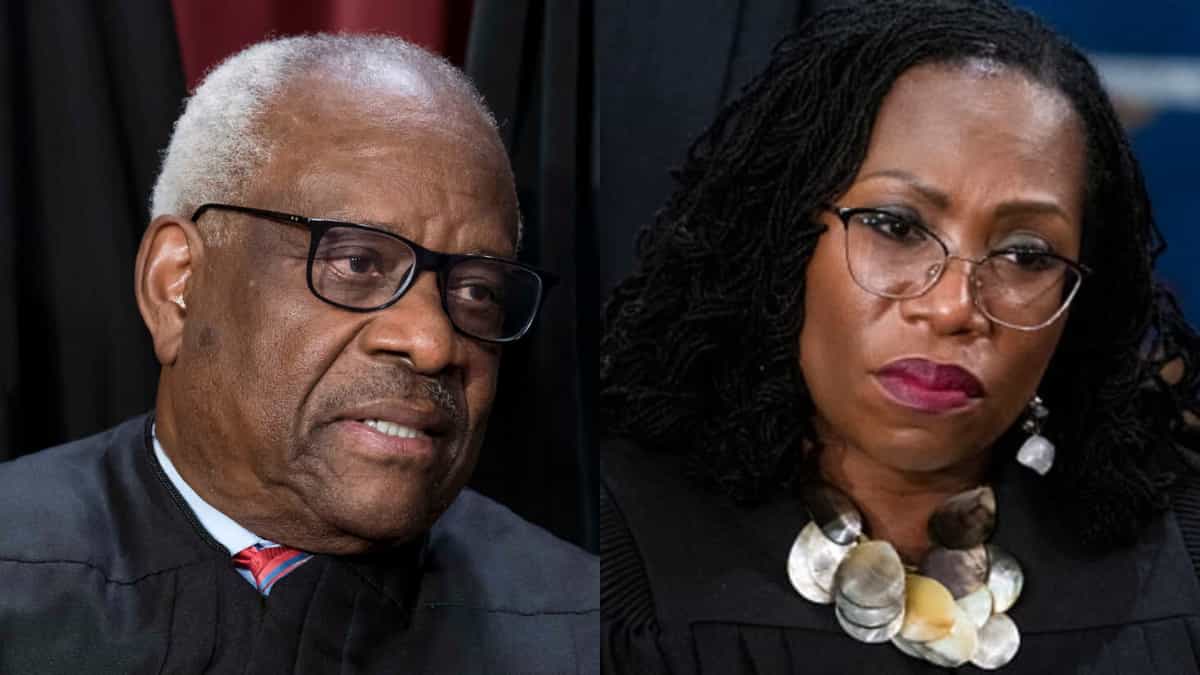
Justices Clarence Thomas (L) and Ketanji Brown (R) did not hold back on their differences
The US Supreme Court on Thursday, in a monumental decision, struck down affirmative action that took race/ethnicity into consideration before granting students admission to premier educational institutions. The decision left the bench divided withtwo ideologically opposed Black justices taking swipe at each other,in unusually sharp language.
Justice Clarence Thomas tore into the arguments posited by liberalJustice Ketanji Brown Jackson, the first Black woman to join the court, who penned her own fiery dissent in the case.
“As she sees things, we are all inexorably trapped in a fundamentally racist society, with the original sin of slavery and the historical subjugation of Black Americans still determining our lives today,” wrote Thomas.
“Worse still, Justice Jackson uses her broad observations about statistical relationships between race and select measures of health, wealth, and well-being to label all blacks as victims,” he wrote, before adding, “Her desire to do so is unfathomable to me.”
Justice Thomas did not appreciate Justice Jackson's continued assessment that Black people were the victims.Justice Jackson’s viewpoint, he said, would keep Black people locked into “a seemingly perpetual inferior caste.”
“Even in the segregated South where I grew up, individuals were not the sum of their skin color," he added.
WATCH |New era in the US education system: Top court bans affirmative action
In response, Justice Jackson denounced the remarks of her colleague as a “prolonged attack”, full of strawmen.
“Justice Thomas ignites too many more straw men to list, or fully extinguish, here. The takeaway is that those who demand that no one think about race (a classic pink-elephant paradox) refuse to see, much less solve for, the elephant in the room – the race-linked disparities that continue to impede achievement of our great Nation’s full potential," she wrote.
"Justice Thomas is somehow persuaded that these realities have no bearing on a fair assessment of ‘individual achievement'," she continued the criticism,
What happens after the ruling?
After the court ruling, colleges and universities across the US may have to alter their admission process. Apart from making the uptake process 'merit-based', the institutions will have to find new ways to ensure diversity on the campus.
US President has expressed his displeasure at the decision to end affirmative action. He said USA's powerful top court was no longer in step with American norms.
"The court has effectively ended affirmative action in college admissions and I strongly, strongly disagree with the court's decision," he said in remarks broadcast live.
(With inputs from agencies)
WATCH WION LIVE HERE: