UN's World Food Progamme wins Nobel Peace Prize 2020

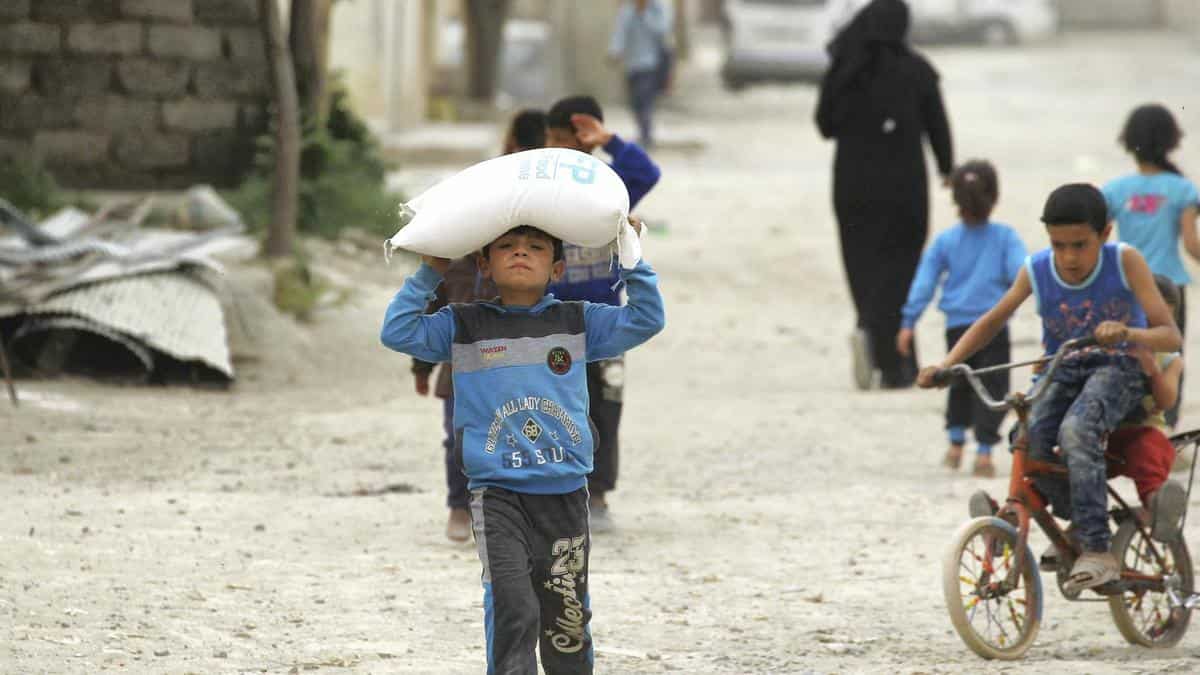
World Food Programme
The World Food Programme (WFP) has been awarded the Nobel Peace Prize 2020 for its efforts to combat hunger and improve conditions for peace in conflict areas.
WFP this year fedmillions of people from Yemen to North Korea, with the coronavirus pandemic seen pushing millions more into hunger.
The WFP was honoured for "its efforts to combat hunger, for its contribution to bettering conditions for peace in conflict-affected areas and for acting as a driving force in efforts to prevent the use of hunger as a weapon of war and conflict," the Nobel committee said on Friday.
"Deepest thanks NobelPrize for honouring the World Food Programme with the 2020 #NobelPeacePrize.This is a powerful reminder to the world that peace and #ZeroHunger go hand-in-hand," WFP postedon Twitter in response to the honour.
"This is humbling," Tomson Phiri told reporters during a regular briefing in Geneva, adding it was "really a proud moment" for the UN organisation.
"One of the beauties of WFP activities is that not only do we provide food for today and tomorrow, but we also are equipping people with the knowledge, the means to sustain themselves for the next day and the days after."
Founded in 1961, the UN organisation helped 97 million people last year, distributing 15 billion rations to people in 88 countries last year.
Whether delivering food by helicopter or on the back of an elephant or a camel, the WFP prides itself on being "the leading humanitarian organisation" in a world where, by its own estimates, some 690 million people -- one in 11 -- go to bed on an empty stomach.
War can be caused by hunger, but hunger is also a consequence of war, with people living in areas of conflict three times more likely to be undernourished than those living in countries at peace, the WFP says.
Yemen, which is living through what the UN has described as the "largest humanitarian crisis in the world", is a stark example of this.
Both the UN and aid agencies have repeatedly raised the alarm over the disastrous consequences of the conflict which has claimed tens of thousands of lives since 2015, when a powerful military coalition led by Saudi Arabia joined the government's fight against Iran-backed Huthi rebels.
The conflict has displaced three million people and pushed the country to the verge of famine.
Two-thirds of Yemen's 30 million people don't know where their next meal will come from, WFP figures show.
The outlook for the world has grown even bleaker this year due to the Covid-19 pandemic, which has led to earnings losses, made food more expensive and disrupted supply chains.
"The coronavirus pandemic has contributed to a strong upsurge in the number of victims of hunger in the world," the Nobel committee said.
"In countries such as Yemen, the Democratic Republic of Congo, Nigeria, South Sudan and Burkina Faso, the combination of violent conflict and the pandemic has led to a dramatic rise in the number of people living on the brink of starvation," it said.
In April, Beasley raised the alarm, saying: "We could be facing multiple famines of biblical proportions within a short few months."
The global recession caused by the virus risks pushing an additional 83 to 132 million people into hunger, the UN said in a report published in mid-July.
This is the 12th time the Peace Prize has gone to the UN, one of its agencies or personalities -- more than any other laureate.
The virus will also affect the Nobel Peace Prize ceremony on December 10 in Oslo, which has been scaled back due to corona restrictions.
The award consists of a gold medal, a diploma and a cheque for 10 million Swedish kronor (950,000 euros, $1.1 million).
(with inputs)