Undersea volcanic activity gives Japan a new island

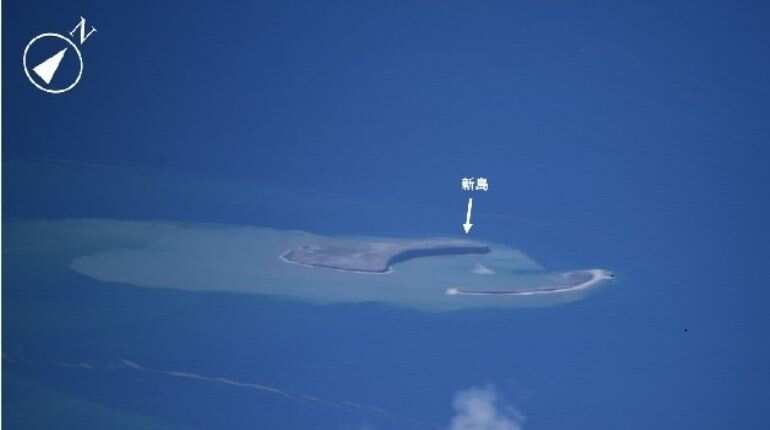
The new island addition to Japanese archipelago
Japan has a new island. A volcanic eruption has given the 6,000 islandsJapan archipelagothis new island.
It is located 1,200 km (745 miles) south of Tokyo in the Pacific Ocean, about 50km south of Minami Ioto, one of the southernmost islands of the Ogasawara group.
Approximately one kilometre in diameter, the new island is crescent-shaped. However, if history suggests that, the island's presence, however, could prove fleeting.
In terms of durability, ash and other fragments will not be able to withstand a constant battering from waves, but lava flows produced by volcanic activity might form a harder shell later on.
In the same area, there have been similar islands formed in 1904, 1914, and 1986, all of which have disappeared.
Weeks of volcanic explosions in 2013 merged Nishinoshima with another island, creating a landmass that, for a short period, looked like Snoopy the cartoon dog.
According to the Mainichi Shimbun newspaper, Japan's meteorological agency has warned that the latest eruption, which began late last week, could continue and that smoke and large chunks of ash could result from it.
It also said the coastguard had found deposits of pumice (volcanic rock) floating on the sea across a wide area after discovering the island from the air following the eruption on Sunday.
New islands in Japan's southwestern reaches may have geopolitical implications if their location allows the country to expand its territory, even just a few hundred metres.
In any case, even if the newest mass of land survives and is incorporated into Japan's territory, its location near Minami Ioto makes changes to the country's territorial waters or exclusive economic zone unlikely, the Mainichi reported.