Two million pilgrims converge on Mecca for hajj

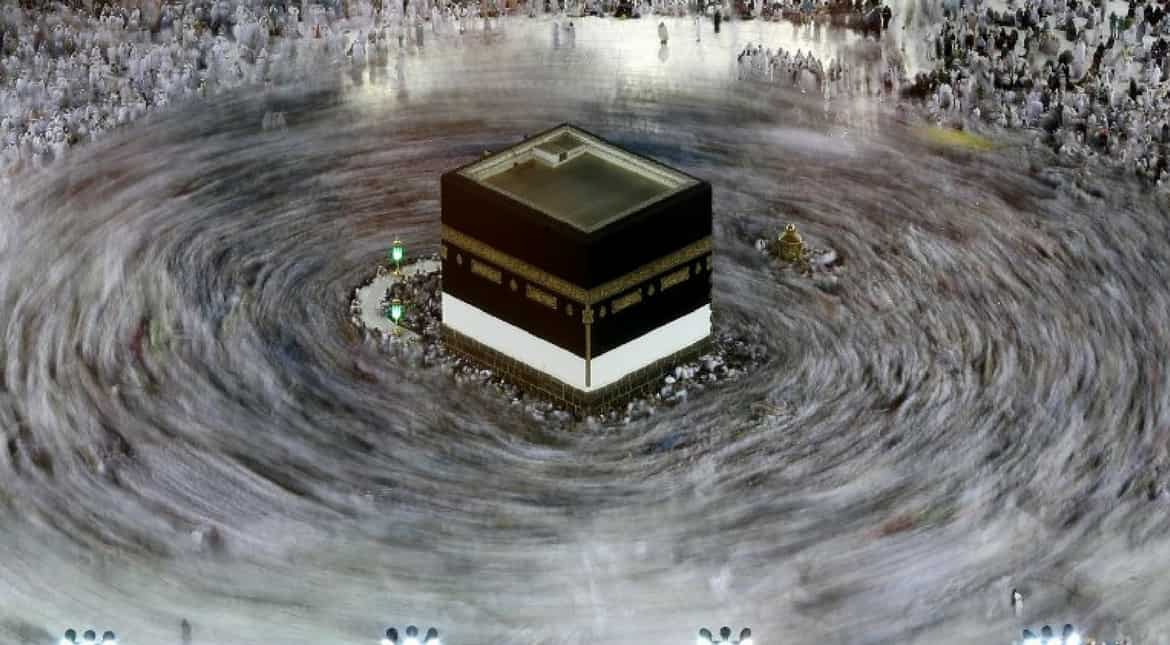
Muslim pilgrims circumambulating the Kaaba, Islam's holiest shrine, at the Grand Mosque in Saudi Arabia's holy city of Mecca
Saudi Arabia relaxes certain restrictions imposed on Hajj pilgrims from Qatar
The Hajj, an annual Islamic pilgrimage to Mecca, in the holiest city for Muslims is due to start from 30th August this year. It is reported that nearly twomillion Muslims from across the globe will be converging on Mecca in Saudi Arabia for the pilgrimage. The Hajj is a religious duty for those who can afford financially and physically.
SaudiArabia, every year, comes out with a number of people they can accommodatefrom every country depending on the number of Muslims in the area.
Indonesia is the world's most populous Muslim nation, and it also provides the largest number of pilgrims for the Hajj. According to this division, Indonesia ranks up highest in terms of Muslims arriving for Hajj in Mecca followed by Pakistan and India in second and third positions.
As reported by AFP, a 47-year-old woman named Eni from Indonesia said, "I'm so excited because many people dream of coming to this place.We feel more religious when we leave this place."
Eni's compatriots throng Jeddah airport 80 kilometers (50 miles) west of Mecca, as tens of thousands of pilgrims pass through the gateway to the Hajj every day. Eni is, however, oblivious to any of this and she continues to study the Koran indistressing heat.
She said, "After my first pilgrimage I felt I wanted to come back to feel myself close to him." She referred to the Prophet Mohammed in this statement before returningto reading the Islam's holy book.
Hajj, according to Islam, is one of the five pillars of the religion.
Abdelmajeed Mohammad Al-Afghani, director of Hajj and Umra (lesser pilgrimage) affairs said to AFP, "This year we expect around two million pilgrims."
In a turn of events, this year will see the return ofpilgrims from Shiite Iran, a regional rival to Sunni powerhouse Saudi Arabia. This, when the entire Gulf region is clouded in a political crisis with an increase in violence in the area because of theIslamic State group jihadists.
Last year, pilgrims from Iran had not attended following a deadlyMecca stampedethat killed nearly 2,300 pilgrims. It was the worst catastrophe in the history of the Hajj, with 464 people from the Islamic Republic of Iran among the dead.
After the disaster, Iran came out againstSaudi Arabia's organisation of the Hajj. It resulted in the severing of diplomatic relations between the two. The two countries have now moved past it.
Speaking on the incident,Slimane Zeghidour, author of "La vie quotidienne à La Mecque: De Mahomet à nos jours" (Daily Life in Mecca from Mohammed to Today) said,"To politicise an event like this does no good."
Forauthor Zeghidour, going on the Hajj takes pilgrims to another level altogether. "The pilgrim has to run, move, and perform several stages" of the ritual.
He said,"It is so physically and mentally demanding that he doesn't have time to think about the crisis in the Gulf. For him this is literature. Many pilgrims come from Asia or Africa, far from the Middle East, and they come to a place where they can try to forget their lives back home."
But this is not the only occasion on which Saudi Arabia has been accused of politicising the Hajj. For almost three months, there ensued a political crisis between Saudi Arabia and Qatar with Saudi boycotting the latter.
In the wake of making amends, Saudi Arabia has announced relaxing certain restrictions for Hajj pilgrims from Qatar.
(WION)