

&imwidth=800&imheight=600&format=webp&quality=medium "Watching war as entertainment: The disturbing case of Sderot Cinema")
An unsettling ritual unfolds almost daily in a small city in southern Israel, located roughly 1 km from the Gaza Strip border. Founded in 1951, the Sedrot town was a transit camp for Jewish immigrants. It now has a population of about 30,000. It is one of the most targeted towns by rockets from the Gaza Strip. Its proximity to the border of Gaza has turned its everyday life into a waiting game between shelter and sirens.
Sderot Cinema
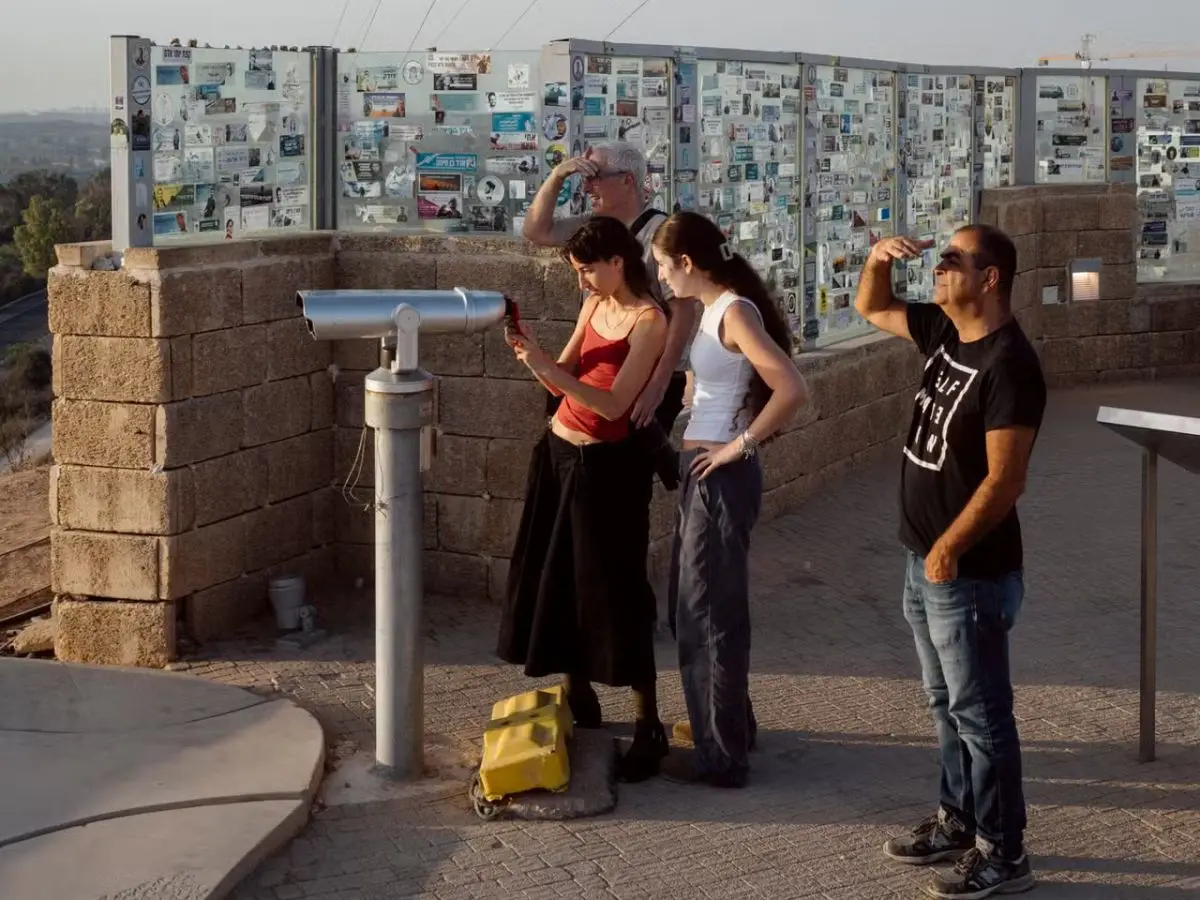
Since the start of the war, every day Israeli's gather at an observation deck to watch the bombings of Gaza. It is the highest point in Sedrot city, called Kobi Hill. One Le Monde reporter, Lucas Minisini, reveals his experience of July 17, speaking to a gentleman on the hilltop. "When I see and hear a missile fall on Gaza, I am happy", said Afik with a weird grin on his face. The phenomenon is more than a decade old. First reported by the Guardian in 2014, the Gaza War. They say that residents bring lawn chairs, snacks, and drinks with them as they sit on hilltops to observe airstrikes. There is a binocular installed, some carry their own, some bring their dogs, with alcohol and other substances. There are shops and cafes nearby, making it the perfect picnic spot with the destructive visuals of the Gaza bombings.
The term “Sedrot Cinema” was coined by a Danish photojournalist, Allan Sorensen, who sarcastically called it so, as “Israelis bringing chairs to hilltop in Sderot to watch latest from Gaza. Clapping when blasts are heard.” The tweet went viral and triggered immense media coverage from Vice to The Guardian, ABC News, Time Magazine and more. Meanwhile, locals pushed back against this, which they called “vilification” of the town by the international media. However, the recent report by the French outlet Le Monde shows that it's an ongoing phenomenon. According to some reports, they gather and enjoy the view for $1.50.
Deeper context
These images and videos have shocked the world. The Israeli media doesn't show the women and children being slaughtered. It's all hostages and Hamas. This media manipulation has diminished basic human kindness and made people incapable of feeling empathy. The spectacle drew international condemnation as it was the display of Palestinian dehumanisation and desensitisation of violence. Critics observed the sadistic pleasure from the pain of one group of people to another group of people who have barely met. The grotesque contrast on one side of celebration and comfort to hunger, death and destruction on the other side is diabolical.
Many argue that the small hill town had been at the forefront of Hamas attacks for so long that watching the strikes relieves them and serves as a vengeful outlet for their anger. This explanation raises more complex, ethical, emotionally charged and morally fraught questions. Does the same situation not apply to Palestinians, too? Sderot has faced rockets, turning them into morally disturbing individuals who derive pleasure from pain. The decades of occupation, historical injustice, and generational trauma in Gaza and the West Bank have created fertile ground for extremist groups like Hamas. Thus creating a spiral of violence. As philosopher and political leaders like Franz Fanon, Nelson Mandela, Malcom x, have echoed the sentiment, "If you treat people like animals, don't be surprised if they start to act like beasts".However, extremism is a mere symptom; it's not the solution. As the act of the Sderot hills is morally corrupt, the Hamas actions are also savage. Palestinians have every right to resist, but the means of resistance have been debated in political philosophy, anti-colonial struggle and international law.

