The Capitals: 'Angels' prevail in Islamabad but after historic blow to Pakistan Army

Pakistan Elections 2024
As Pakistan went to polls earlier this week, jailed former Prime Minister Imran Khan's bid for power was expected to be snuffed out in the country of over 240 million people. At the time of filing The Capitals, the candidates backed by Imran Khan's party together comprised 93 of 264 seats, the biggest bloc in the National Assembly. This was followed by 75 seats won by Nawaz Sharif's Pakistan Muslim League (Nawaz) and 54 seats by Bilawal Bhutto-Zardari's Pakistan People's Party (PPP).
The success of candidates backed by Khan's Pakistan-Tehreek-e-Insaf (PTI) partystunned Rawalpindi, the garrison town close to Islamabad where army headquarters form the nucleus of power in Islamabad.
Also watch |Pakistan Elections: Pakistan PPP & PML-N agree on 'Political cooperation'
The results delivered a historic blow to the military’s political influence and threatened further prolonged instability as rival parties vie for control.
On October 1, 2023, The Capitals reported on WION thatIslamabad's game of thrones are stacked against Imran Khan. Reason? Dozens of corruption cases against Imran Khan and at least two convictions whose lightening speed rivals just the Communist Party courts, next door in China.
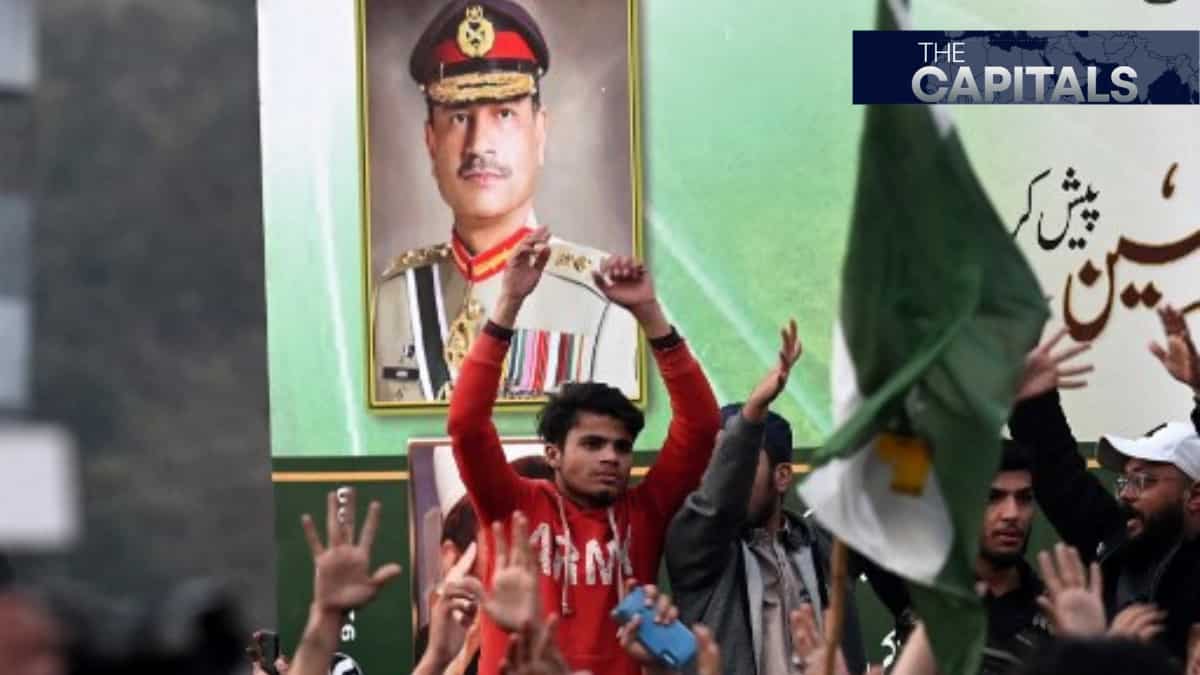
But despite the remarkable show of resurgence by Khan-backed candidates in the elections, the initial round of switchover of 'independent' candidates into Nawaz Sharif's PML(N) camp has begun. An alliance between the PML(N) and the PPP is being forged despite initial setbacks, and while Khan's supporters have taken to the streets saying the results of the Feb 8 elections were rigged to deny PTI a majority, the reaction is nowhere as strong as May 9, 2023 'mini-intifada'.
Pakistan's powerful military-intelligence nexus, collectively dubbed as establishment, has directly ruled the country for three decades since it became independent from the British after a bitter partition from India.
Plainclothes ISI operatives can be found in towns and cities across Pakistan, "low-key but ubiquitous, like pigeons on a power line", wroteDeclan Walsh in his bookThe Nine Lives of Pakistan.
In Urdu, Pakistanis call the ISI's menfarishtay, or angels – a double-edged euphemism that refers both to the traditional white long-shirts typically worn by ISI men and to the vast uncircumscribed powers at their disposal.
"When the ISI men come to the door, the illusion of a democratic state melts away. Nobody can stop them – no judge, no lawyer, no ambassador, not even a minister. The angels rule,"Walsh writes further, reflecting on the semblance of democracy that exists in Islamabad’s corridors of power well within ISI’s control.
On Feb 8, as the Pakistani electorate took to polling centres, the military's bidding for the politicians it intended to install in Islamabad felt threatened. The mobile services were blacked out. As the initial trends showed a clear lead to Khan-backed candidates, the counting first slowed, then stopped, then resumed.
By the time the conclusive numbers came, the angels had ruled against PTI-backed candidates, and thus against Imran Khan.