Swiss official on TEPA pact: India gets market access; chocolate and watches to be more affordable

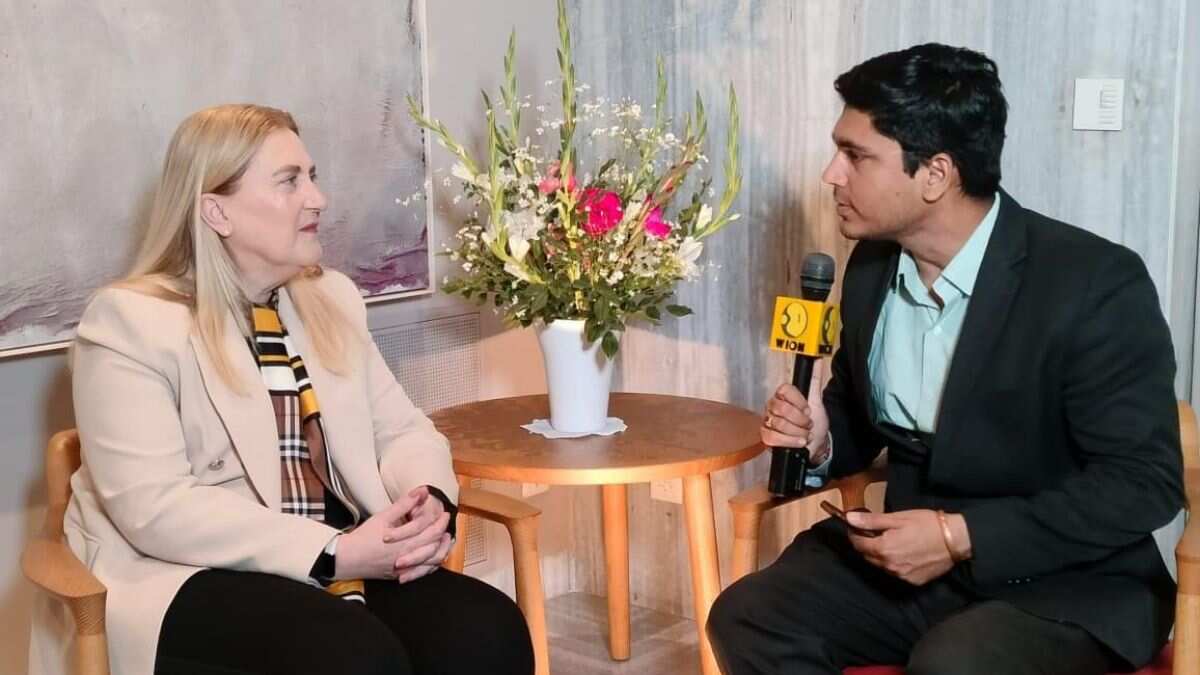
Swiss State Secretary for Economic Affairs Helene Budliger Artieda
In a landmark development, India and the European Free Trade Association (EFTA) sealed a trade pact on Sunday, paving the way for enhanced market access for the twosides. Swiss State Secretary for Economic Affairs, Helene Budliger Artieda, expressed optimism about the pact's potential impact during an exclusive interview with our diplomatic correspondent Sidhant Sibal. She highlighted the agreement's provision of 99 per cent market access to India to the Swiss markets under the Trade and Economic Partnership Agreement (TEPA).
"I'm hopeful that you will get it (chocolate) and that it will be more affordable to get in India because indeed we have agreed on a position on chocolate, high-end chocolate as is what we produce," said Artieda, underscoring the prospects of Swiss delicacies becoming more accessible to Indian consumers.
Artieda further emphasised the significance of the agreement in facilitating access to Swiss watches, a cornerstone of the country's renowned craftsmanship and precision. The trade pact, signed in Delhi amidst diplomatic fanfare, also heralded substantial economic commitments, including a staggering $100 billion investment pledge for India.
WION: How big is this milestone? And essentially, what do both sides get from it?
Helene Budliger Artieda: It's a massive moment of joy for us. You have to understand we've been negotiating for 16 years, so I'm very happy that we managed to get across the finish line.
India is an amazing market withits 1.4 billion population. It has an excellent growth rate. I'm told by Minister (Piyush) Goyal that you are aiming to become the third-largest market in the world, so the benefitfor us from the EFTA aside, this is obvious, is access, better access to this great market. But from the get-go, we have always discussed with our Indian counterparts that we want to have a balanced deal. So, India will get excellent market access for goods and services to EFTA. We're 50 million people. So, it's a bit different in size, but we're a very mature market and we have, of course, good buying power among, but I think more important is that EFTA are known to be large, foreign, direct investors. And we have also pledged that we will invest 100 Billion US dollars, that is a massive amount of money, into India and that we are committed to generating roughly 1 million jobs in the next 15 years.
WION: What are the challenges you felt during the negotiations, and how were these challenges overcome by the two sides?
Helene Budliger Artieda: It's not only numbers and trade data. It's also important that you trust each other because, as I said, our goal was to get a balanced deal. And I think that was the greatest difficulty, you have on one side 1.4 billion people, a country that's really taking off, and then you have us in Switzerland, 9 million. To really get that balance right and make it a fair and equitable deal has been a bit of a challenge. But I think once we realise that we can, you know that India is a young country and that you need jobs, and once I consulted with our business associations, and they said we are more than willing to come to India I think we really managed to create that balance.
You know, it's a legal document, a free trade agreement. So, I think at one point we're discussing to the comma, what will be, of course, the correct text, soit's been very intensive, but I've always believed in it. Because we have developed this people-to-people relation of trust.
WION: Globally,the focus has been onthe diversification of supply chains. How does this FTA help India, especially with diversifying its supply chains?
Helene Budliger Artieda: Swiss companies look for legal certainty. Of course, they're already present in India, but this Free Trade Agreement will give a boost to that legal certainty. And they're also you know, sort of, like when they see that the Swiss government is banking on India, all the Swiss companies, given the geopolitics are looking at their supply chain, they're looking where to manufacture, you have to understand, we're a small country in size and population, but we're a large market we're 20th largest market economy. So, our home market is not enough for our investment, and we cannot manufacture everything we produce in Switzerland. So Swiss companies after the pandemic, and now with the new geopolitics, they are looking to diversify. They're looking for new places. So, this trade and economic partnership agreement really comes at the exact right moment, because India is taking off and because of geopolitics, and because of the fact that Swiss companies are trying to organise themselves differently.
WION: Which sectors in India are going to benefit?
Helene Budliger Artieda:I'm hopeful that you will get it (Swiss chocolate) and that it will be more affordable to get in India because indeed we have agreed on a position on chocolate, high-end chocolate as is what we produce. If you look at goods, we have granted India 99 per cent access. So, we're really open. And, you know, it's up to India to diversify and seek these opportunities in Switzerland. So that's from India to Switzerland.
I would say Switzerland is truly open, if you surpass the 99 per centof what has been, you know, traded in the past that you have been given access to. Switzerland is open to Indian goods.
India has also granted 95 per cent access to Switzerland,which is also good andI think it's in the area of machinery. We're not sending anything cheap, anything to India. It's the high quality, it's highly innovative machinery and precision instruments and so on, that will come to India, and they will actually help to achieve India's goal to be the premier manufacturing and service hub of the world. It's a very complementary economy. We're also happy that we're getting good access to textile machinery. So, Switzerland is not massively exporting textiles, but we have very high-end, excellent textile machinery. You talked about chocolate or another thing that we're famous for. We also managed to get good access for watches, which is important. And then, of course, we're a big life science help. So we've also got some preferential treatment on Life Science products.