Suspected North Korea missile fails after launch over Pyongyang

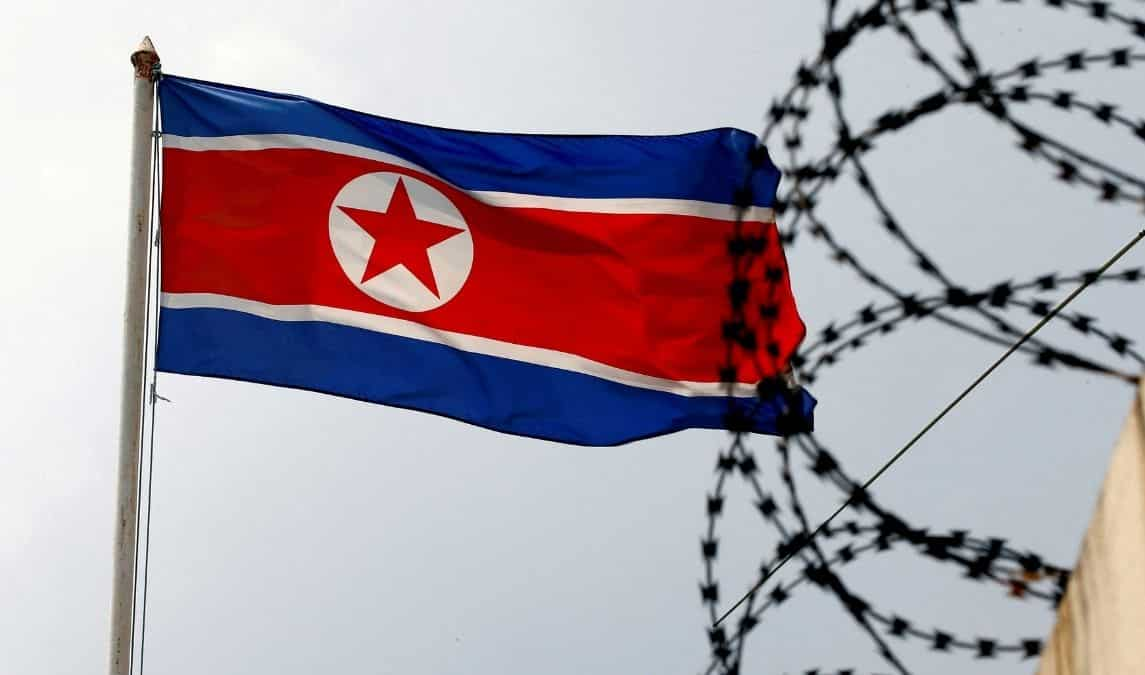
North Korea
NorthKoreafired an "unknown projectile" on Wednesday which appeared to fail immediately after launch, SouthKorea's military said, amid reports that the nuclear-armedNorthis seeking to test-fire its largest missile yet.
The United States and SouthKoreahave warned thatNorthKoreamay be preparing to launch an intercontinental ballistic missile (ICBM) at full range for the first time since 2017.
The projectile was fired from Sunan Airport outside theNorthKorean capital of Pyongyang, SouthKorea's Joint Chiefs of Staff (JCS) said in a statement.
"It is presumed that it failed immediately after launch," the statement said. The projectile seemed to explode in mid-air shortly after liftoff, Yonhap news agency reported, citing unnamed sources.
The USmilitary's Indo-Pacific Command called it a "ballistic missile launch." The command did not mention the reported failure, but condemned the launch and urged Pyongyang to refrain from further destabilising acts.
A source at Japan's Ministry of Defence also called the projectile a potential ballistic missile, Japanese public broadcaster NHK reported.
Debris fell in or near Pyongyang after the failed test, Seoul-based NK News reported, citing unnamed witnesses and a photograph of the test showing a red-tinted ball of smoke at the end of a zig-zagging rocket launch trail in the sky above the city.
"The report of a failure from Sunan is concerning because of the possibility of damage to heavily populated civilian areas," said Ankit Panda, a senior fellow at the U.S.-based Carnegie Endowment for International Peace.
In 2017, an intermediate-range ballistic missile launched from another location failed shortly after liftoff and crashed into an industrial or agriculture complex in the city of Tokchon.
The Sunan airport has been the site of several recent launches, including on Feb. 27 and March 5.NorthKoreasaid those tests were for developing components of a reconnaissance satellite and did not identify what rocket it used, but Seoul and Washington said they were tests of a new ICBM system.
SERIES OF NEW MISSILE TESTS
ReclusiveNorthKoreahas fired missiles at an unprecedented frequency this year, conducting its ninth weapons test on March 5, drawing condemnation from the United States, SouthKoreaand Japan.
The USS Abraham Lincoln aircraft carrier led military exercises in the Yellow Sea, and air defence artillery at Osan air base in SouthKoreaintensified drills in response to the increasedNorthKorean missile activity, U.S. forces in Asia said on Tuesday.
The new ICBM system, the Hwasong-17, was unveiled at a military parade in 2020 and reappeared at a defence exhibition in October 2021.
The Feb. 27 and March 5 launches did not demonstrate the missile's full range, and analysts said theNorthmight have used only one stage of the missile or adjusted its fuel volume to fly at lower altitudes.
The Hwasong-17 would beNorthKorea's largest ICBM yet, and the government appears to be restoring some tunnels at its shuttered nuclear test site, U.S. and SouthKorean officials said last week.
NorthKoreahas not tested an ICBM or nuclear bomb since 2017, but has said that it could resume such testing because denuclearisation talks with the United States are stalled.
REGIONAL RESPONSE
U.S. National Security Adviser Jake Sullivan and China's top diplomat Yang Jiechi discussedNorthKoreain Rome on Monday during talks that focused on Ukraine.
A senior U.S. official said the two discussed ensuring there would soon be follow-up talks to earlier discussions between U.S. Special Representative forNorthKoreaSung Kim and his Chinese counterpart, Liu Xiaoming, on ways to press Pyongyang to drop its nuclear weapons programme.
The official said Washington had "serious concerns about the recent escalatory actions" byNorthKoreaand Sullivan made clear to Yang the steps the United States believed to be necessary.
Last week, the United States and 10 other countries bemoaned the failure of the U.N. Security Council - where China has veto power - to condemnNorthKorea's repeated missile launches, saying this eroded the credibility of the council and the global non-proliferation regime.
Washington imposed freshNorthKorea-related sanctions on Friday, targeting Russian individuals and companies after the two recent launches.
Past USpunitive steps and international sanctions at the United Nations have failed to arrestNorthKorea's weapons development.
Russia and China, which backed U.N. sanctions afterNorthKorea's last ICBM and nuclear tests in 2017, have since argued that sanctions should be eased to encourage dialogue.