WATCH: 'Super blue blood moon' set to treat your eyes on January 31!

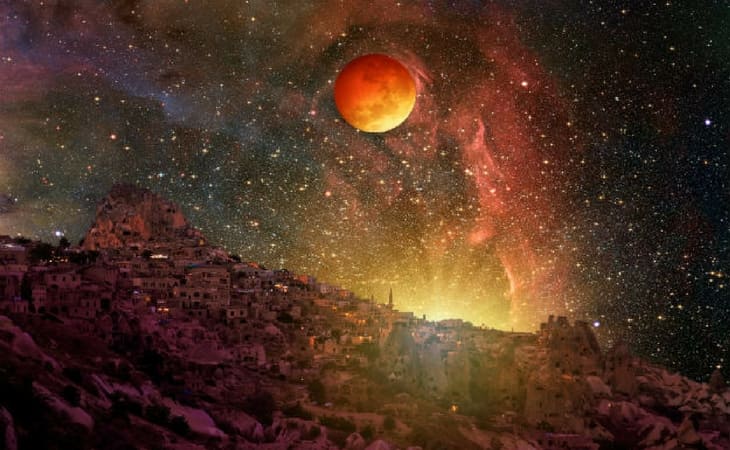
Super blue blood moon
The world will witness a lunar delight on January 31 - a blue moon, blood moon and a supermoon. This will be the first lunar eclipse of 2018
The world will witness a rare lunar delight on January 31 - a blue moon, blood moon and a supermoon. This will be the first lunar eclipse of 2018.
This celestial event will be taking place after 150 years, the last celestial event took place in 1866, making it a once in a lifetime opportunity.
The rare sight will be seen from many countries including India, Russia, Australia, China and Thailand. Institute Director Dr Anil Pandey said, on the 31st, the moon will be on the closer orbit to the earth.
The blue moon also will be a super moon, which occurs when it is at or near its closest point to the earth, or perigee. A supermoon is about 14 per cent brighter than usual, the National Aeronautics and Space Administration said.The super blue moon will pass through Earth’s shadow to give viewers in the right location a total lunar eclipse. While the moon is in the Earth’s shadow it will take on a reddish tint, known as a “blood moon.”
“Just having these three things simultaneously occur is unusual,” Petro said in a telephone interview. “A blue moon is not extremely rare but it’s a nice coincidence that it happens in conjunction with these other two.” The moon will reach its fullest on Wednesday at 8:27 am EST. A blue moon normally occurs about once every 2-1/2 years. This month’s first full moon was on January 1.
Debiprasad Duari, director of research and academics at M P Birla Planetarium said the eclipse will last for one hour and 16 minutes in the country and 3 hours, 45 minutes in total, during which there will be a total eclipse of one minute 32 seconds starting at 6.59 pm.The eclipse will end at 9.38 pm.
In India, it will start at 5.18pm local time but the total eclipse takes effect at 6.21pm until 7.37pm.
The skies of Nainital will have the clearest and brilliant view of the eclipse. Not only is the atmosphere smog-free but after the recent snowfall, the skies have become clearer offering an uninterrupted view.
NASA is offering a free live feed of the ‘lunar trifecta’ on NASA TV and NASA.gov/live.