Catalonia crisis escalates, Spain's Senate approves direct rule over region

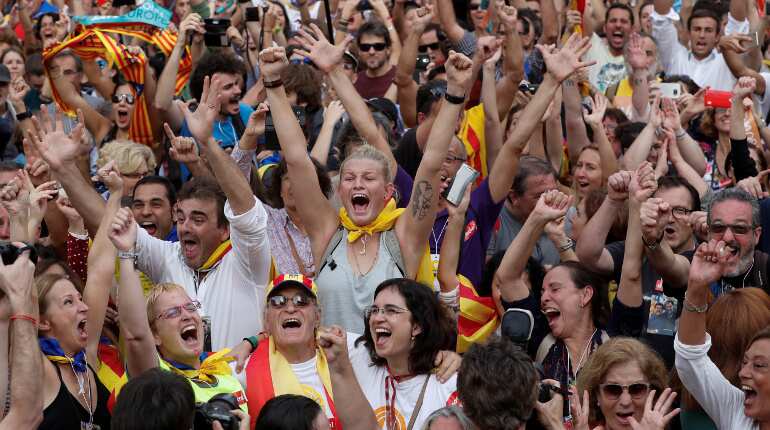
Catalonia
Spanish Prime Minister Mariano Rajoy convened his cabinet to adopt the first measures to govern Catalonia
Spain’s Senate on Friday voted to grant Madrid powers to impose direct rule on Catalonia, shortly after the semi-autonomous region’s parliament approved a motion declaring independence.
The measures allowing Madrid to take control of Catalonia and deposing regional president Carles Puigdemont and his executive were approved with 214 votes in favour, 47 against and one abstention.
Spanish Prime Minister Mariano Rajoy convened his cabinet to adopt the first measures to govern Catalonia.
The measures to be adopted could include firing the Barcelona government and assuming direct supervision of Catalan police forces.
Spain's public prosecutor's office will file rebellion charges next week against Catalan secessionist leader Carles Puigdemont, a spokesman said
Under Spanish law, the crime of "rebellion" is punishable by up to 30 years in jail.
Spanish Prime Minister Mariano Rajoy had vowed to "restore legality" in Catalonia after the regional parliament declared independence.
"I ask all Spaniards to remain calm. The rule of law will restore legality in Catalonia," he wrote in a Twitter message immediately after the Catalan assembly voted in favour of declaring independence from Spain.
Spanish senators met earlier on Friday to adopt drastic measures to impose direct rule on rebel region which held an unlawful independence referendum on October 1.
Maintain the momentum: Puigdemont to supporters
Catalan leader Carles Puigdemont, meanwhile, asked supporters to "maintain the momentum" in a peaceful manner.
"You will have to maintain the momentum of this country in the coming hours, particularly where peace, civic responsibility and dignity are concerned," he told lawmakers and onlookers in Barcelona.
Foreign powers back Spain
The US and theEuropean Union backed Madrid in the crisis.
The US State Department said the country consideredCatalonia an "integral part of Spain".
The EU said Madrid "remains our only interlocutor".
EU President Donald Tusk wrote on Twitter:
A top EU official earlier said resolving the crisis in Catalonia, stating " it's not a question of Spain, it's a question of Europe."
"We have to respect the constitution and that's extremely important for Europe -- so it's not a question of Spain, it's a question of Europe," Carlos Moedas, the European Commissioner for research, science and innovation, said.
"We, as a European Union, have to be on the defence of the constitutional order of Spain."
Britain "does not and will not" recognise the unilateral declaration of independence made by the Catalan regional parliament, Prime Minister Theresa May's spokesperson said in a statement
French President Emmanuel Macron said Friday Spanish PM Rajoy had his "full support".
"I have one partner in Spain, that's Prime Minister Rajoy... the rule of law prevails in Spain, with constitutional rules. He wants to ensure they are respected and he has my full support," Macron said.
Germany does not recognise Catalonia's unilateral declaration of independence, a government spokesman said, calling for dialogue between the two sides.
"The (German) federal government does not recognise such an independence declaration," spokesman Steffen Seibert said in a statement posted on Twitter.
(With inputs from AFP, Reuters)