

&imwidth=800&imheight=600&format=webp&quality=medium "SpaceX launches Starship for 11th test flight - It lifts off, separates and crashes into Indian Ocean...")
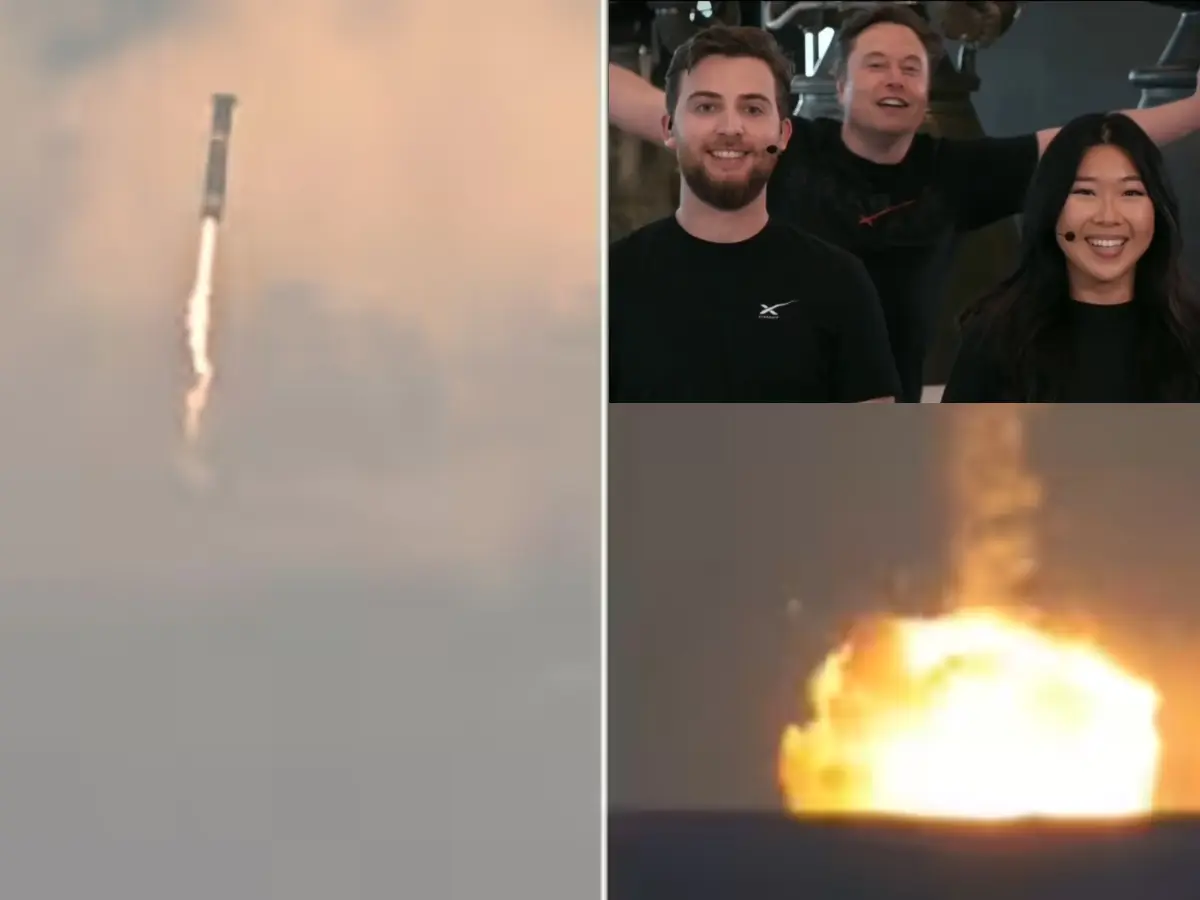
Elon Musk's SpaceX on Monday (Oct 14) achieved another milestone with the 11th flight test of its Starship Super Heavy rocket. This launch highlights the company’s commitment to making the rocket fully reusable. Shortly after liftoff, the Starship’s booster and upper stage separated through a “hot staging” process. The booster then began its controlled descent back towards the Gulf of Mexico but eventually ended with a splashdown in the Indian Ocean. A loud explosion was heard as the Starship crashed into the Indian Ocean as planned.
As the launch was livestreamed, Space X CEO Elon Musk unexpectedly appeared on the webcast to check in on the launch, surprising the hosts. This flight marks the second successful return of the Version 2 Starship prototypes, following a series of failed attempts earlier this year. Achieving controlled reentry and safe landing remains a critical step toward SpaceX’s goal of flying the rocket multiple times.
Despite hearing a loud explosion during the mission, SpaceX confirmed that the Raptor engines ignited correctly at separation, prompting the booster to attempt a landing burn. Cheers erupted from the webcast hosts as the booster safely splashed down in the Gulf of Mexico, and the upper stage completed its descent in the Indian Ocean, performing final landing maneuvers smoothly.
Meanwhile, Acting NASA administrator Sean Duffy hailed today’s test flight as “another major step toward landing Americans on the Moon’s south pole.” Earlier this year, this test ended in failure. In this test, a batch of mock Starlink satellites are deployed, briefly re-lighting its engines in space and testing new heat shield tiles during its blazing hot return from space before splashing down west of Australia, according to Reuters. SpaceX, in future tests, expects to launch a more advanced Starship prototype tailored with upgrades essential for long-duration missions in space. That includes docking adapters and other hardware changes key to orbital refueling, a complex process involving two Starships docking in orbit to transfer hundreds of tons of super-cooled propellant.

