&imwidth=800&imheight=600&format=webp&quality=medium "South Korea's 'Black Tuesday'- Why KOSPI suffered its worst-ever points decline")
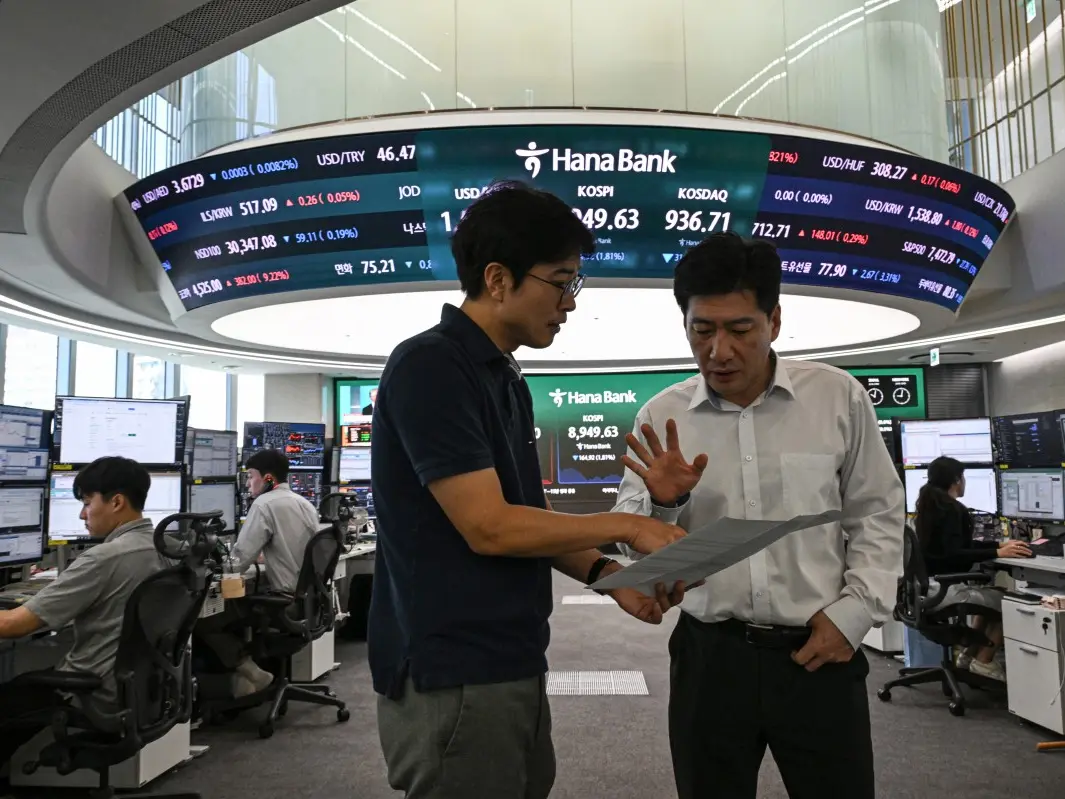
South Korea's benchmark KOSPI index fell approximately 9.99 per cent on June 23, as investors executed a major sell-off. This was the fifth-largest single-day percentage decline in history and the largest points shed ever in history at 910.71 pts. The sharp fall also triggered a 20 minute boursed wide trading halt after intraday loss breached the threshold. It was being termed as “Black Tuesday” in South Korea. The sharp sell-off had a ripple effect across nations. Japan's Nikkei closed 3.6 per cent lower, and Softbank tumbled by more than 10 per cent, while other benchmark indexes like the Nasdaq were down by over 2.20 per cent. The CSI 300, Hang Seng, Shanghai, and Taiex also showed a decline. The sharp selloff across Asia and the US triggered concerns about whether it was just a correction or the first crack in the AI rally.
From a controversial tax proposal to AI euphoria

The high-flying Kospi fall was driven by Samsung Electronics Co and SK Hynix, whose shares tumbled by 12.31 and 12.47 per cent respectively. These two account for more than half of the market capitalisation of the index. One section of the market attributes the drop to the controversial tax proposal on the unrealised gains. The drop follows a massive rally in the Asian market, as South Korea and Taiwan overtake the market capitalisation of the Indian stock market. The South Korean ruling Democratic Forum, on June 23, called for comprehensive taxation that would treat unrealised gains on stocks and real estate as taxable income, even before the asset is ever sold. They argued that treating unrealised gain as taxable income will reflect the real-time wealth expansion instead of the arbitrary timing of the sale. It had been the cause of a structural friction, a major double standard, as investors treat those stock market gains as unrealised income to avoid tax, while at the same time they use those unrealised gains as collateral to take out bank loans and secure hard liquidity. They used these loans to buy highly volatile, leveraged single-stock ETFs, doubling down on an already top-heavy market.
While another section of the market analysts suggests that the AI rally has gone too fast and too far, without accounting for the uncertainty around the Iran war, it is a classic example of “irrational exuberance”. The market has developed a dangerous immunity to geopolitical headlines. They have started to treat conflict as the new normal, expecting it to be locked in a specific region. They are treating the chipmakers as bulletproof, but ignoring the financial reality of the cyclical nature of the AI infrastructure. This comes despite repeated red flags that the tech giants could not maintain their massive capex spending without seeing any profit. The Kospi recovered on June 24, 3.26 per cent, specifically owing to the massive 90 trillion won ($58.6 billion) share buyback program by Samsung Electronics.