South Korea elections: Opposition registers sweeping win dealing blow to President Yoon Suk Yeol

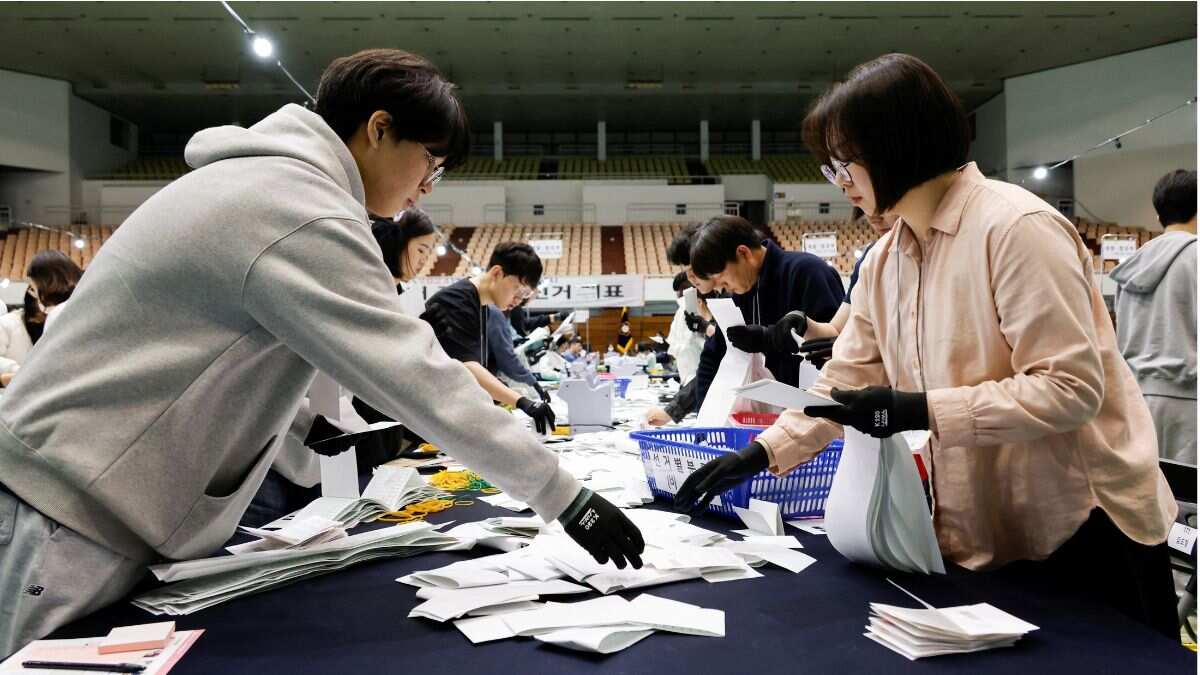
south korea elections
South Korea's liberal opposition parties achieved a sweeping win in Wednesday's (Apr 10) parliamentary election, dealing a significant blow to President Yoon Suk Yeol and his conservative party.
However, as per reports, the opposition's success likely fell just short of a super majority.
A referendum of sorts
Some analysts have referred to the election as a referendum on Yoon's leadership. The South Korean leader's popularity has suffered because of his administration's handling of the economy and various political scandals.
A common theme coined by many opposition candidates was "Judgement". Campaigning heavily on these issues, they repeatedly criticised Yoon's management and his refusal to acknowledge his wife's misstep of accepting a luxury gift — a Dior bag.
The votes
Reuters reports that with over 99 per cent of the votes counted as of 5:55 am (2055 GMT Wednesday) on Thursday (Apr 11), the Democratic Party (DP) as per National Election Commission and network broadcasters projections will secure over 170 of the 300 seats in the new legislature.
Reacting to the victory, DP leader Lee Jae-myung expressed gratitude to the voters, stating, "When voters chose me, it was your judgement against the Yoon Suk Yeol administration."
Lee, who won a seat in Incheon, west of Seoul, emphasised the party's commitment to taking responsibility for the people's livelihood and said, "you are giving the Democratic Party the duty to take responsibility for the livelihood of the people and create a better society".
For this win, he defeated a conservative heavyweight closely linked to President Yoon.
Watch |Israel threatens to strike Iran | South Korea opposition set for big win
A splinter liberal party, believed to be closely aligned with the DP, was also expected to secure at least 10 seats.
Yoon's People Power Party (PPP) was projected to win just over 100 seats, narrowly avoiding a supermajority of two-thirds opposition control that as per Reuters "could break presidential vetoes and pass constitutional amendments".
However, analysts say that this is likely to relegate Yoon to a "lame duck" status near the end of the first half of his single five-year term.
The election saw a record-high turnout for a parliamentary election — nearly 29.7 million people, or about 67 per cent of eligible voters.
Yoon, who is not up for re-election, might see his ability to push his legislative agenda significantly affected by the election results.
Mason Richey, a professor at the Hankuk University of Foreign Studies, suggests that as his domestic influence wanes, Yoon may now focus more on his foreign policy agenda.
"Given his likely lame duck status, the temptation for Yoon will be to focus on foreign policy, where he will still have statutory power."
(With inputs from agencies)

