
&imwidth=800&imheight=600&format=webp&quality=medium "Seaplane redux: ShinMaywa's US-2 back in contention for the Indian Navy lease")
India’s maritime defence strategy is taking a practical turn as the Indian Navy revives its long-standing interest in amphibious aircraft. Following a request for information (RFI) issued in January 2026, the defence ministry is looking to wet-lease four fixed-wing seaplanes for a four-year period. This move brings Japan’s formidable ShinMaywa US-2 back into the spotlight. By opting for a wet lease, the Navy aims to quickly plug crucial capability gaps without the delays of a traditional procurement programme.
The wet lease approach
The decision to wet-lease four aircraft marks a pragmatic shift in India’s defence acquisition. Under this arrangement, the chosen operator will provide the aircraft along with the complete operating package. This includes the flight crew, cabin crew, maintenance, and insurance.

By avoiding a long-drawn tender process, the Indian Navy gains immediate operational capabilities. This temporary solution allows the armed forces to evaluate the practical utility of amphibious aircraft before making a heavy financial commitment.
Why the ShinMaywa US-2?
New Delhi and Tokyo have discussed the ShinMaywa US-2 for over a decade. While previous attempts stalled primarily due to high costs and pricing disagreements, the aircraft remains a prime candidate to fulfil the current RFI.
Trending Stories
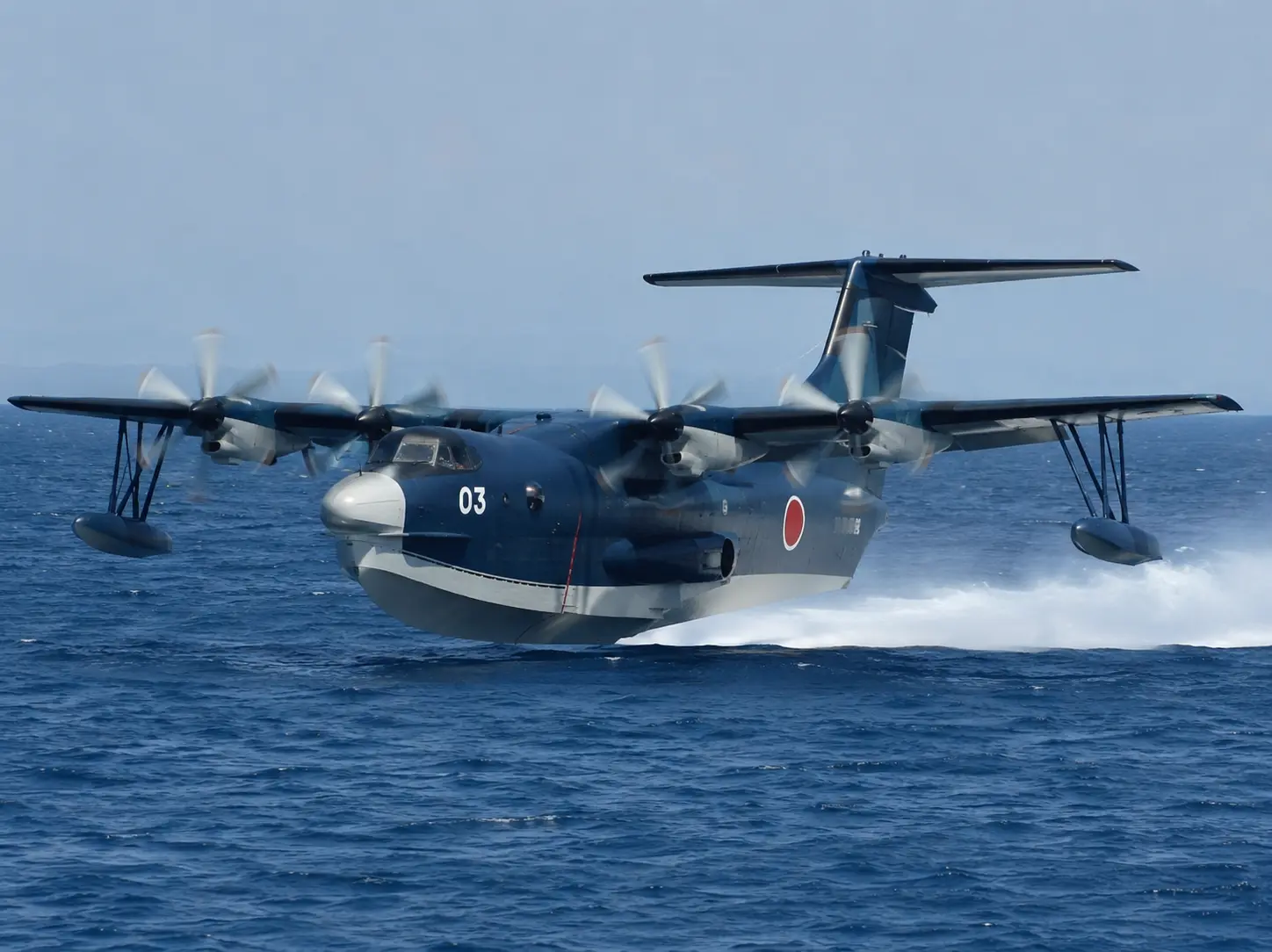
The US-2 is highly regarded for its short take-off and landing (STOL) capabilities. It can operate in rough seas with wave heights of up to three metres. Powered by four Rolls-Royce engines, plus an additional engine specifically for boundary layer control, it can land on both conventional runways and open water. The seaplane recently demonstrated its versatility during the multinational Balikatan 2026 exercises in the Philippines, highlighting its value in regional maritime security.
Strategic maritime roles
India’s growing maritime responsibilities require a robust presence across a coastline of over 7,500 kilometres. Amphibious aircraft are crucial for monitoring the Indian Ocean and providing logistical support to remote territories such as the Andaman and Nicobar Islands and the Lakshadweep archipelago.
The primary duties outlined for the leased seaplanes include long-range search and rescue, operational logistics support, and casualty evacuation. Secondary roles will involve anti-piracy missions, maritime patrols, and anti-narcotics operations in areas lacking conventional airfields.
Leasing these aircraft will immediately enhance India’s ability to respond to maritime emergencies and security threats across the Indo-Pacific. If the four-year deployment proves successful, it will likely lay the necessary groundwork for a permanent amphibious aviation wing within the Indian Navy.
