Satellite data reveals activity spike at Tibet detention centres, suggest harsher imprisonments by China

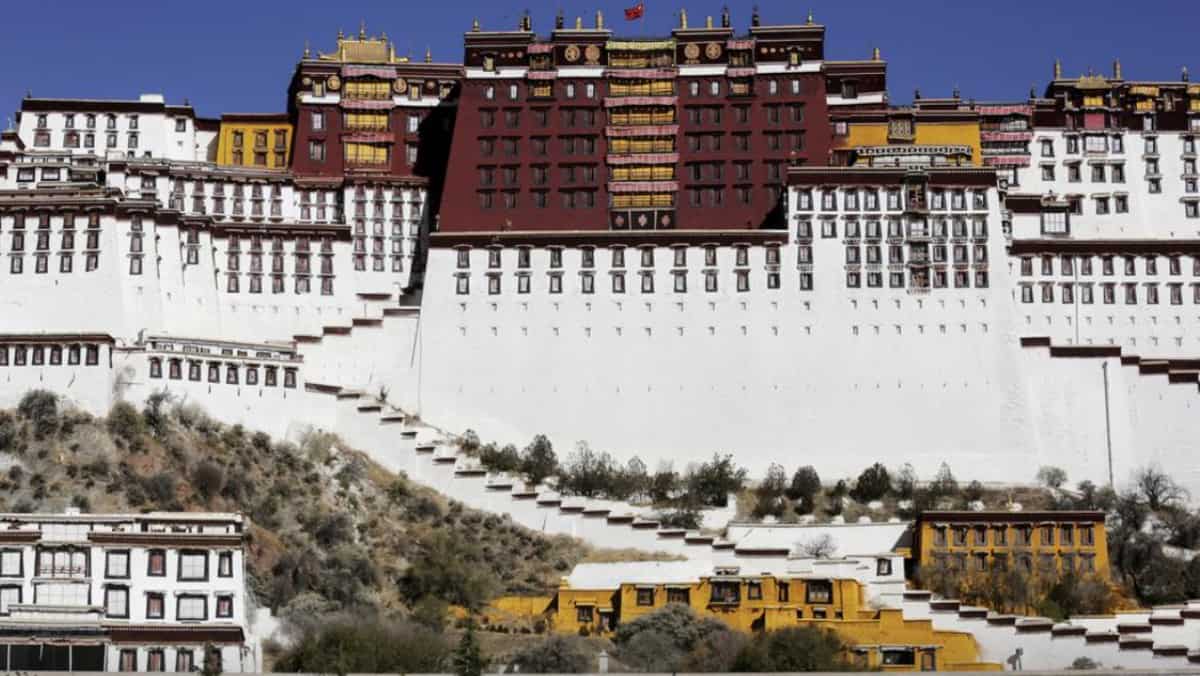
Potala Palace in Lhasa, Tibet Autonomous Region, China
A recent study conducted by the Rand Europe research institute has uncovered a concerning pattern of heightened activity at high-security detention facilities in Tibet. This increased activity was measured through night-time lighting usage, suggesting a potential rise in more severe imprisonments by Chinese authorities.
Tibet's autonomous region is notoriously secretive and referred to as an "information black hole" in the report.
Research findings
The study used overhead satellite imagery analysis and night-time lighting data to gain insights into the situation.
The researchers examined 79 detention facilities across the Tibetan Autonomous Region and found that the growth in night-time lighting was particularly concentrated in the 14 higher-security facilities. The study revealed increases in night-time lighting across prisons during 2019-2020 and in high-security detention facilities during 2021-2022. In contrast, lower security facilities showed a peak in growth back in 2017.
Possible interpretations
The emitted light visible from space could indicate various developments within detention facilities. Researchers said it might signify new construction, as was demonstrated in earlier studies on Xinjiang facilities. However, this time expansion of existing buildings is more likely in the case of Tibetan facilities.
Additionally, increased light could indicate higher occupancy or usage of the facilities, without necessarily implying physical expansion.
Comparison: Xinjiang and Tibet
The researchers believe that the heightened activity in Tibetan detention facilities could point to a shift towards longer detentions, similar to what has been observed in Xinjiang, where a substantial number of people were sent to re-education facilities and high-security detention centres.
Tibet, like other border regions, including Xinjiang and Mongolia, has experienced long-standing crackdowns on the religious and cultural practices of non-Han ethnic minorities.
Watch | Russian defence minister's Pyongyang visit | Putin to meet African leaders | WION Speed News
Obtaining accurate information from inside the TAR is exceedingly difficult due to strict controls on travel, communication, and information flow.
Unlike Xinjiang, where there has been more international focus and media coverage, Tibet remains largely understudied and shrouded in secrecy. The report said that the lack of reliable data from Tibet does not imply a lack of repressive control but emphasises the need for further research and international attention on the region.
Concerns raised by activists
Activists and human rights groups have expressed growing concern over the harassment, detention, and torture of Tibetan activists, religious figures, and intellectuals. Additionally, mass surveillance, mandatory re-education programmes, and the transfer of Tibetan children to state-run "boarding schools" have drawn criticism. These actions aim to assimilate Tibetans culturally, religiously, and linguistically into the dominant Han society.
Director of defence and security at Rand Europe, Ruth Harris, told the Guardian,“Tibet remains an information black hole and any attempt to understand the security landscape there is fraught with difficulty."
“Foreign researchers are blocked from accessing many Chinese sources and find much available data unreliable,” she added.
WATCH WION LIVE HERE
You can now write for wionews.com and be a part of the community. Share your stories and opinions with us here.