Russia claims Su-35 struck US-made Patriot system with Kh-31PM missile from 125 km away

&imwidth=600&imheight=450&format=webp&quality=medium "Russia claims Su-35 struck US-made Patriot system with Kh-31PM missile from 125 km away")
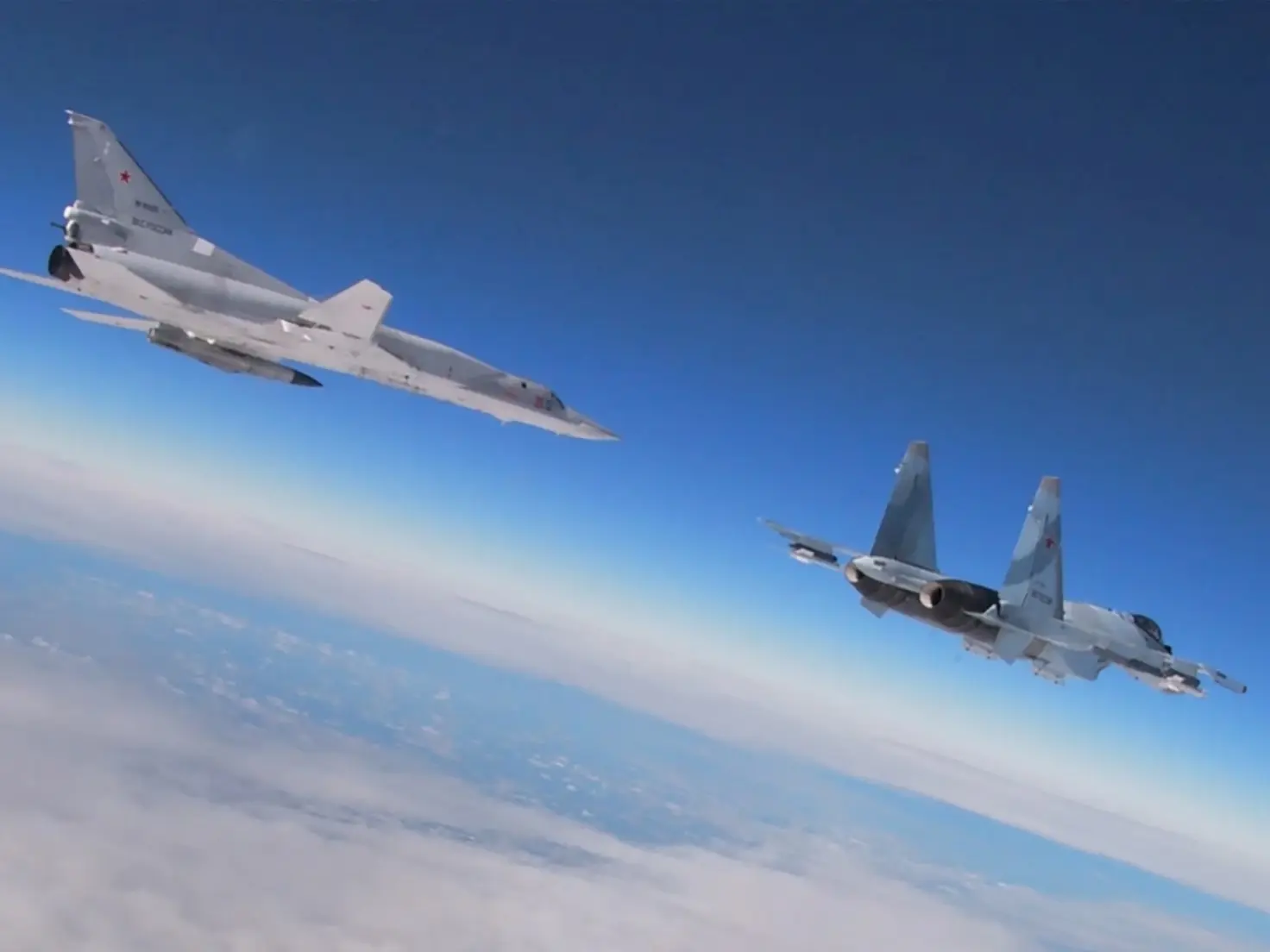
A Tupolev Tu-22M3 Backfire strategic bomber (L) and a Su-35 multirole supermaneuverable fighter flying Photograph: (AFP)
Russia claims a Su-35 fighter jet struck a US-made Patriot air defence system in Odesa with a Kh-31PM anti-radiation missile from around 125 km away.
Russia on Sunday claimed that Su-35s have struck a US-made Patriot Defence system within Ukrainian territory. A Kh-31PM anti-radiation missile supposedly struck a Ukrainian MIM-104 Patriot long-range air defence system from about 125 kms away. The attack was carried out on August 23 at the Ukrainian port city of Odesa. The claim is yet to be confirmed by Ukraine, and the extent of damage at the target is disputed. Some reports have described it as a separate radar station instead of a Patriot component.
According to Military Watch magazine, Russian Forces have released footage showing a Su-35 launching the missile at what they identified as components of a Ukrainian Patriot system. The claim that it was struck from 125 kms comes from the target range indicator displayed on the Su-35’s Head-Up Display (HUD) in the leaked or released cockpit video. The claim comes as Ukraine is experiencing a severe shortage of Patriot missile defence systems. Ukrainian President Volodymyr Zelensky has been intensely lobbying Western allies for access to deeper US stockpiles and hundreds of additional interceptors.
Also Read: 'Insult' to 4 crore people of Telangana: Why CM Revanth Reddy's US visit clearance was denied
Why is the Kh- 31PM missile lethal?
Russia deployed the Kh-31PM, a high-speed, anti-radiation missile (ARM) explicitly engineered to target and home in on enemy radar emissions. It does not transmit a radar signal to find its target, which is a major advantage. An aircraft launching a conventional active-radar missile must potentially expose itself to lock on to the target, but an ARM uses electromagnetic radiation from enemy radar systems.
The missile has a minimum range of 55 kms to a maximum range of 300 kms. The missile is an upgrade of the Soviet-era Kh-31P. It retains the high speed and improves the seeker and propulsion system. It has a top speed of Mach 4 and uses a solid-fuel rocket booster to accelerate rapidly after launch; then the booster is discarded, and a ramjet sustainer takes over. This gives the missile a high-speed thrust, making it extremely hard to intercept.