

&imwidth=800&imheight=600&format=webp&quality=medium "Russia's nuclear-powered, radar-evading, unlimited-range, Burevestnik aka SKYFALL missile test spark fear of radioactive emission in arctic")
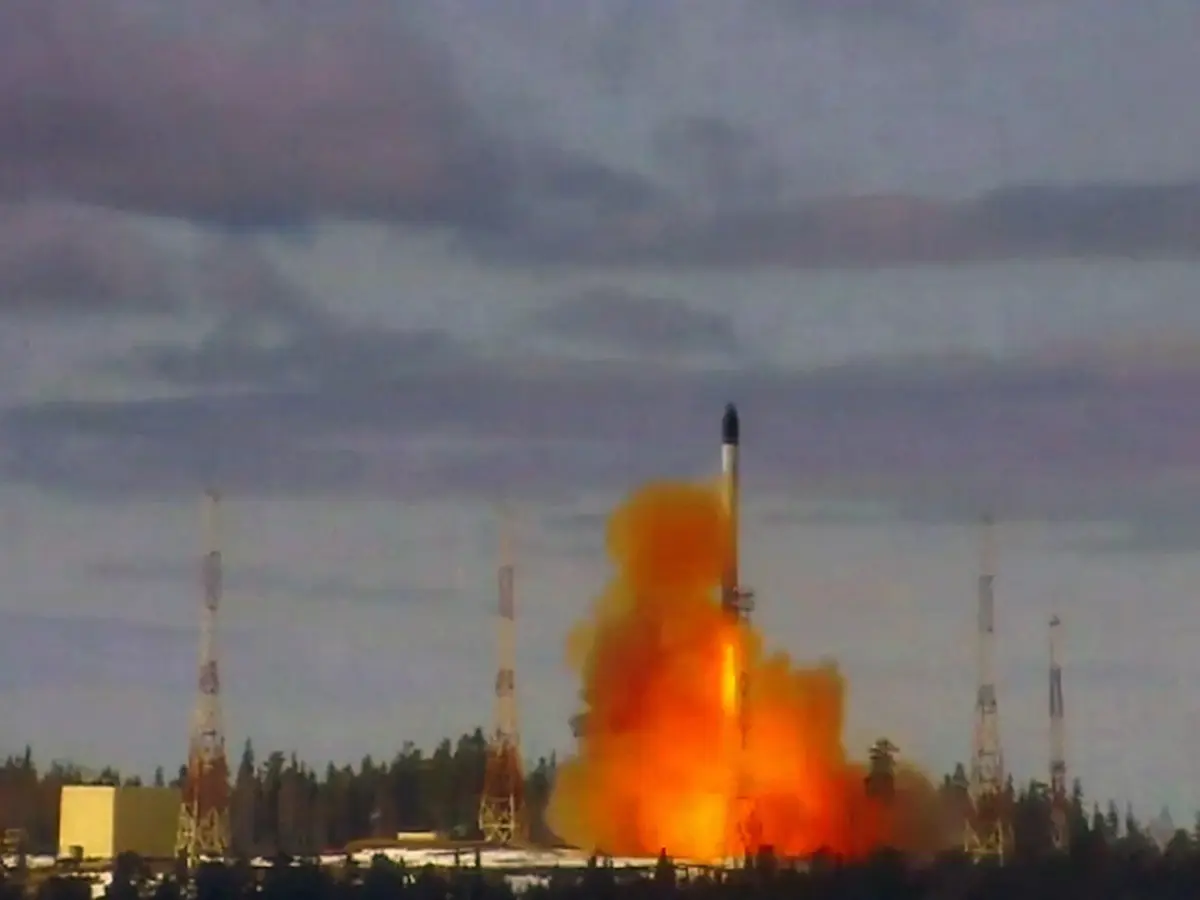
Russia is set to conduct a potentially dangerous test for the Burevestnik missile, also known as the SSC-X-9 Skyfall by NATO. This is significant because this is the only known nuclear-powered missile and a speculative or experimental concept. Some analysts called it a ‘flying Chernobyl’. The United States also had a nuclear-powered missile called SLAM or Supersonic Low Altitude Missile system in the 1950s. But it was later discontinued due to being extremely dangerous.
Russian Authorities have shut down a 500-kilometre airspace corridor near Novaya Zemlya from August 7 to August 12, covering more than 40000 square km. Images from the satellites suggest intense weeks of preparation at the Pankovo test site. The Russian state nuclear corporation Rosatom has deployed ships to the Barents Sea and aircraft to the nearby Rogachevo air base. This is the site where Russia have tested nuclear weapons and technology since 1950, according to Barents Observer.
Burevetshnik has a theoretically unlimited range owing to the onboard nuclear reactor, and has been seen as President Vladimir Putin's most controversial nuclear weapon project. It can be equipped with both conventional and nuclear warheads. Burevetshnik, also known as Skyfall, can evade current missile defence systems. One potential drawback claimed by experts is its Subsonic speed, which hampers its stealth ability. It can fly at low altitude for longer distances and circumnavigate the globe, evading radar detection. But due to its slow speed, it might be prone to interception.
The missile had been under development since 2010 and tested since 2017, with 13 tests showing mixed results, only two being positive. Notably, in 2019, during one test, the missile crashed in the White Sea, killing several scientists and releasing radiation. Experts warn that the test has the potential to scatter radioactive material across vast distances. Norwegian authorities, whose Finnmark region lies less than 1,000 kilometres from the test site, have voiced concern. The US has deployed its WC-135R ‘nuke sniffer’ aircraft to trace radioactivity in the region. Earlier in 2025, the United States decided to start its Golden Dome Project, which is a multi-layer defence system aimed at countering ballistic, hypersonic, and cruise missiles. A global arms race is on, with the new START treaty between the US and Russia set to expire by 2026.
"The Burevestnik is not a wonder weapon, and the challenges it poses for NATO security are neither new nor unmanageable," said Decker Eveleth from CNA Research Group.

