Russia avalanche kills at least 11 climbers on Mount Mizhirgi, six missing

&imwidth=600&imheight=450&format=webp&quality=medium "Russia avalanche kills at least 11 climbers on Mount Mizhirgi, six missing")
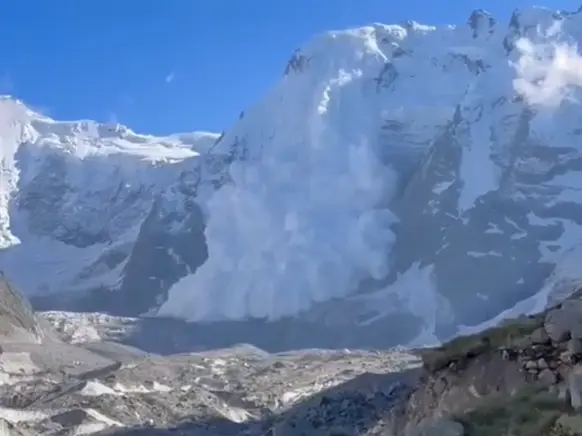
Screenshot taken from the video Photograph: (X)
An avalanche on Russia’s Mount Mizhirgi killed at least 11 people, injured six and left six climbers missing as rescue teams searched the mountain
At least 11 people were killed and six others injured after an avalanche struck a group of climbers on Mount Mizhirgi in Russia’s Kabardino-Balkaria region in the North Caucasus, local emergency services said. The avalanche swept down the mountain at around 5 pm local time on Sunday, hitting a group of 33 climbers. By 9 am local time on Monday, 10 climbers had managed to make their own way down the mountain, while the fate of six others remained unknown, emergency services said.
More than 50 emergency workers were involved in the search and rescue operation. However, difficult mountain terrain and a high risk of further avalanches were hampering rescue efforts. Search operations were continuing Monday as emergency crews worked to locate the six missing climbers. Mount Mizhirgi is one of the highest peaks in Russia’s North Caucasus region and is located in the mountainous Kabardino-Balkaria area. Officials said the avalanche struck the group while they were on the mountain, leaving emergency teams facing challenging conditions as they searched for survivors and missing climbers.
What is an avalanche?
An avalanche is a rapid flow of snow, ice, and sometimes rocks down the side of a mountain or steep hill. It occurs when the snowpack becomes unstable and gravity causes it to break loose. Avalanches can travel at speeds of over 80 km/h (50 mph), and some large avalanches can exceed 300 km/h (190 mph) under the right conditions.
Causes of avalanche
There are several common causes:
- Heavy snowfall that adds too much weight.
- Rapid warming from sunshine or warmer temperatures.
- Strong winds that pile snow into unstable drifts.
- Human activity, such as skiing, snowboarding, or snowmobiling, which can trigger an already unstable slope.

