Airstrikes in Kabul: Islamabad uneasy at growing India-Taliban proximity?

&imwidth=600&imheight=450&format=webp&quality=medium "Airstrikes in Kabul: Islamabad uneasy at growing India-Taliban proximity?")
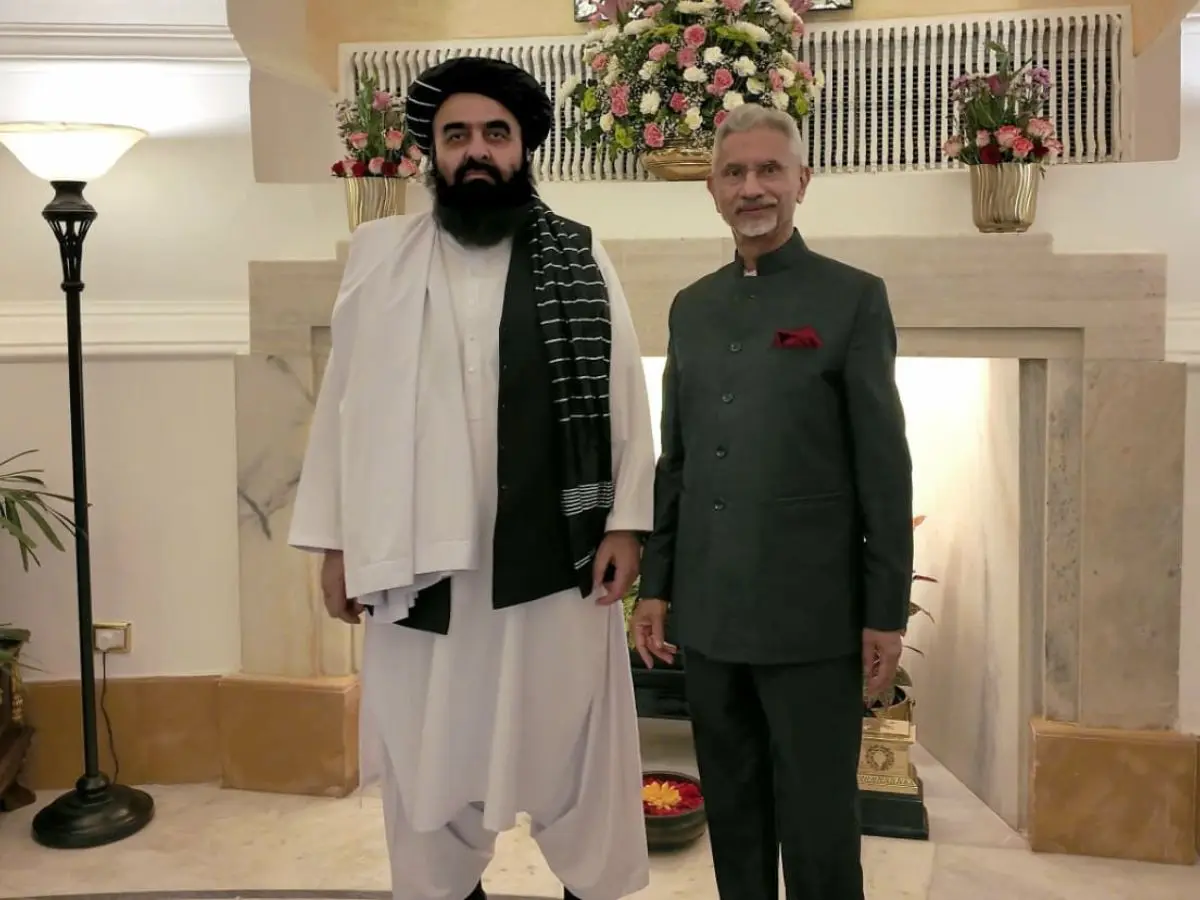
Amir Khan Muttaqi with S Jaishankar Photograph: (X)
Multiple explosions have been reported in Kabul as Taliban Foreign Minister Amir Khan Muttaqi visits India. Pakistan is suspected of conducting airstrikes targeting TTP militants, reflecting growing tension over India–Afghanistan ties and Islamabad’s security concerns.
Afghanistan have reported several explosions in District 8, near eastern Kabul. The explosion comes just as Taliban Foreign Minister Amir Khan Muttaqi is in India on a six-day visit to strengthen economic and political ties. Amir Khan Muttaqi, the Taliban's Foreign Minister, is on his first visit to India. India has yet to formally recognise the Taliban regime, and the UN Security Council temporarily lifted its travel ban to allow the visit. The Taliban is seeking to break out of international isolation and to gain legitimacy.
Pakistan have not officially claimed responsibility for the attack, but earlier, Pakistan's Defence Minister Khwaja Asif warned about sheltering terrorists in Afghan soil, suggesting a crossing of Pakistan's diplomatic threshold.
"Enough is enough, our patience has run out. Terrorism from Afghan soil is intolerable,” Asif said in the National Assembly. Pakistan's media outlets and several other local sources have attributed the attack to the Pakistani Air Force. It supposedly targeted TTP chief Noor Wali Mehsud.
Earlier on October 7, a Quetta-bound Jaffar Express was bombed using an improvised explosive device (IED), killing several soldiers, and Baloch rebel groups have claimed responsibility for the attack. Pakistan have long accused the Taliban of aiding its ideological partner Tehrik-e-Taliban Pakistan. So the recent air strikes are painted as self-defence against terrorism. Pakistan have also accused foregin intelligence like MOSSAD and RAW being involved in seeding separatist sentiment in Balochistan. Pakistan allegedly captured Kulbhushan Sudhir Jadhav, a RAW spy in Balochistan in 2016 whose job was to destabilise Pakistan. Indian government denied those allegations saying that he was kidnapped from Iran.
For decades, Pakistan has seen Afghanistan as its strategic depth, a friendly buffer against the influence of India. But now, as the Taliban seeks independent foreign relations with India, this seems to have cornered Pakistan. Afghanistan have previously maintained strong relations with India during the Afghan Ghani's government, and India invested nearly $3 billion in infrastructure, education and development projects. Now, if the Taliban receives similar economic and political benefits from India, Pakistan will see its leverage erode with Afghanistan and will be isolated in the region. India's approach to the Taliban had been pragmatic and cautious. Hosting the Taliban foreign minister without formally recognising the Taliban regime is a diplomatic win for India. So the bombing can be seen as an unilateral act of aggression as well as a defence against a security threat, this may push the Taliban closer to India, giving it a footprint on Pakistan's north-western border.

