Opinion: Women in China are wealthier than others

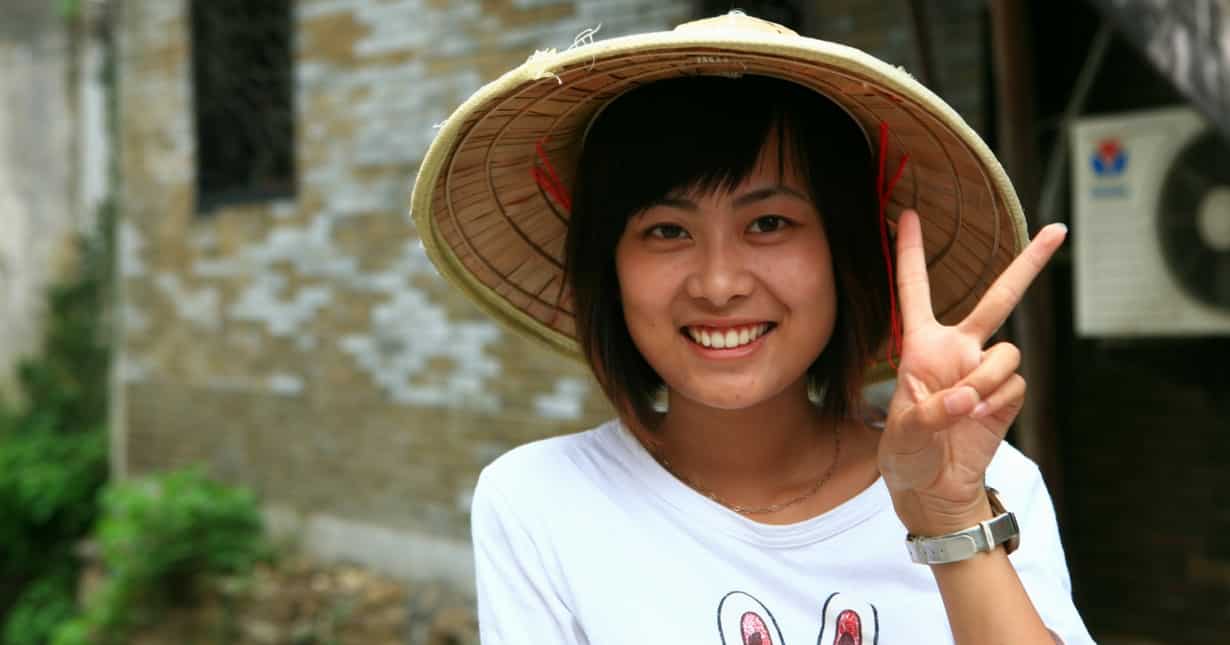
Women in China
Women in China now are leading the economic spheres and they have become wealthier compared to women in any part of the world
Well before the United Nations decided to dedicate several days of the year celebrating one or the other women issues, China had taken special initiatives to ameliorate the condition of women in that country. The latest among these measures is the passage of an anti-domestic violence law in December 2015.
The new legislation signifies one of the novel state initiatives to address gender inequality in the domestic sphere. It is mainly the government-run women’s organisation like All-China Women’s Federation (ACWF) along with other women’s networks which created positive legal awareness about women’s rights and, thus,sensitised the Chinese government to formulate laws regarding these issues.
The government in China has managed the social conflict by adopting various social transformative measures from time to time. Immediately after the revolution in early the 1950s, China has formulated the first marriage law which addresses women’s equal right to choose life partners. Another important step towards gender equality was the land reform law which ensured women’s equal right to property, especially in terms of land entitlement.
The Chinese public policies on women have been quite empowering in the sense that women’s participation in the economic production was ensured through different mechanisms.
So, the government and the ruling Communist Party of China (CPC) sought to address gender equality by granting rights to women in personal spheres and also in public spheres. Over the years, the government has also amended these laws on marriage and property to bring new complexities in the different social milieu and, thus, address women’s rights pertaining to the right to get a divorce, share in the property and the maintenance rights.
The Chinese public policies on women have been quite empowering in the sense that women’s participation in the economic production was ensured through different mechanisms. Mao Zedong, the Chairman of the CPC for almost half a decade coined the phrase ‘Women hold up half the sky’ to project women as good workers and capable labouring hands. The phrases like ‘Iron Girls’ and ‘What Men can do Women can do too’ really captured the equality rhetoric of that era.
Women participated equally in heavy work and also outside the home which is otherwise known as men’s domains. In the Chinese official rhetoric, the women were portrayed as role models to be followed by others. Millions of women came out of their home and took active participation in state-run economic and social construction projects.
Moreover, women in China from its imperial past has proved to be most successful whether it is Empress Dowarger CiXi who holds a great political authority in imperial era or Madame Song Qing Liang who made a great contribution in the new People’s Republic to female actress Gongli Known for films like Red Sorghum and Raise the Red Lantern, has won awards from the Berlin International Film Festival to Cannes. She was named a UNESCO Artist for Peace in 2000.
Now, women in China have also made a remarkable achievement in the lesser-known women’s spheres. It ranges from Guo Jianmei, first public interest lawyer in China, Hu Shuli, the editor-in-chief of Caixin media group and made her name as an investigative journalist. Women are able to enter the domains which were usually dominated by men.
Women in China now are leading the economic spheres and women really control the assets and most of the successful entrepreneurs are women in China.
Women at a very young age of 30-40 years are able to make a breakthrough in sectors, such as finance, banking and real estate. Soho China CEO Zhang Xin, the real estate developer has transformed Beijing’s skyline and Liu Qing, CEO Didi Kuaidi, online taxi services in Shanghai, also made a mark in online shopping commerce platforms.
Women in China now are leading the economic spheres and women really control the assets and most of the successful entrepreneurs are women in China. Women entrepreneurs are moving away from industries traditionally associated with women, such as garments and beauty products and venturing into sectors usually dominated by men, such as digital products and furniture.
Women command greater visibility in all the spheres of China’s economy as well as social life. For a visitor who first time travels to China especially from India the public portrayal of confident and successful women images are quite an astonishing phenomenon. Being an immigration officer to taxi drivers, from bank to hotel managers, laoban (Boss) is a common everyday vocabulary used to depict Chinese women’s lives.
In China, women are no longer the ‘iron girls’ of the socialist era, but they have become wealthier compared to women in any part of the world. These women’s images have often been displayed by the state-run media channels as ‘capable women’ who have really carved out space for themselves.
(Disclaimer: The author writes here in a personal capacity).