Opinion: India missed an opportunity to counter China on Rohingyas

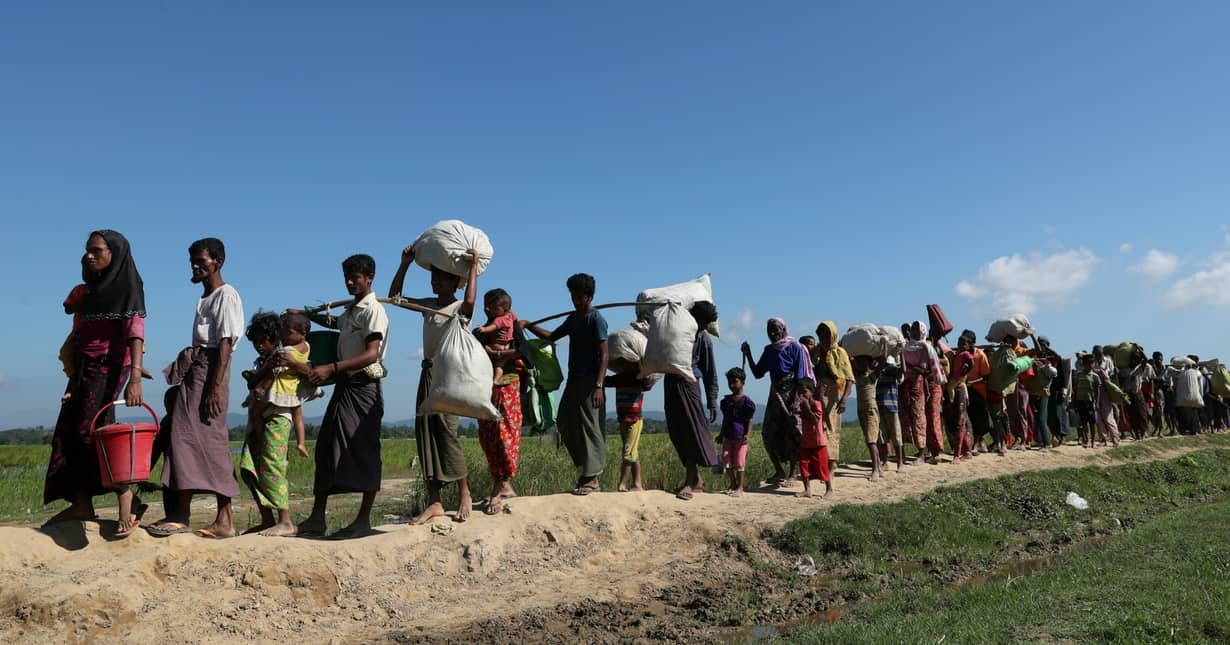
Rohingya crisis
India missed an opportunity to win over Bangladesh from China by siding with Myanmar on Rohingya issue.
I was going to Rohingya refugee camps in Balukhali from Cox’s town in a battery run three-wheeler locally called “auto”. Six people can commute in such vehicle. All my co-passengers were locals of this rural area, and it was understood from their discussion that they had no or primary level of education. Surprisingly, I found them discussing Rohingya crisis and the discussion included geopolitics in their own style. The driver of the three-wheeler also joined the discussion.
The time was early September. In the discussion, I found them to be very angry with China for its indirect support to Myanmar in the atrocities against Rohingya people. “ China er jonnoi Burma er ato sahosh barse” was the gist of their discussion in Bangla meaning “Myanmar is so arrogant for China’s support”.
A few days later when the Indian Prime Minister Narendra Modi visited Myanmar and reportedly told Suu Kyi that India was with Myanmar, I witnessed how the anger against China just turned into anger against India. People were no longer concerned about China. It seemed to me that it was expected to them that China would sidewith Myanmar but they did not expect India to support Myanmar against Bangladesh.
Anti-Chinese sentiment could have grown rapidly in Bangladesh due to China’s continued support to Myanmar government as Rohingya sentiment has been very high in Muslim majority Bangladesh.
The news that PM Modi said India was with Myanmar went viral on Bangladesh’s social media. I found many people who were never critical of India were criticalthis time. Added to the injury, the BJP government also expressed their interest to deport Rohingya refugees who took shelter in India.
One Bangladeshi newspaper carried a report that some Rohingya refugees were pushed from India to Bangladesh through Satkhira border. There was a backlash in Bangladesh following this report. At the same time, in Assam, BJP reportedly carried out campaign to deport what they call “illegal Bangladeshis” there. There was an uproar in Bangladesh after local newspapers reported on this false claim of the Assam BJP.
And recently, when news circulated that India abstained from voting in a UN resolution on Rohingyas while Pakistan voted in favour of it, there was also uproar on Bangladeshi social media.
As I extensively covered Rohingya crisis and visited different parts of the country to work on varies reports in the last few weeks, it seemed to me that India missed an opportunity in the Rohingya crisis. Anti-Chinese sentiment could have grown rapidly in Bangladesh due to China’s continued support to Myanmar government as Rohingya sentiment has been very high in Muslim majority Bangladesh. However, the wrong policy of the Modi government on the Rohingya issue has helped grow anti-Indian sentiment in Bangladesh instead.
There was another crucial aspect. The Bangladeshi Opposition parties have been criticising the government for putting all its eggs in one basket, i.e. depending on India in the foreign policy matters. When India turned its back on Bangladesh, during one of the biggest crises, the anti-Indian quarter got fuel and it is at all time high in Bangladesh.
There might be some equations of the Modi government to take this policy on Rohingya crisis. We have heard that this is due to India’s “Go East” policy. The Modi government might have a fear that growing Chinese influence in East Asian nations might cause problems to India in the coming days and Myanmar is the gateway for India to establish ground in other East Asian nations.
It also might have fear about its North East and its huge investment in Rakhine state. China might be benefited in any tension between India and Myanmar. It has the real fear of insurgents in North East of India getting direct support from Myanmar.
As India has strong influence both on Suu Kyi and her party and on Bangladesh, it could easily meditate the Rohingya crisis.
However, the way Modi government dealt the crisis was a real disaster. Many Bangladeshis believe that the Modi government’s Rohingya policy was the result of its anti-Muslim mindset. There were many discussions on different platforms in Bangladesh that India would not take the same policy if Rohingyas are not Muslims. Many also pointed out that the Modi government does not have the same policy for refugees of other religious groups like Tibetan and Tamil refugees.
As India has strong influence both on Suu Kyi and her party and on Bangladesh, it could easily meditate the Rohingya crisis. Even if it could not successful, any such attempt would help grow anti-Chinese sentiment in Bangladesh. However, siding with a country against a friendly nation who helped smashed insurgents in its North East can never constitute a smart foreign policy.
In my opinion, after Doklam crisis which alarmed Bhutan of its national security and forced it to rethink about its full dependency on India, the Rohingya crisis is another foreign policy mistake of the Modi government. I fear that these might be two historical mistakes for India. They have potentials to end India’s strong influence on these two neighbouring nations.
(Disclaimer: The author writes here in a personal capacity).